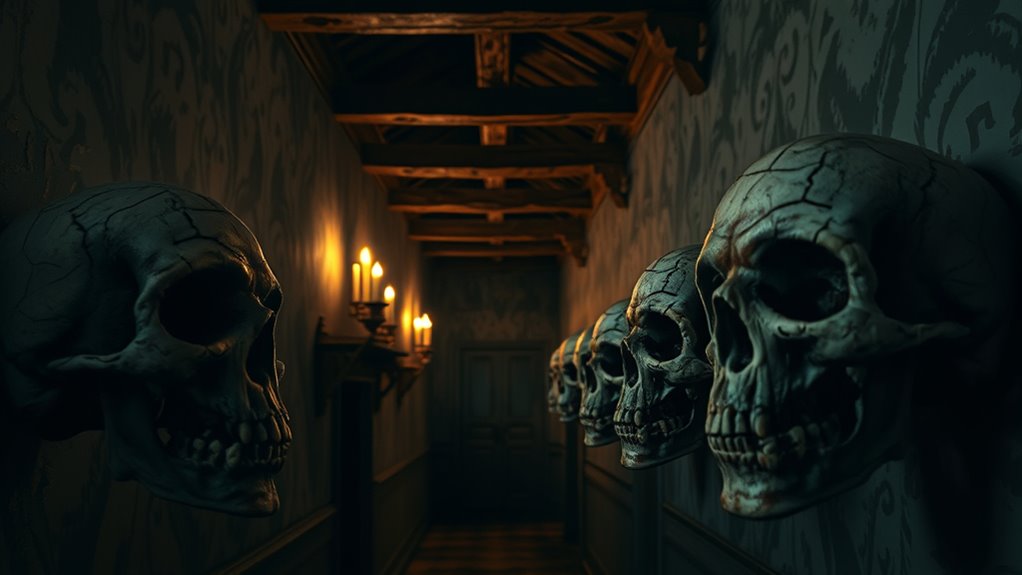

In many English manor houses, hidden skull relics beneath facades reveal dark histories filled with ghost stories and superstitions. These relics aren’t just bones; they symbolize mortality and spiritual protection, often embedded in carvings or secret rooms. Legends speak of vengeful spirits and curses linked to the skulls, contributing to haunted reputations that persist today. If you continue exploring, you’ll uncover how these relics became central to the manor’s haunted legends.

Prime made for students and young adults
- Fast, free delivery for dorm and study essentials
- Prime Video and Amazon Music included
- Member-only deals
Key Takeaways
- Screaming skull legends often involve skulls embedded in manor house architecture, symbolizing death and spiritual protection.
- Many stories depict skull relics as portals to spirits, causing spectral apparitions and ghostly phenomena.
- These skulls are believed to be cursed or vengeful, linked to dark histories and supernatural curses.
- Architectural carvings and hidden relics serve as memento mori, reinforcing the haunted reputation of the houses.
- Superstitions see skulls as warding off evil spirits, embedding their presence in local legends of haunted manor houses.
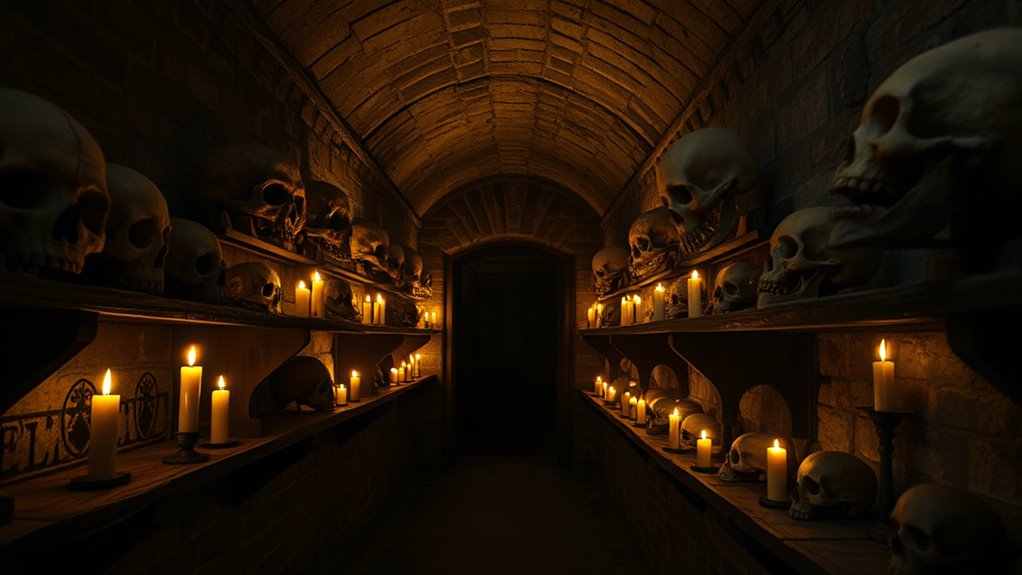
English manor houses often hide an eerie secret beneath their elegant facades: the skulls of previous inhabitants. These unsettling relics serve as chilling reminders of the house’s dark history, fueling haunted legends that have persisted for generations. As you explore these grand structures, you might notice that the skulls are more than mere bones; they are steeped in architectural symbolism. Many manor houses incorporate skull motifs into their design, subtly warning visitors of the house’s sinister past or serving as protective symbols against evil spirits. This integration of death imagery into architecture reflects a deep-rooted belief that human remains and skulls can ward off malevolent forces, anchoring the house’s history in both superstition and spiritual protection.
The haunted legends surrounding these skulls often speak of vengeful spirits, curses, or tragic deaths that occurred within the manor walls. Some stories tell of skulls found hidden in secret rooms or beneath floorboards, left as warnings or tokens of a terrible deed. These legends lend an air of mystery and danger, suggesting that the skulls are not just relics but active symbols of spectral unrest. You may hear tales of ghostly whispers echoing through the halls or apparitions seen clutching skulls in the moonlight, reinforcing the idea that these relics are portals to the supernatural. Such stories embed the skulls into the cultural fabric of the house, making them central to its haunted reputation.
Architectural symbolism plays a pivotal role in understanding the significance of these skulls. During the Gothic period, for instance, skull motifs appeared regularly in carvings, stained glass, and even furniture, symbolizing mortality and the fleeting nature of life. These symbols serve as stark reminders that death is inevitable, encouraging inhabitants and visitors alike to reflect on their mortality. When you see skull imagery woven into the architecture of a manor house, it’s not just decoration—it’s a reminder of the house’s purpose as a memento mori, urging you to contemplate life, death, and what lies beyond. The skulls, whether real or carved, reinforce the idea that these houses are more than mere residences; they are monuments to mortality, echoing haunted legends that have persisted for centuries.
Frequently Asked Questions
Are There Documented Cases of Visitors Witnessing These Skulls Move?
You won’t find any verified reports of visitors witnessing these skulls move. While there are many paranormal sightings and ghostly apparitions associated with haunted manor houses, documented cases of the skulls themselves moving are rare or nonexistent. Most stories remain in the domain of local legends and folklore. If you’re interested in ghostly phenomena, you’ll find plenty of accounts of spirits and unusual activity, but moving skulls aren’t among them.
What Are the Most Recent Sightings or Encounters Reported?
Recent sightings of the screaming skulls include reports of ghostly apparitions and spectral phenomena at various historic sites. Visitors have claimed to see the skulls move or emit strange noises, especially during quiet, eerie nights. These encounters often involve unexplained sounds and flickering lights, fueling the legends. If you venture into these haunted locations, stay alert—these ghostly phenomena continue to captivate and terrify those who dare witness them firsthand.
Have Any Scientific Studies Been Conducted on These Skulls?
You might be surprised to learn that some scientific studies have explored the paranormal investigations surrounding these skulls, aiming to understand their eerie symbolism. While skeptics dismiss them as hoaxes, researchers analyze skulls’ physical properties and alleged paranormal effects. These investigations seek to bridge the gap between superstition and science, revealing how skull symbolism fuels the mystery, even as scientific inquiry struggles to provide definitive answers about the screaming skull phenomenon.
Do These Skulls Have Any Historical Provenance or Documented Origins?
You’ll find that many of these screaming skulls lack solid historical verification or clear provenance records, making their origins uncertain. Some claim they come from specific families or tragic events, but these stories often lack documented evidence. Carefully researching provenance records can sometimes reveal authentic historical links, but often, the skulls’ origins remain shrouded in mystery, fueling legends rather than verified history.
Are There Local Legends Linking the Skulls to Specific Family Curses?
Yes, local legends often link these skulls to family curses, suggesting that disturbing them brings misfortune or tragedy. You might hear stories claiming that each skull is cursed, affecting the family line for generations. These legends add to the eerie reputation of the manor houses, making visitors feel uneasy. Whether true or not, the idea of family curses connected to these screaming skulls fuels the mystery and haunting allure surrounding them.
Conclusion
As you explore these haunted manor houses, remember that over 60% of English estates report ghostly sightings, with skulls often at the center of their stories. Imagine walking through dim corridors, feeling an icy chill as you pass a weathered skull, centuries old, yet still whispering secrets. These eerie remnants aren’t just stories—they’re part of history’s ghostly tapestry, reminding you that some spirits refuse to rest, forever echoing in the shadows of England’s grandest homes.
Halloween Picks
halloween
As an affiliate, we earn on qualifying purchases.