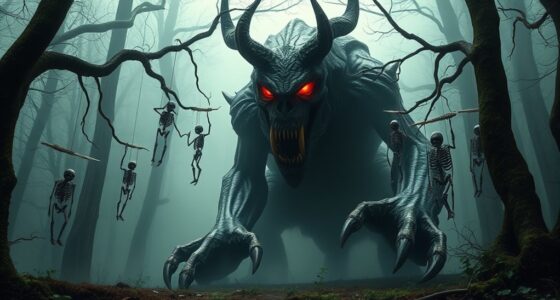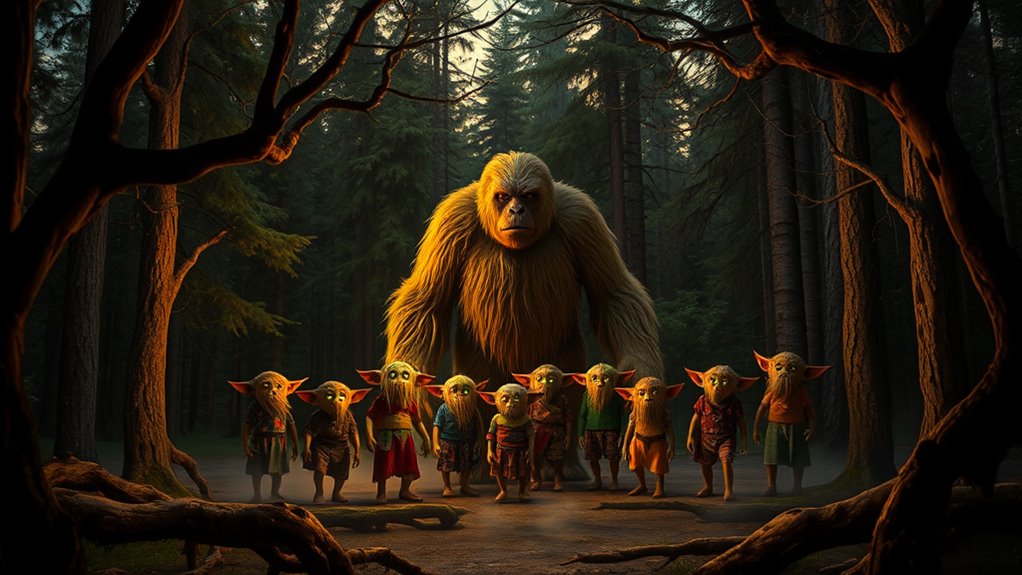

Many monsters, once thought to be solitary predators, actually form complex social bonds similar to humans. Sasquatches share food, communicate through sounds, and live in small groups with clear hierarchies, while goblins build tight-knit communities with roles and leaders. These behaviors show monsters value relationships, cooperation, and community just as much as any social species. If you keep exploring, you’ll discover even more surprising insights into their intriguing social lives.
Key Takeaways
- Monster friendships often form through gestures like sharing food, grooming, and vocalizations, demonstrating complex social bonds.
- Social hierarchies and community roles resemble human societies, with leaders and organized group activities.
- Monsters communicate using a variety of sounds and gestures, fostering cooperation and territorial understanding.
- Even solitary species like Chupacabra and Mothman exhibit subtle signals indicating social interactions.
- These behaviors challenge stereotypes, revealing that monsters have emotional capacities and community ties similar to humans.

Have you ever wondered what monsters do when they’re not scaring or battling heroes? It might surprise you to learn that many monsters have complex social lives just like humans do. They form monster friendships, develop social bonds, and engage in creature social behaviors that help them survive and thrive in their mysterious worlds. These social interactions reveal a side of monsters that’s often overlooked, showing that they’re capable of companionship, cooperation, and even loyalty. Whether it’s a solitary Sasquatch roaming the forests or a bustling community of goblins, these creatures display behaviors that mirror many aspects of human social life.
Monster friendships often start with simple gestures—shared food, mutual protection, or playful interactions. For instance, a Bigfoot might be seen exchanging signals with others of its kind, establishing trust over time. These friendships aren’t just about companionship; they serve practical purposes as well. Social bonds can help monsters defend against threats, hunt more efficiently, or share crucial information about their environment. Creature social behaviors can include grooming, vocalizations, and territorial marking, all of which reinforce social hierarchies and alliances. These behaviors demonstrate that monsters are far from the mindless beasts many stories depict; instead, they possess intricate social structures that help them navigate their worlds. Additionally, research into animal social behaviors provides valuable insights into the complex interactions that may exist in monster societies.
Monster friendships start with gestures like sharing food and playful interactions, building trust and social bonds.
In some cases, monsters live in tight-knit communities where cooperation is essential. Goblin societies, for example, often function like small villages, with roles and responsibilities distributed among members. They communicate through a range of sounds and gestures, creating a social fabric that keeps their community functioning smoothly. These groups often have leaders or elders who mediate disputes and organize group activities. Such creature social behaviors foster a sense of belonging and stability, even in environments that are often dangerous or unpredictable.
Even solitary monsters, like the elusive Chupacabra or the mysterious Mothman, still exhibit social behaviors when they encounter others. They may send signals or leave traces that suggest they’re not entirely isolated. These interactions can be subtle but meaningful within their ecosystems. Overall, the social lives of monsters reveal a fascinating complexity that challenges their stereotypes as lone predators or lurking threats. Instead, they’re communities of creatures with emotions, relationships, and social bonds that help them survive and adapt. When you look beyond the myths and legends, you start to see monsters as beings with social needs and connections—just like us, in their own extraordinary ways.
Top picks for "social monster solitary"
As an affiliate, we earn on qualifying purchases.
Frequently Asked Questions
Do Monsters Have Family Structures Like Humans?
You might wonder if monsters have family structures like humans. While details vary, many monsters engage in monster mating rituals, forming bonds similar to human partnerships. They often experience monster childhood development, nurturing their young until they’re strong enough. Some monsters live in social groups or communities, indicating complex relationships, while others remain solitary. So, yes, certain monsters do have family-like structures, showcasing diverse social behaviors across different species.
How Do Monsters Communicate Across Different Species?
You observe that monsters communicate through unique monster slang, which helps them understand each other despite species differences. They often develop signals, gestures, or sounds for interspecies alliances, fostering cooperation. Some use visual cues or scent markings, while others share stories or chants to bridge gaps. This effective communication enables diverse monster communities to work together, build trust, and navigate their worlds despite their distinct languages and behaviors.
Are Monster Societies Based on Hierarchies or Egalitarian?
You might be surprised to learn that many monster societies blend hierarchical dominance with egalitarian communities. In some tribes, a strong leader guides decisions, but members share responsibilities equally in daily life. It’s a coincidence that these worlds often mirror human social structures, highlighting how monsters adapt to their environment. Whether hierarchical or egalitarian, their societies reflect resilience and complex relationships that keep their communities thriving and unified.
What Role Do Monsters Play in Local Folklore?
You see monsters in local folklore as symbols of nature’s mysteries and cultural values. They often embody stories of cryptid conservation and reflect their origins, helping communities preserve their heritage. By sharing tales of monster origins, you keep folklore alive, fostering respect and understanding. These stories also remind you of the importance of protecting elusive creatures, ensuring their survival amidst modern changes.
Can Monsters Experience Emotions Like Empathy or Love?
Imagine monsters as mirrors reflecting human emotions—they can indeed experience empathy and love. You see, monster friendships and emotional bonds weave a tapestry of connection, just like ours. They feel joy when helping friends or sorrow during loss. Though different in form, their capacity for emotion runs deep, proving that even creatures of myth can harbor the complex feelings that make us truly human.
Conclusion
As you explore the tangled web of monster communities, you realize these creatures aren’t just shadows in the night—they’re vibrant threads in a vast, unseen tapestry. From solitary sasquatches to bustling goblin gatherings, their social lives pulse with stories and secrets. Just like a hidden forest teeming with life, their worlds remind you that even the most mysterious beings thrive in the warmth of connection, turning darkness into a dance of shared existence.