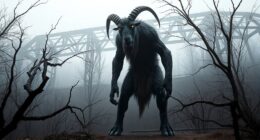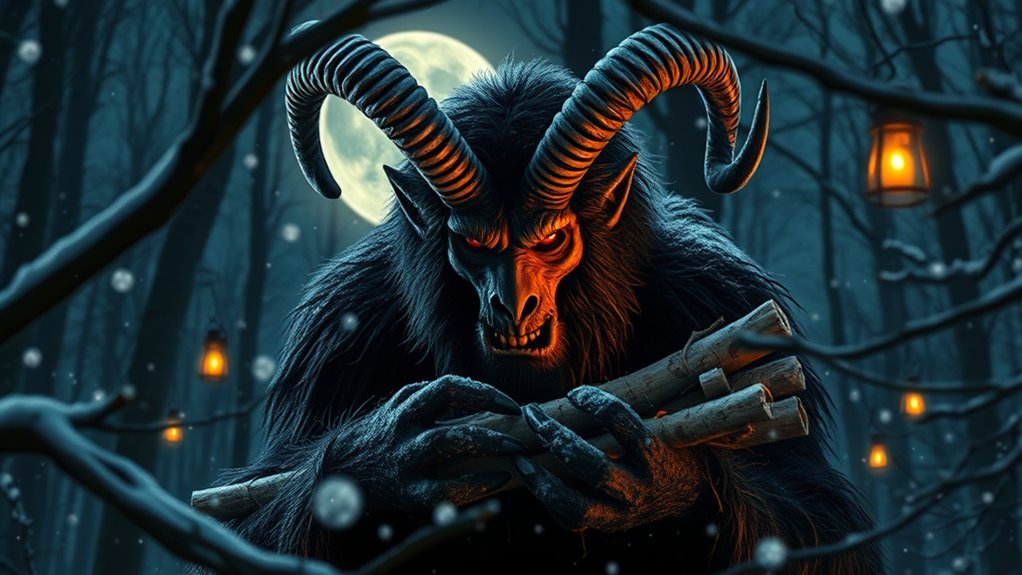

Krampus is a key figure in Germanic Christmas traditions, symbolizing the wild, chaotic side of the season. Originating from ancient pagan myths, he’s portrayed as a horned, beastly creature often shown with chains and a snarling tongue. During Krampusnacht on December 5th, he punishes misbehaving children, balancing Santa’s goodwill. His role highlights the darker aspect of holiday folklore, blending old myths with modern customs. To explore more fascinating details about this legendary creature, keep going.
Key Takeaways
- Krampus originates from ancient European myth and pre-Christian pagan traditions, symbolizing chaos and wild nature.
- He is depicted as a horned, beastly figure with chains, embodying fear and disorder in Germanic folklore.
- Krampus acts as a Christmas enforcer, punishing misbehaving children during the December 5th Krampusnacht celebration.
- His story blends pagan and Christian elements, reflecting cultural transitions in Germanic Christmas traditions.
- Modern popularity of Krampus includes festivals, movies, and parades, emphasizing his role as a symbolic Christmas beast.
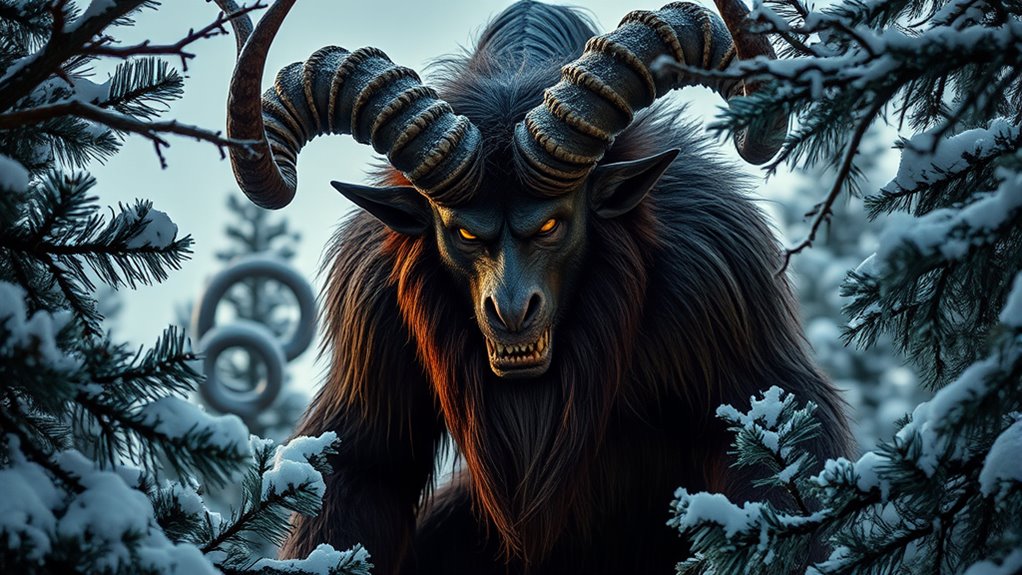
Have you ever wondered about the origins of the intimidating Christmas figure known as Krampus? If so, you’re not alone. Krampus is a fascinating part of holiday folklore, a creature that has captivated people’s imaginations for centuries. As a mythical creature, Krampus stands out because he combines elements of fear and tradition, making him a distinctive figure in the landscape of European holiday stories. You might picture him as a horned, beastly figure with a long, snarling tongue and chains clanking around him—an embodiment of chaos during a season often associated with joy and goodwill. His presence in folklore is a reminder that holiday traditions often carry complex messages, blending celebration with cautionary tales.
In the sphere of mythical creatures, Krampus is unique. Unlike Santa Claus, who embodies giving and kindness, Krampus acts as a sort of enforcer or punisher. He’s said to patrol the night during the Yuletide season, especially on December 5th, the night known as Krampusnacht in parts of Germany and Austria. On this night, families believe Krampus comes to punish misbehaving children, often by swatting them with birch branches or hauling them away in his sack. This duality—Santa representing reward and Krampus representing consequence—adds a layer of depth to holiday folklore. It’s a way of teaching children about good behavior through a mythic figure who embodies both the fear of discipline and the excitement of folklore storytelling.
You might find it intriguing that Krampus’s origins are deeply rooted in ancient myth. His image and stories trace back to pre-Christian pagan traditions, where horned beasts often symbolized wild nature and chaos. Over centuries, these mythic elements blended with Christian influences, creating the character we now recognize. Today, Krampus has seen a resurgence in popular culture, from festivals and parades to horror movies, but at his core, he remains a creature born from the rich tapestry of European myth and holiday folklore. His role as a mythical creature who balances the spirit of Christmas with a touch of menace makes him a compelling symbol of the season’s complexity. Additionally, modern interpretations often highlight his symbolic significance, reflecting the enduring nature of myth in cultural traditions.
Frequently Asked Questions
How Did Krampus Originate in Germanic Folklore?
You’ll find that Krampus originates from medieval origins rooted in pagan symbolism, where he represented the darker side of winter festivities. As part of Germanic folklore, he was believed to embody chaos and the wild, primal forces of nature. Over time, these pagan elements blended with Christian traditions, transforming Krampus into a figure who punishes misbehaving children, maintaining his role as a symbol of both fear and seasonal shift.
Are There Modern Celebrations Involving Krampus?
Yes, there are modern celebrations involving Krampus. You can see people donning krampus costumes during lively krampus parades, especially in Austria and Germany. These events feature participants dressed as the feared creature, often with bells and chains, creating a festive yet spooky atmosphere. The parades attract tourists and locals alike, celebrating the myth with music, dancing, and tradition, keeping Krampus alive in contemporary holiday festivities.
What Are the Differences Between Krampus and Santa Claus?
You notice that Santa Claus is a friendly, jolly figure who brings gifts and joy, while Krampus is a scary, horned creature who punishes naughty children. The myth vs tradition plays a big role here; Santa’s story is more modern reinterpretations emphasizing kindness, whereas Krampus retains darker roots. You see many celebrations blending these elements today, highlighting the contrast between the cheerful and the sinister in holiday folklore.
How Has Krampus Influenced Popular Culture Worldwide?
Krampus has profoundly shaped pop culture, sparking sensationalized stories, spooky movies, and merchandise marvels. You see his sinister silhouette in seasonal specials, spooky costumes, and collectible figures worldwide. His myth, molded into modern media, makes him a memorable mascot of mischievous mayhem, motivating movie marathons and merchandise madness. This monstrous figure’s influence invites you to explore a darker, delightful side of holiday traditions, blending tradition with trending pop culture phenomena.
Are There Regional Variations of Krampus Across Europe?
You’ll find regional variations of Krampus across Europe, reflecting local folklore and cultural adaptations. In Austria and Germany, he’s often depicted as a horned, frightful figure, while in other areas like Slovenia and Croatia, similar creatures appear with unique traits. These differences highlight how local traditions shape the character’s appearance and role, making Krampus a versatile figure that adapts to regional cultural narratives and festive customs throughout Europe.
Conclusion
As you step back from the shadowed depths of Krampus’s legend, you realize he’s more than just a monstrous figure—he’s the dark mirror reflecting humanity’s own fears and desires. His horns and chains echo the chaos lurking beneath the festive cheer, reminding you that Christmas isn’t just about joy but also about confronting the shadows within. In this icy dance of light and dark, you see how legends carve themselves into the soul, forever haunting your holiday dreams.