
TL;DR

Prime made for students and young adults
- Fast, free delivery for dorm and study essentials
- Prime Video and Amazon Music included
- Member-only deals
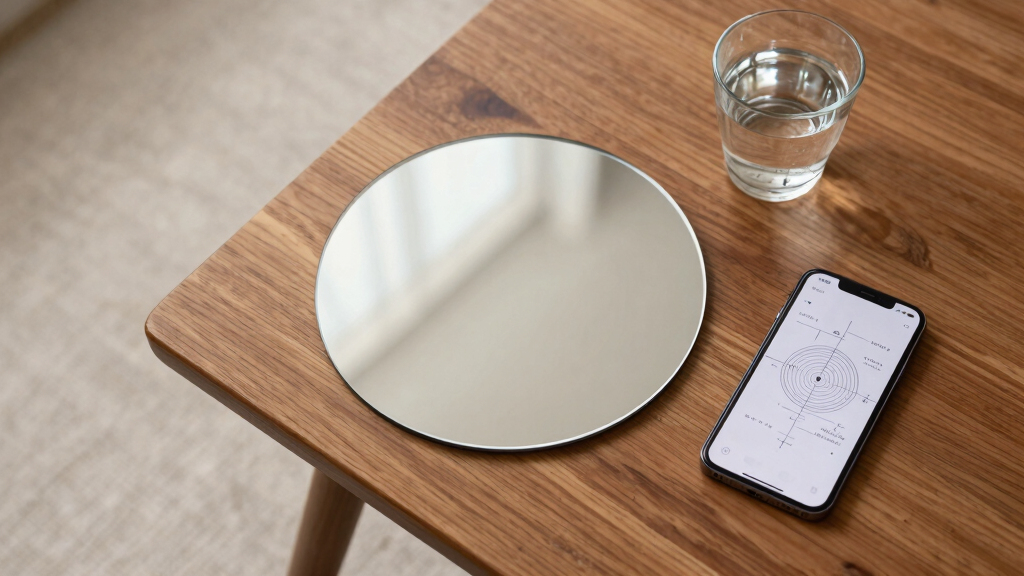
The FCC has approved a test of a space mirror intended to reflect sunlight and brighten the night sky. This marks a significant step in space-based lighting technology but raises environmental concerns. Details on the deployment timeline and impact are still emerging.
The FCC has approved a proposal to conduct a test of a space-based mirror designed to reflect sunlight and increase illumination of the night sky. This decision marks a significant development in space technology and environmental experimentation, with potential implications for urban lighting and climate intervention efforts.
The Federal Communications Commission (FCC) granted approval for a private company to proceed with testing a large space mirror that will reflect sunlight toward Earth in a controlled manner. The project aims to evaluate the feasibility of using space mirrors to augment natural lighting, potentially reducing reliance on terrestrial energy sources for lighting and addressing issues like light pollution.
According to the FCC, the test is scheduled for later this year. The mirror will be deployed at an altitude of approximately 600 kilometers, and the company involved has stated that the experiment will last several weeks, with close monitoring of environmental and safety impacts. The FCC emphasized that the project complies with existing regulations and safety standards.
Potential Impact on Night Sky and Climate Interventions
This approval signals a new phase in space-based lighting technology and could influence future efforts to manipulate natural light for environmental or urban purposes. While proponents argue it could help reduce energy consumption and light pollution, critics raise concerns about environmental risks, space debris, and light pollution impacts on ecosystems and astronomical observations.
Popular right now

Hisense 85 U6 Pro Series Mini-LED ULED 4K UHD HDR Gaming AI Smart Fire TV (85U6SF Pro)

TCL 85-Inch QM6K Series QLED Mini LED 4K HDR Smart Google TV

TCL 85 Designer Series QD-Mini LED TV (Model 85A400U) with Google Smart TV
As an affiliate, we earn on qualifying purchases.
Background on Space Mirrors and Regulatory Approvals
The concept of using space mirrors to reflect sunlight has been discussed in scientific and engineering circles for decades, primarily as a potential tool for climate intervention. Recent years have seen increased interest from private companies and governments in deploying space-based reflectors for various purposes, including weather modification and urban lighting.
The FCC’s approval follows a series of regulatory reviews of space-based experiments, with this project being among the first to focus explicitly on lighting the night sky. Previous proposals faced scrutiny over environmental and safety concerns, but the current approval indicates a cautious acceptance of controlled testing.
“The FCC’s approval reflects our commitment to supporting innovative experiments that adhere to safety and environmental standards.”
— FCC spokesperson
Unresolved Questions About Environmental and Space Safety
It is not yet clear how the space mirror will impact local ecosystems, astronomical observations, or space debris. Experts have raised concerns about long-term environmental effects and space safety, but detailed assessments are still pending. The exact deployment timeline and regulatory oversight beyond initial approval remain unclear.
Next Steps for Testing and Environmental Monitoring
The company plans to conduct the initial test later this year, with ongoing monitoring and data collection. Regulatory agencies will review the results to determine if further experiments are warranted. Additional assessments are expected to evaluate environmental impacts and space safety protocols before any larger-scale deployment.
Key Questions
What is the purpose of the space mirror test?
The test aims to evaluate whether a space-based mirror can effectively reflect sunlight to illuminate the night sky, potentially reducing energy use and light pollution.
Are there environmental risks associated with this test?
Yes, experts have raised concerns about potential impacts on ecosystems, astronomical observations, and space debris, but detailed environmental assessments are still underway.
When will the test take place?
The company plans to conduct the initial test later this year, with exact dates to be announced closer to deployment.
Could this technology be used on a larger scale?
Potentially, if successful and deemed safe, space mirrors could be used for urban lighting, climate intervention, or other applications, but regulatory and environmental hurdles remain.
How does this differ from previous space experiments?
This project is among the first focused specifically on testing space mirrors for lighting purposes under current FCC regulations, marking a new phase in space-based environmental experiments.
Source: hn