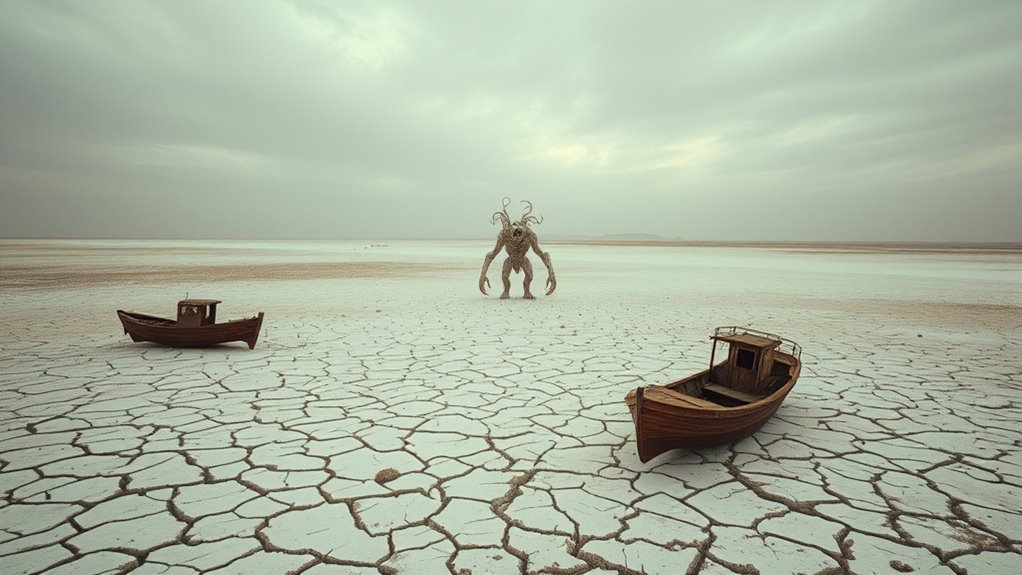

The Monster of the Aral Sea reflects the region’s environmental disaster, where shrinking waters and abandoned ships create eerie legends. Local stories tell of giant shapes lurking beneath the cracked surface, symbolizing ecological neglect. As the once-vibrant sea turns into a wasteland, these myths capture the despair caused by human mismanagement and pollution. If you want to uncover how this legend intertwines with ecological and cultural aspects, there’s much more to explore.
Key Takeaways
- The Monster of the Aral Sea is a local legend linked to the region’s ecological collapse and environmental despair.
- Shrinking water levels and abandoned ships contribute to sightings of mysterious, shadowy shapes beneath the surface.
- Scientific explanations suggest submerged debris and natural water phenomena may create illusions of a monster.
- The legend symbolizes ecological neglect, environmental suffering, and warns against human mismanagement of natural resources.
- The myth persists as a cultural reminder of the region’s ecological disaster and the fragility of aquatic ecosystems.

Once a vast and thriving body of water, the Aral Sea has transformed into a haunting shadow of its former self, giving rise to the legend of the Monster of the Aral Sea. As you explore this desolate landscape, you might hear stories whispered by locals about strange, mythical sightings—giant shapes lurking beneath the cracked, salty surface. These tales have persisted for decades, fueled by the eerie silence and the abandoned ships stranded in the desert-like environment. Many believe that these sightings are more than just folklore; they’re a reflection of the ecological impact that has ravaged the region. The shrinking of the sea, caused by human activity and mismanagement of water resources, has created an environment ripe for myth-making. The ecological impact is profound, turning once vibrant aquatic ecosystems into barren wastelands. Fish populations have all but disappeared, and the water that remains is highly saline and polluted, making it inhospitable for most forms of life. This ecological collapse has led to a stark, surreal landscape where the remnants of the sea seem to haunt the horizon, feeding the legend of a monster that lurks beneath the surface. Locals and scientists alike have reported seeing strange, shadowy figures in the distance—massive, unidentified shapes that seem to move with the currents or rest beneath the crusted salt flats. These sightings, whether real or imagined, intensify the myth of a monster that has come to symbolize the ecological disaster. The legend persists partly because the ecological impact of the sea’s shrinkage is so visible and devastating. It’s as if the very environment has conjured up a creature to represent its suffering and loss. You might wonder if these sightings are mere hallucinations born from despair or the result of natural phenomena, like submerged debris or unusual water movements, magnified by the stark landscape. Moreover, scientific studies have examined submerged debris and natural water movements that could explain some of these sightings. Yet, the myth endures, woven into the cultural fabric of the region, reminding everyone of what once thrived here and what has been lost. The ecological impact has not only transformed the physical landscape but also the stories we tell about it. The Monster of the Aral Sea, whether a figment of imagination or an actual creature, stands as a haunting symbol of environmental neglect and a warning for future generations. Its legend continues to grow, echoing through the barren silence, as a reminder of nature’s fragility and the consequences of human interference.
Frequently Asked Questions
What Is the Origin Story of the Aral Sea Monster Legend?
You might find that the legend of the Aral Sea monster stems from mythical origins rooted in local folklore. Over time, stories evolved through folklore evolution, blending fears of the shrinking sea and mysterious sightings. Villagers once believed a creature lurked beneath the waters, symbolizing nature’s wrath. This folklore transformed into legends, fueling imaginations and preserving cultural stories about the sea’s tragic decline and its mythical guardians.
Have There Been Recent Sightings of the Supposed Creature?
You’ve probably heard rumors of recent cryptid sightings in the Aral Sea, fueling folklore preservation efforts. While some claim to see strange shapes emerging from the shrinking waters, skeptics remain unconvinced. These tales keep the legend alive, sparking curiosity and fear. Whether real or imagined, the stories persist, reminding us how legends adapt to changing landscapes and the human need for mystery amidst environmental disaster.
How Do Local Communities Perceive the Monster Today?
You’ll find that local communities today view the monster through a blend of mythical beliefs and community narratives. Many see it as a symbol of the sea’s mysterious past, often dismissing it as legend. However, some still hold onto stories passed down through generations, keeping the myth alive. For these communities, the monster remains a powerful part of their cultural identity, blending tradition with the environmental history of the Aral Sea.
What Scientific Efforts Are Underway to Study the Aral Sea’s Ecosystem?
Ever wonder how scientists are tackling the Aral Sea’s ecological crisis? They use satellite monitoring to track changes in water levels, salinity, and habitat loss. Efforts focus on ecological restoration, aiming to revive some aquatic life and stabilize the environment. These scientific initiatives help understand the ongoing devastation and guide sustainable solutions, ensuring future generations can witness a healthier Aral Sea. Are we doing enough to restore this essential ecosystem?
Could Climate Change Influence the Legend’s Persistence?
Climate impacts could definitely influence myth persistence around the Aral Sea monster. As the environment changes and the sea shrinks, local stories may become more vivid or exaggerated, fueling the legend. You might notice that as water levels drop and the ecosystem deteriorates, people cling more to myths for cultural identity or explanations. These stories become intertwined with climate impacts, making the legend more resilient over time.
Conclusion
You can see how the monster of the Aral Sea symbolizes the devastating environmental impact humans have caused. Imagine a small fishing village once thriving on the sea’s bounty now empty, with locals telling stories of a strange creature lurking in the desolate waters. This legend reflects not just fears of a creature, but the reality of ecological collapse. If we don’t act, future generations might only know the Aral Sea through stories and ghostly legends.