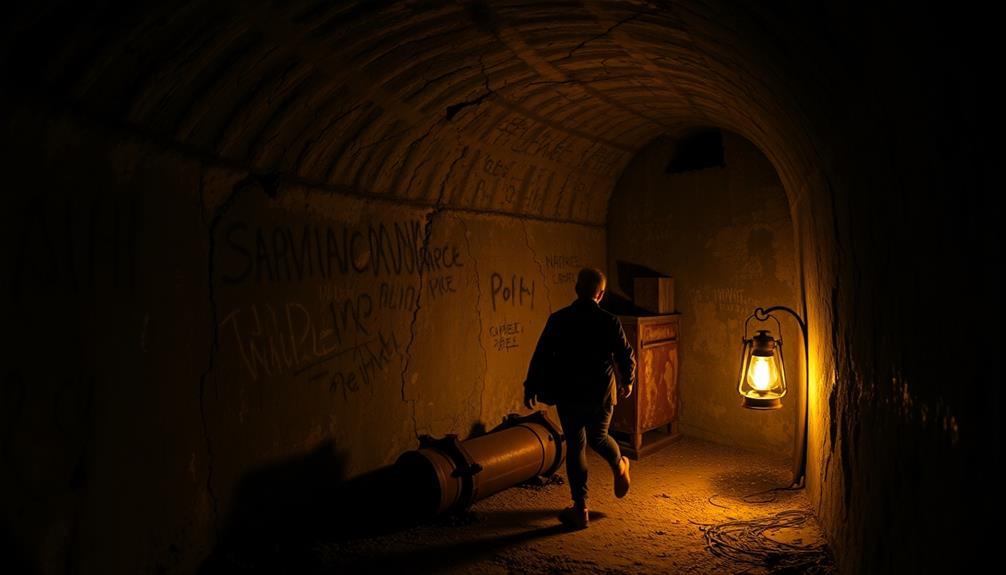
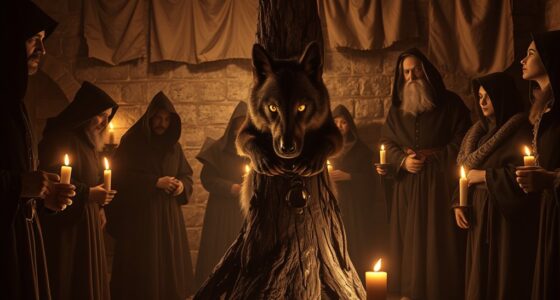
The Aufhocker is a feared German shapeshifter and sleep demon from folklore. It’s known for sitting on your chest during sleep and transforming into beasts, silhouettes, or household objects to embody natural fears of darkness and the unknown. Legends describe it as a malevolent force that causes nightmares and paralysis, serving as a warning to stay safe and vigilant. If you want to uncover more about this eerie creature, there’s much more to explore.
Key Takeaways
- The Aufhocker is a German folklore creature believed to be a shapeshifting sleep demon that sits on people’s chests during sleep.
- It originated from rural European superstitions, serving as an explanation for nightmares and sleep paralysis.
- The creature can transform into animals, silhouettes, or household objects to frighten victims.
- Legends portray the Aufhocker as a malevolent force embodying fears of darkness and the unknown.
- Its stories highlight cultural efforts to interpret, control, and warn against nocturnal supernatural threats.
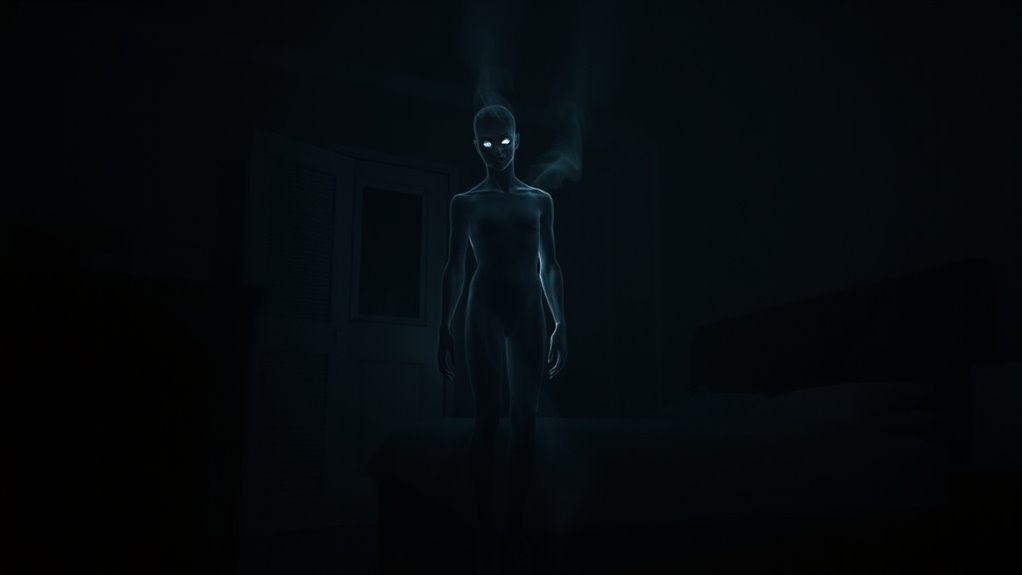
In German folklore, the Aufhocker is feared as both a shapeshifter and a sleep demon that preys on the vulnerable during the night. This creature’s origins are rooted in supernatural legends passed down through generations, and understanding these folklore origins helps reveal why it remains such a haunting figure. The Aufhocker’s story is woven into the fabric of European folklore, where it embodies fears about the unseen dangers lurking in darkness. Its supernatural legends serve as cautionary tales, warning people about the perils of neglecting safety and the importance of guarding against malevolent spirits that take advantage of vulnerability.
The folklore origins of the Aufhocker trace back centuries, with tales emerging from rural communities where superstitions thrived and stories of spirits and demons were common. These legends often described the creature as a malevolent force that would sit on a person’s chest or back while they slept, causing nightmares, paralysis, or a feeling of intense pressure. Over time, stories evolved, and the Aufhocker became known not just as a sleep demon but also as a shapeshifter capable of transforming into various forms — sometimes a beast, a silhouette, or even a familiar household object. This shapeshifting ability heightened the creature’s terrifying reputation, making it a symbol of the unpredictable and dangerous forces believed to exist beyond the natural world. Additionally, these legends often emerged from attempts to explain sleep paralysis and other mysterious nocturnal experiences that people encountered, helping to make sense of the unexplainable.
The Aufhocker’s legends depict a shapeshifting malevolent force haunting rural communities and embodying unpredictable, dangerous supernatural fears.
You might wonder why such supernatural legends persisted for so long. In many cases, these stories stem from attempts to explain sleep paralysis, nightmares, or sudden nighttime fears that people couldn’t otherwise understand. The Aufhocker became a personification of these mysterious experiences, a tangible threat that could be feared and warded off. Its folklore origins reveal a deep-seated need to interpret the unknown, turning natural fears into stories with moral lessons or warnings. These legends often emphasized the importance of maintaining good health, avoiding certain behaviors, or adhering to social norms to keep the malevolent spirit at bay.
As you delve into these legends, you realize that the Aufhocker’s supernatural legends reflect broader cultural fears about darkness and the unseen. They serve as a reminder of how folklore origins shape our understanding of the world and the mysterious forces we believe inhabit it. The creature’s shapeshifting nature also emphasizes the idea that danger isn’t always what it seems — it can disguise itself in many forms, lurking in the shadows and striking when you least expect it. Learning about these supernatural legends offers a fascinating glimpse into how ancient storytellers sought to explain and control their fears, turning the unknown into stories that continue to captivate and warn.
Top picks for "aufhocker german shapeshifter"
Open Amazon search results for this keyword.
As an affiliate, we earn on qualifying purchases.
Frequently Asked Questions
What Cultural Origins Does the Aufhocker Have?
You should know that the Aufhocker has cultural origins rooted in German folk belief and mythological origins. This shapeshifter and sleep demon comes from traditional stories passed down through generations, where it’s believed to haunt sleeping individuals. Its mythological roots reflect fears and superstitions about sleep disturbances, making it a significant figure in regional folklore. You’ll find that the Aufhocker embodies ancient German cultural ideas about dreams, spirits, and nighttime dangers.
Are There Modern Sightings of the Aufhocker?
You might hear about modern sightings of the Aufhocker, especially during sleep paralysis episodes, where folklore influence blurs reality. People report feeling a shivering presence, sensing a shapeshifter lurking in the shadows, and experiencing strange sensations reminiscent of old legends. While these stories are rare, they persist in local tales, fueling curiosity and fear. The Aufhocker remains a haunting part of contemporary folklore, bridging history and modern supernatural experiences.
How Does the Aufhocker Choose Its Victims?
You’re likely targeted during sleep paralysis, when the Aufhocker’s folklore origins come into play. It chooses victims who experience vivid, unsettling dreams or feel vulnerable in their sleep. You might notice its presence when your body is paralyzed, and it feeds on fear and helplessness. Its selection seems tied to your subconscious fears, making you more susceptible during moments of sleep vulnerability and heightened anxiety.
Can the Aufhocker Be Warded off or Protected Against?
Yes, you can ward off the Aufhocker using protective charms and ritual practices. Carrying symbols like iron or specific talismans can deter its presence, while performing rituals such as burning sacred herbs or reciting protective prayers can create a barrier. Be consistent with these practices, especially before sleep, to reduce the chance of it targeting you. Staying vigilant and maintaining a strong spiritual routine helps keep you safe from this shapeshifter and sleep demon.
What Psychological Effects Are Associated With Encounters?
Encountering the Aufhocker can lead to psychological effects like intense fear, anxiety, and sleep paralysis. You might experience dream invasion, feeling as if your dreams are being manipulated or intruded upon. These experiences can cause lingering paranoia or dread about sleep, disrupting your rest and mental well-being. It’s essential to stay calm and grounded, as panic can worsen feelings of helplessness during such encounters.
Conclusion
As you drift through restless nights, remember the Aufhocker’s silent watch. Like a shadow’s whisper, it can shift and slip through your dreams, a reminder that some fears hide just beyond the veil. Stay alert, for in the dance between wakefulness and sleep, the shapeshifter lurks, waiting to remind you that not all darkness is gone when dawn arrives. Keep your doors closed—some demons are better left unseen.