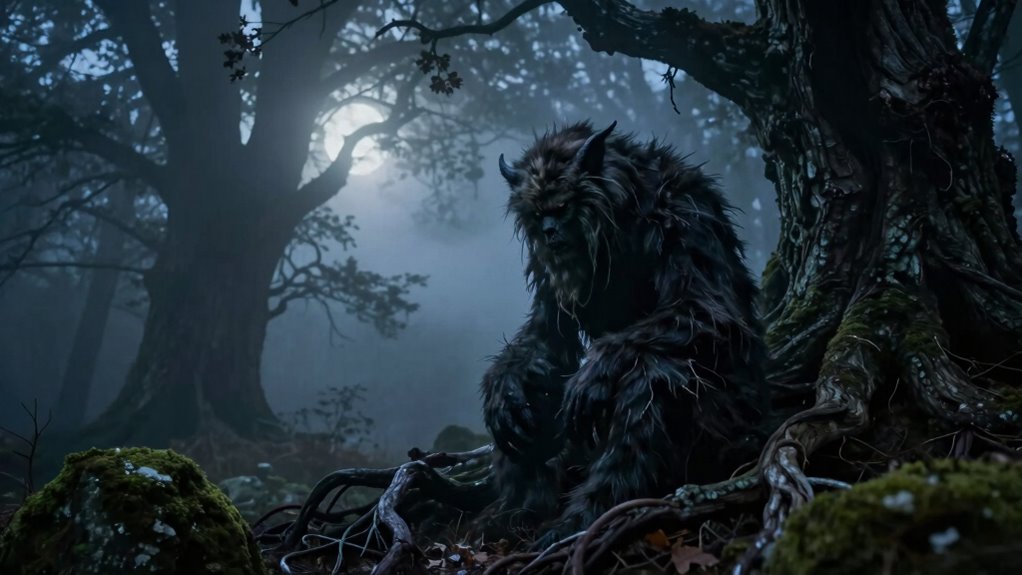

The Morbach Monster is a key part of Germany’s werewolf legacy, rooted in folklore that mixes fear, superstition, and cultural identity. You’ll find stories of shape-shifting creatures, often seen as wolves or humanoids, passed down through generations. These legends reflect deep connections to nature and serve to reinforce community bonds. While scientific explanations exist, these myths still thrive, showing how folklore shapes local culture. Keep exploring to discover even more about this intriguing legend.

Prime made for students and young adults
- Fast, free delivery for dorm and study essentials
- Prime Video and Amazon Music included
- Member-only deals
Key Takeaways
- The Morbach Monster is rooted in local folklore, symbolizing primal fears and the wildness of nature in German tradition.
- Sightings describe shape-shifting entities between wolf-like and humanoid forms, reflecting Germany’s werewolf legends.
- Legends serve as cultural explanations for unexplainable phenomena, reinforcing social cohesion and community identity.
- Modern interpretations view the monster as part of Germany’s rich werewolf legacy, blending myth with cultural heritage.
- Folklore continues to influence local storytelling, festivals, and cultural identity, keeping the legend alive across generations.
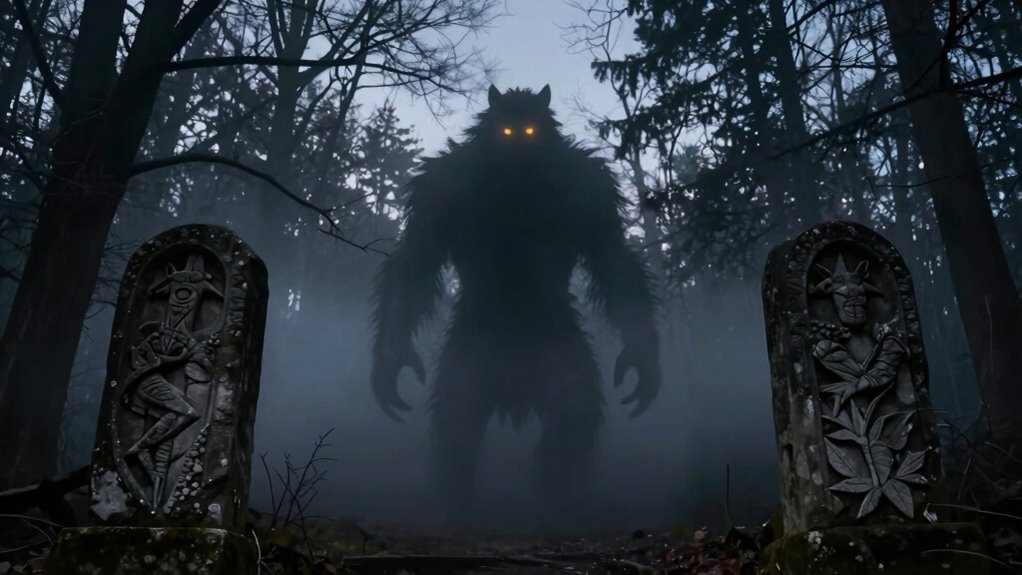
In the forests and villages of Germany, legends of shape-shifting creatures have persisted for centuries, with the Morbach Monster standing out as one of the most intriguing. This mysterious cryptid has captured imaginations through countless cryptid sightings, fueling local folklore and sparking curiosity among both residents and visitors alike. You might wonder how such stories began and what truths, if any, lie behind these legends. The folklore origins of the Morbach Monster are deeply rooted in old tales that blend fear, superstition, and cultural identity. Historically, villagers would whisper about strange tracks, eerie howls, or sightings of a beast lurking near the woods, often interpreted as a werewolf or similar creature. These sightings, passed down through generations, helped cement the monster’s place in local mythology, creating a sense of mystery and caution that endures today.
Your curiosity might lead you to explore the pattern of cryptid sightings associated with this creature. Many reports describe a creature that shifts in form, sometimes appearing as a wolf, other times as a humanoid beast. These stories aren’t isolated; they form part of a broader tradition of shape-shifting legends across Germany, where fears of the supernatural often intertwined with real-world experiences. The folklore origins suggest that such creatures symbolize the wildness of nature and the primal fears of humans living close to the forest’s edge. Some stories even suggest that the Morbach Monster was a cursed individual or a guardian spirit misunderstood by those who encountered it. Over time, these tales became a way for communities to explain unexplainable phenomena, reinforce social norms, or simply entertain with tales of the uncanny. Additionally, these legends reflect a deep cultural connection to the natural environment and human imagination. Recognizing the historical context of these stories helps us understand their enduring significance in local culture. Moreover, modern scientific explanations often attempt to rationalize sightings, but the cultural significance of these legends continues to thrive in local storytelling and festivals. Interestingly, the persistence of such stories demonstrates how folklore can serve as a cultural identity that transcends scientific understanding.
As the legend evolved, local authorities and villagers sometimes dismissed sightings as misidentifications of animals or overactive imaginations. Yet, the stories persisted, bolstered by anecdotal evidence and the human tendency to believe in the extraordinary. Today, the Morbach Monster remains a symbol of Germany’s rich werewolf legacy, embodying a blend of folklore, fear, and fascination. Whether you see it as a mere myth or a remnant of ancient beliefs, these stories serve as a reminder of how deeply rooted the idea of shape-shifting creatures is in human culture. They challenge you to consider the thin line between myth and reality, urging you to keep an open mind when encountering legends that have stood the test of time.
As an affiliate, we earn on qualifying purchases.
Frequently Asked Questions
Are There Any Modern Sightings of the Morbach Monster?
There haven’t been any recent cryptid sightings of the Morbach Monster, but folklore origins keep the legend alive. You might come across local stories or occasional reports, though they lack concrete evidence. As with many cryptids, sightings often stem from folklore and imagination rather than verified encounters. If you’re interested, exploring local legends can give you a fascinating glimpse into how such creatures continue to inspire mystery and storytelling today.
How Does the Morbach Monster Compare to Other European Werewolf Legends?
You’ll find that the Morbach Monster shares similarities with other European werewolf legends, much like a patchwork quilt of folklore variations. Unlike the romanticized werewolves of France or the bloodthirsty beasts of Eastern Europe, the Morbach Monster’s stories are more mysterious, often rooted in local urban legends. Its reputation, like a shadow cast by folklore, echoes across Germany, blending history and myth in a way that’s uniquely its own.
What Rituals or Folklore Are Associated With Werewolf Hunters in Germany?
You’ll find that German werewolf hunters often relied on ancient rituals and folklore traditions to protect themselves and ward off evil spirits. These rituals included blessed amulets, prayer, and specific chants believed to repel werewolves. Hunters also used silver or iron tools, following old superstitions passed down through generations. Such practices were deeply rooted in local folklore, emphasizing the importance of spiritual protection against supernatural threats.
Has Scientific Research Ever Investigated the Morbach Monster?
Scientific research has rarely investigated the Morbach Monster, as cryptid folklore often lacks concrete evidence. You should know that most scientists approach such legends with skepticism, viewing them as intriguing stories rather than factual discoveries. While local legends persist, credible scientific inquiry into the creature remains limited, mainly due to a lack of verifiable data. So, if you’re curious, keep in mind that scientific skepticism dominates the investigation of creatures like the Morbach Monster.
Are There Annual Festivals Celebrating Germany’s Werewolf Heritage?
Yes, several annual festivals celebrate Germany’s werewolf heritage and its mythic creatures. You can attend events like the Wolf Festival in Morbach, which highlights the cultural symbolism of these legends. These festivals often feature storytelling, costumes, and themed activities that honor Germany’s rich folklore. By participating, you connect with the myths surrounding these mythical creatures, keeping alive the cultural symbolism that has fascinated people for generations.
As an affiliate, we earn on qualifying purchases.
Conclusion
You might find it fascinating that during the Middle Ages, over 30,000 people across Europe were accused of being werewolves, reflecting widespread fears and societal tensions. The Morbach Monster is just one example of how these legends shaped local culture and beliefs. Understanding this history reveals how fear can manifest in myths, serving as a mirror to the anxieties of those times. So, next time you hear about monsters, remember they often tell us more about ourselves than we realize.
As an affiliate, we earn on qualifying purchases.
As an affiliate, we earn on qualifying purchases.
Fall Picks
fall essentials
As an affiliate, we earn on qualifying purchases.