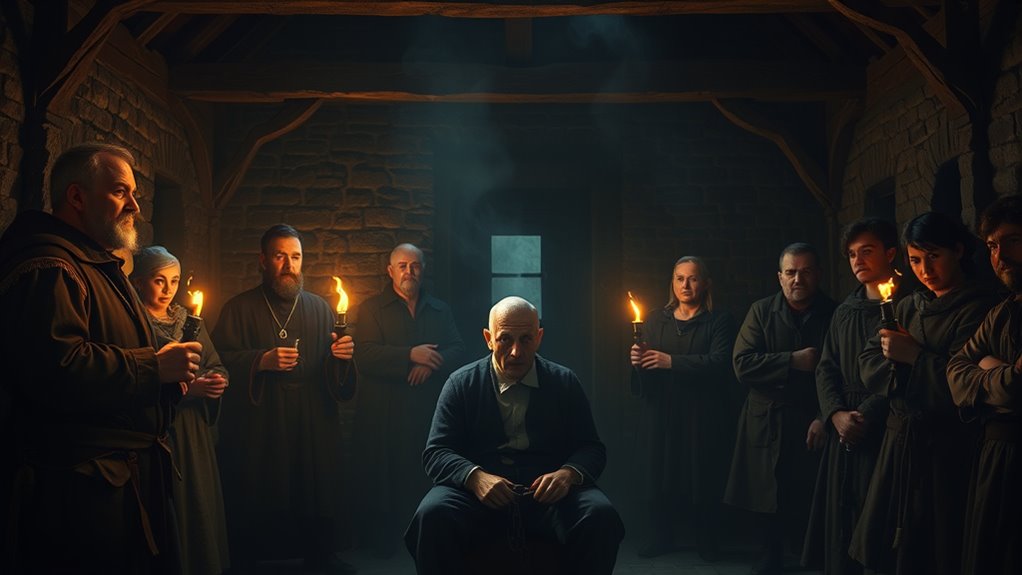

In the trial of Peter Stumpp, you see how medieval society’s fears and superstitions led to brutal justice. Accused of being a werewolf, he confessed under torture to shape-shifting and heinous acts during full moons. These accusations reflected widespread beliefs in supernatural creatures and evil pacts, often used to target those considered outsiders or witches. Understanding Stumpp’s story reveals how superstition fueled deadly persecutions—if you keep exploring, you’ll discover more about this dark chapter in history.

Get school and study supplies delivered free — and shop member deals
- Fast, free delivery on millions of items
- Access to Prime Big Deal Days deals on October 6–7
- Prime Video, Amazon Music and more included
Key Takeaways
- Peter Stumpp was tried in 1589 for alleged werewolf transformations and brutal murders in Bedburg, Germany.
- His confession claimed he transformed into a wolf during full moons to commit crimes, reflecting medieval superstitions.
- The trial involved torture to obtain confessions, highlighting the brutal justice practices of the period.
- Accusations included animal attacks, pacts with the devil, and supernatural deeds, rooted in medieval fears of evil forces.
- The case remains a significant historical and folkloric example of medieval beliefs in shape-shifting and supernatural justice.
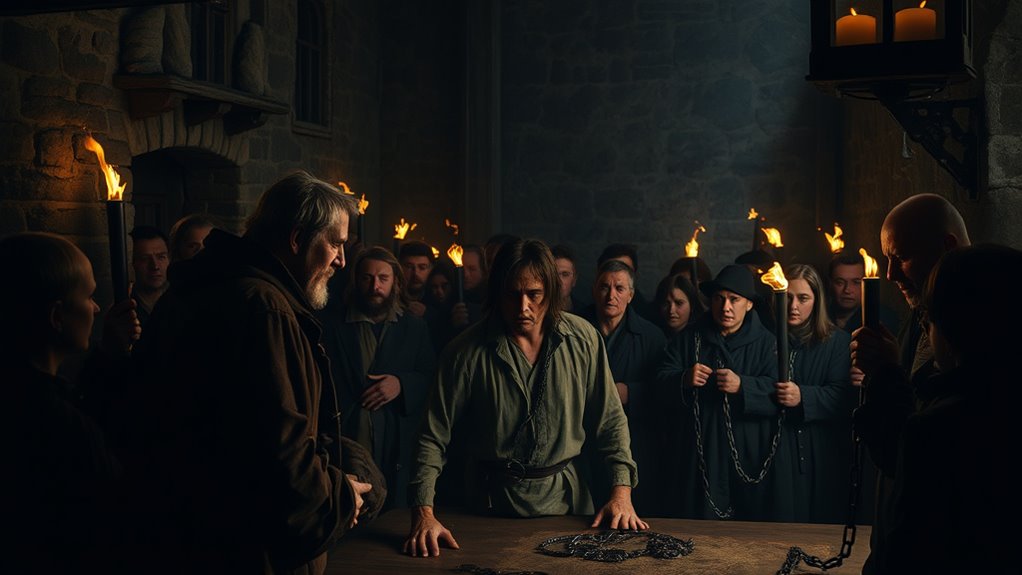
Have you ever wondered if legendary creatures like werewolves could truly exist? In the case of Peter Stumpp, the infamous figure known as the Werewolf of Bedburg, this question takes on a chilling reality. His story is rooted in the dark days of medieval justice, a time when accusations of monstrous deeds often led to brutal trials. But what made Stumpp’s case so compelling isn’t just the crimes he was accused of, but the mythic transformations that fueled local fears and legends. During that era, the idea of a human transforming into a beast was a powerful symbol of the unknown and the supernatural. People believed that such mythical transformations could happen, especially under the influence of evil or curses, which made Stumpp’s alleged metamorphosis into a wolf seem almost plausible to his contemporaries.
Stumpp’s trial was less about definitive proof and more about the harsh justice of the time. Medieval justice didn’t require the kind of evidence we expect today; instead, it relied heavily on confessions, witness accounts, and the prevailing superstitions. Accusations of being a werewolf carried heavy social and religious implications, often leading to a swift and brutal punishment. In Stumpp’s case, the accusations weren’t just about animal attacks but also included claims that he had made pacts with the devil, further fueling the medieval fear of unholy alliances. His trial became a grim spectacle, where confessions of his mythical transformations played a central role. Under torture, Stumpp allegedly admitted to being a shape-shifter, transforming into a wolf during full moons to commit heinous acts. These confessions, whether entirely truthful or manipulated by fear and coercion, fit perfectly into the medieval worldview that saw evil spirits and demonic forces behind such monstrous deeds. The use of torture methods during his trial exemplifies the brutal nature of medieval justice systems.
His story embodies how myths and fears from that time blurred the line between reality and legend. The idea of a human transforming into a beast isn’t just a story; it’s a reflection of how medieval communities understood and grappled with the unknown. The mythic concept of transformations served as a way to explain the inexplicable, often used to justify harsh punishments for those accused of witchcraft or devilry. In Stumpp’s case, his trial became a symbol of medieval justice’s brutal methods, where accusations of being a werewolf could destroy a person’s life. Today, the tale endures as a gruesome chapter in folklore, but it also reminds us of how deeply rooted fears of the supernatural once shaped justice and society.
As an affiliate, we earn on qualifying purchases.
Frequently Asked Questions
What Was Peter Stumpp’s True Fate After His Trial?
After his trial, you learn that Peter Stumpp was executed, likely by hanging, as forensic analysis and psychological profiling suggested he was a condemned criminal rather than a true werewolf. His fate was sealed by authorities who saw him as a dangerous human suspect, and history records his end as a grim execution rather than a supernatural creature. This outcome reflects the medieval tendency to interpret such cases through fear and suspicion.
Were There Any Eyewitness Accounts Beyond the Trial Records?
Eyewitness testimonies beyond the trial records are scarce, but folklore influences suggest some locals may have shared stories later. You might find tales passed down that describe sightings or encounters, blending fact and legend. These accounts, often romanticized or sensationalized, reflect how the community remembered Stumpp’s story. While concrete evidence remains limited, folklore keeps the legend alive, shaping how people perceive his supposed werewolf activities today.
How Did Local Folklore Change After the Trial?
After the trial, local folklore evolved, reinforcing superstitious beliefs about werewolves and dark forces. You’d notice stories becoming more vivid, emphasizing evil deeds and the danger of the supernatural, which kept communities wary and superstitious. The trial’s notoriety fueled folklore’s evolution, turning Peter Stumpp into a cautionary symbol of evil. These stories helped shape local traditions, blending fact with myth, and kept superstitions alive through generations.
What Methods Were Used to Suspect Someone of Werewolf Activity?
Imagine darkened rooms filled with whispers and trembling hands. You’re suspected of werewolf activity through witchcraft accusations, often based on spectral evidence—visions or dreams seen as proof. People look for signs like unusual behavior, animal attacks, or cursed objects. Authorities relied on confessions, spectral visions, and bizarre accusations, believing these signs pointed to your guilt. This chilling process turned suspicion into a dangerous hunt, fueled by fear and superstition.
Are There Any Modern Theories Explaining the Accusations?
Modern theories suggest that accusations of werewolf activity may stem from witch hunts and mass hysteria, where fear and superstition fueled suspicion. Psychological explanations propose that individuals facing social or personal crises might have experienced hallucinations or delusions, leading to accusations. These theories highlight how fear, misunderstanding, and societal pressures contributed to the witch hunts and werewolf accusations, often targeting vulnerable people during times of crisis.
As an affiliate, we earn on qualifying purchases.
Conclusion
As you reflect on Peter Stumpp’s chilling trial, remember that over 200 alleged werewolf sightings occurred across Europe during the 16th century. This statistic shows just how widespread fear and suspicion were, fueling stories like Stumpp’s. His case reminds you how paranoia can spiral into hysteria, blurring the line between myth and reality. So, next time you hear a legend, think about the dark history behind it—sometimes, truth is stranger than fiction.
As an affiliate, we earn on qualifying purchases.
As an affiliate, we earn on qualifying purchases.
Fall Picks
fall essentials
As an affiliate, we earn on qualifying purchases.