TL;DR

Prime made for students and young adults
- Fast, free delivery for dorm and study essentials
- Prime Video and Amazon Music included
- Member-only deals
Recent archaeological discoveries offer new evidence about the societal collapse that occurred in the Late Bronze Age around 1200 BCE. While the causes remain debated, these findings help clarify the scale and impact of the event. The development is significant for understanding ancient history and the factors that led to the decline of major civilizations.
Recent archaeological discoveries have provided new insights into the Late Bronze Age Collapse, a period around 1200 BCE marked by the decline of major civilizations across the Eastern Mediterranean and Near East. These findings are confirmed and are helping historians better understand the scale and possible causes of this widespread societal upheaval.
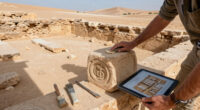
Archaeologists working in the eastern Mediterranean have unearthed evidence of widespread destruction layers, abandoned cities, and disrupted trade networks dating to approximately 1200 BCE. These findings, confirmed by multiple excavation teams, indicate a significant societal collapse affecting civilizations such as the Mycenaeans, Hittites, and Egyptian New Kingdom.
Recent analyses of pottery, fortifications, and written records suggest that a combination of factors—including natural disasters, climate change, invasions, and internal social unrest—may have contributed to the collapse. However, no single cause has been definitively established, and scholars continue to debate the relative importance of each factor.
Experts emphasize that these discoveries provide a clearer picture of the scale of destruction and societal disruption, highlighting the collapse as a complex, multi-faceted event rather than a single cause or sudden event.
Implications for Understanding Ancient Civilizations
The new evidence helps clarify how interconnected and fragile late Bronze Age societies were, and why their collapse had long-lasting effects on regional history. Understanding this period can inform modern perspectives on societal resilience and vulnerability to multiple stressors, including environmental and social factors.
This development matters because it challenges earlier theories that attributed the collapse solely to invasions or natural disasters, suggesting instead a multifaceted crisis with widespread repercussions that shaped subsequent history.
As an affiliate, we earn on qualifying purchases.
Key Archaeological Discoveries and Historical Debates
The Late Bronze Age Collapse, occurring roughly between 1200 and 1150 BCE, is traditionally characterized by the sudden decline of major civilizations in the Eastern Mediterranean. Historically, scholars have debated whether invasions by the so-called ‘Sea Peoples,’ natural catastrophes, economic decline, or internal unrest primarily caused the collapse.
Recent excavations in Greece, Turkey, and Egypt have uncovered destruction layers, abandoned settlements, and disrupted trade routes, confirming the widespread nature of the upheaval. These findings support the idea that multiple factors, including climate change evidenced by dendrochronological data and evidence of droughts, played roles in destabilizing societies.
Prior theories focused heavily on invasions or natural disasters, but new evidence suggests a combination of these, along with internal factors, contributed to the societal disintegration.
“The extent of destruction across multiple sites indicates a coordinated and widespread collapse, not just isolated incidents.”
— Dr. Maria Lopez, archaeologist
As an affiliate, we earn on qualifying purchases.
Unresolved Questions About Causes and Timing
While recent findings confirm widespread destruction and societal decline around 1200 BCE, the precise sequence of events and dominant causes remain unclear. It is not yet confirmed whether climate change, invasions, or internal factors were primary, or how these factors interacted over time.
Further research is needed to establish definitive timelines and causative links, and to understand regional variations in the collapse process.
historical site lighting equipment
As an affiliate, we earn on qualifying purchases.
As an affiliate, we earn on qualifying purchases.
Future Excavations and Interdisciplinary Research
Researchers plan to continue excavations at key sites across the eastern Mediterranean, aiming to refine the timeline and causative factors of the collapse. Advances in climate science, DNA analysis, and material studies are expected to provide deeper insights into the environmental and social dynamics of this period.
Collaborative efforts among archaeologists, climate scientists, and historians will be crucial for developing a comprehensive understanding of this complex historical event.
ancient civilization replica artifacts
As an affiliate, we earn on qualifying purchases.
As an affiliate, we earn on qualifying purchases.
Key Questions
What was the Late Bronze Age Collapse?
The Late Bronze Age Collapse was a period around 1200 BCE marked by the widespread decline and fall of major civilizations in the eastern Mediterranean, leading to societal disruptions and the end of the Bronze Age in the region.
What are the new findings about this event?
Recent archaeological excavations have uncovered evidence of widespread destruction, abandoned cities, and disrupted trade networks, confirming the scale of societal collapse. These findings suggest a complex interplay of causes rather than a single event.
Why is this period still debated among scholars?
Because the exact causes, sequence of events, and regional variations remain unclear, with theories ranging from invasions and natural disasters to internal unrest and climate change. Ongoing research aims to clarify these uncertainties.
How does this impact our understanding of history?
It highlights the vulnerability of complex societies to multiple stressors and the importance of resilience. Studying this collapse can offer lessons for modern societies facing environmental and social challenges.
Source: hn
Fall Picks
fall essentials
As an affiliate, we earn on qualifying purchases.