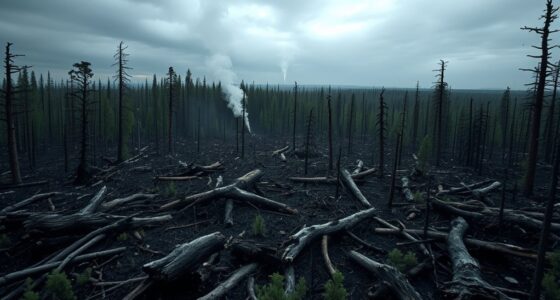

You’re exploring stories that reveal deep fears of disappearance and cultural loss. The Lost Colony of Roanoke and the legend of the Green Children symbolize anxieties about communities vanishing, outsiders lurking, and identities dissolving. These tales reflect societal worries about being erased by time, war, or nature. If you keep exploring, you’ll uncover more about how these stories shape our understanding of the fragile boundary between the known and the unknown.

Prime made for students and young adults
- Fast, free delivery for dorm and study essentials
- Prime Video and Amazon Music included
- Member-only deals
Key Takeaways
- The Lost Colony and Green Children symbolize societal fears of cultural erasure and the unknown nature of disappearing communities.
- Legends blur history and myth, reflecting anxieties about losing identity, tradition, and societal stability.
- Stories evoke fears of outsiders, hidden worlds, and hidden populations lurking beneath the surface.
- These mysteries serve as cautionary tales about the fragility of human communities and societal preservation.
- The enduring fascination highlights humanity’s desire to understand and make sense of vanishing groups and unexplained phenomena.
Throughout history, stories of disappearing groups and mysterious children have sparked both curiosity and fear, revealing a deep-seated anxiety about vanishing populations. These tales often become part of cultural legends, passed down through generations, fueling imaginations and fears alike. You might have heard of the Lost Colony of Roanoke, a classic example of a historical mystery that leaves you wondering what happened to its settlers. In the late 16th century, an entire group vanished without a trace, leaving behind only the word “Croatoan” carved into a post. To this day, no one knows whether they were wiped out, assimilated, or simply moved away. Such stories feed into a collective dread of losing entire communities, especially when written into the fabric of history as unresolved enigmas. These stories often reflect societal fears of cultural erasure and unintentional disappearance, which can be linked to the broader phenomenon of historical vanishings that continue to fascinate and terrify us.
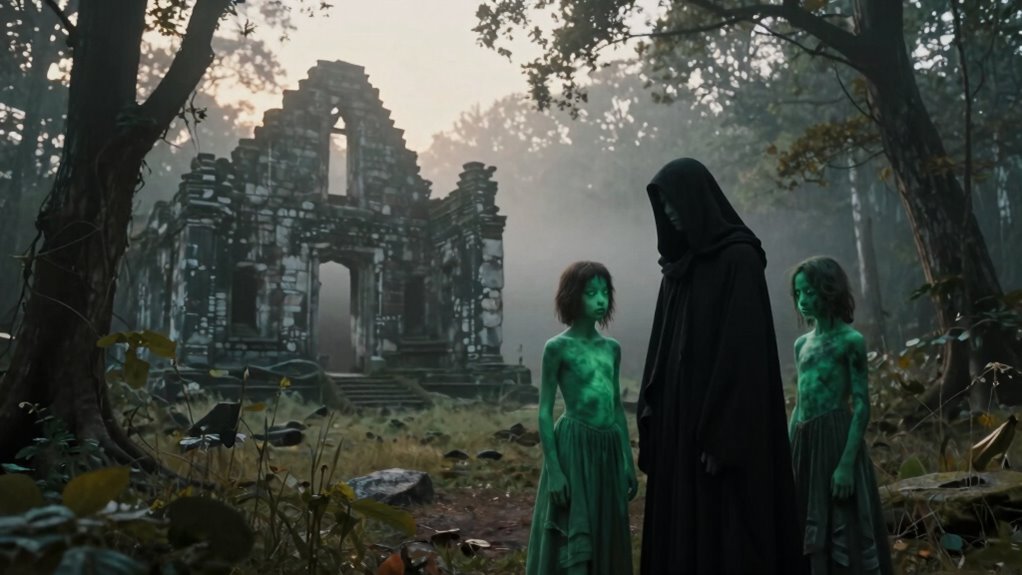
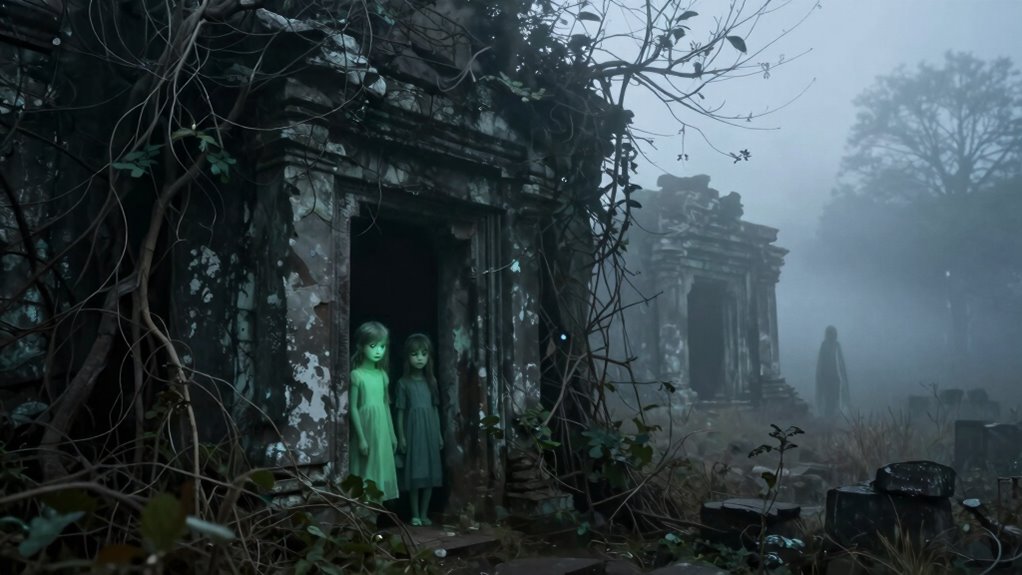
Then there’s the eerie legend of the Green Children of Woolpit, another cultural legend that continues to fascinate. According to the tale, two children with green-hued skin appeared suddenly in a small English village during the medieval period. They spoke an unknown language, refused to eat normal food, and claimed to come from a subterranean world. Over time, the girl lost her green color and adapted to regular life, but the story persisted as a mysterious phenomenon that defied explanation. The Green Children’s story taps into fears of the unknown and the idea that otherworldly beings or hidden communities could be lurking just beneath the surface of everyday life. You’re left to wonder whether these children were real, misidentified, or symbolic of fears about outsiders and disappearing communities.
Both historical mysteries and cultural legends like these serve as cautionary tales and reflections of human anxieties about vanishing people. They reveal how societies grapple with the fear of losing their identity, their history, or even entire populations to time, war, or nature. These stories remind you that the fear of disappearance isn’t just about the past—it echoes into your present, shaping how you perceive the unknown. Whether it’s the lost settlers or the green children, these stories continue to evoke curiosity, caution, and a sense of wonder about the fragile line between the known and the unknown. They are a testament to humanity’s enduring fascination with the mystery of disappearance and the stories we tell to make sense of it.
historical mystery books about lost colonies
As an affiliate, we earn on qualifying purchases.
As an affiliate, we earn on qualifying purchases.
Frequently Asked Questions
What Are the Most Recent Discoveries Related to These Mysteries?
Recent discoveries shed new light on these mysteries, emphasizing historical accuracy and archaeological evidence. Researchers have uncovered artifacts and settlement remains that support some theories while challenging others. For example, new digs around the Lost Colony site reveal clues about its inhabitants’ fate. For the Green Children, DNA analysis is offering insights into their origins. These findings help you better understand these enigmas, but some questions still remain unanswered.
Are There Any Known Cultural Influences From These Stories Today?
You’ll find that these stories heavily influence cultural symbolism today, shaping myths and legends that seem almost alive. They feed our imagination with mythical origins, inspiring art, literature, and folklore that feel as timeless as they are mysterious. These tales ignite a sense of wonder, reminding us that history and myth are intertwined, and their echoes continue to influence modern storytelling, folklore, and even popular culture in ways that feel larger than life.
How Do These Stories Compare to Similar Legends Worldwide?
You’ll find that these stories share similarities with legends worldwide through their mythical origins and cultural symbolism. They often embody universal themes like mystery, fear of the unknown, or innocence lost. Such legends influence modern storytelling, inspiring books, movies, and art. By comparing them, you see how different cultures interpret similar fears and hopes, creating a rich tapestry of myth that connects humanity across time and geography.
What Psychological Phenomena Might Explain These Phenomena?
Imagine you’re in a 21st-century TED Talk, but your mind’s still in the 16th century—this is like a form of mass hysteria that explains these legends. Psychological phenomena such as collective memory and suggestibility make people believe and pass down strange stories, even without evidence. Your brain fills gaps in knowledge with myths, creating shared cultural narratives that seem real, fueling fears of vanishing or mysterious people.
Have Any Scientific Studies Validated These Legends?
Scientific studies haven’t definitively validated these legends, as their mythical origins make them difficult to prove or disprove. While some researchers explore psychological and cultural factors behind these stories, the legends continue to influence popular culture and folklore. Their enduring cultural impact keeps them alive, inspiring curiosity and debate. You can see how myths shape collective beliefs, even without scientific validation, highlighting their powerful role in human history and storytelling.
green children of woolpit folklore figurine
As an affiliate, we earn on qualifying purchases.
As an affiliate, we earn on qualifying purchases.
Conclusion
As you reflect on these mysterious tales, you can’t help but wonder—are these stories just legends, or could they hide a truth about vanished lives? The Green Children and the Lost Colony whisper secrets from the shadows, tempting you to look closer. What if, someday, new evidence emerges? Will you be ready to uncover what’s been lost, or will these stories forever remain just out of reach, teasing your imagination with their haunting secrets?
medieval legends and myths collection
As an affiliate, we earn on qualifying purchases.
As an affiliate, we earn on qualifying purchases.
cultural legend storytelling kit
As an affiliate, we earn on qualifying purchases.
As an affiliate, we earn on qualifying purchases.
Halloween Picks
halloween
As an affiliate, we earn on qualifying purchases.