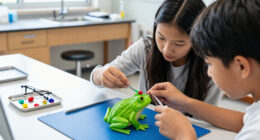

This guide helps parents and educators set up and run science experiments for children using educational science kits. It covers selecting the right kit, preparing materials, conducting experiments safely, and encouraging curiosity. Designed for beginners, this process takes roughly 30 to 60 minutes per session, depending on the complexity of the experiment.

Prime made for students and young adults
- Fast, free delivery for dorm and study essentials
- Prime Video and Amazon Music included
- Member-only deals

Doctor Jupiter My First Science Kit for Kids Ages 4-8
- ✔ Age Range: 4-8 years
- ✔ Number of Experiments: 100+
- ✔ Standards: ASTM F963-17
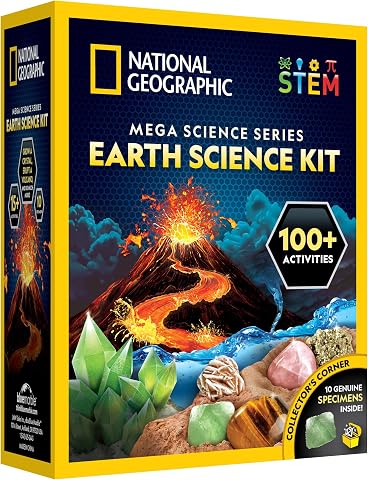
National Geographic Earth Science Kit – 100+ Science Experiments & Activities for Kids
- ✔ Brand: National Geographic
- ✔ Age Range: 96 months and up
- ✔ Included Components: Crystal Growing Kit, Gemstone and Pyrite Dig Bricks, Volcano Plaster Kit
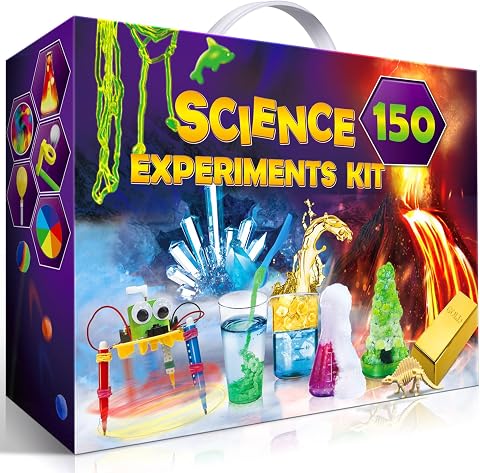
UNGILINGA 150 Experiments Science Kits for Kids
- ✔ Number of Experiments: 150
- ✔ Suitable For: Kids
- ✔ Includes: Science tools and materials
Difficulty: Beginner | Time: 30-60 minutes per experiment or session
What You’ll Need
Tools & Materials:
- Educational science kit (purchased or assembled)
- Protective gear (gloves, goggles)
- Cleaning supplies (cloths, wipes)
- Basic household tools (scissors, measuring cups)
Knowledge:
- Basic understanding of safety precautions
- Ability to read experiment instructions
- Basic supervision skills
Ensure the science kit is age-appropriate for the children involved. Review all safety warnings before starting. Prepare a clean, open workspace free of distractions.
Doctor Jupiter My First Science Kit for Kids Ages 4-8
<p>This science kit stands out for its focus on early childhood education, offering over 100 experiments designed to spark curiosity in children aged 4 to 8. Compared with more advanced kits, it emphasizes simple, safe activities that foster critical thinking and problem-solving. The kit’s straightforward instructions and high-quality materials make it accessible for parents and educators. However, it may be too basic for older children or those looking for more complex experiments, and adult supervision is needed for some activities.</p>
Pros:
- Encourages early interest in science and STEM learning
- Includes comprehensive, easy-to-follow instructions
- Safe, high-quality materials meeting safety standards
- Provides screen-free, educational entertainment
Cons:
- May be too simple for children over age 8
- Requires adult supervision for some experiments
Best for: Young children just beginning their STEM journey, ages 4-8
Not ideal for: Older kids seeking challenging or in-depth scientific projects
Bottom line: A perfect starter kit for young kids new to science, balancing safety, fun, and educational value.
“A perfect starter kit for young kids new to science, balancing safety, fun, and educational value.”
National Geographic Earth Science Kit – 100+ Science Experiments & Activities for Kids
<p>This kit is ideal for children aged 8 and up who are ready to explore geology and earth sciences in more depth. It includes over 15 engaging experiments, such as volcano eruptions and crystal growing, complemented by detailed educational guides. Compared with the simpler Doctor Jupiter kit, it offers more complex activities that require a bit more supervision and space, making it better suited for kids with a budding interest in science. Its size and scope might be overwhelming for younger children or limited storage environments.</p>
Pros:
- Includes over 15 engaging, hands-on experiments
- Educational guides enhance understanding of scientific concepts
- High-quality materials and comprehensive components
Cons:
- Some experiments require adult supervision
- Large kit size may demand extra storage space
- Limited to ages 8+
Best for: Older children interested in earth sciences and geology
Not ideal for: Very young children or those seeking simple, quick activities
Bottom line: A highly educational kit for older kids who want to dive deep into earth sciences with detailed guides and substantial experiments.
“A highly educational kit for older kids who want to dive deep into earth sciences with detailed guides and substantial experiments.”
UNGILINGA 150 Experiments Science Kits for Kids
<p>This comprehensive kit offers 150 experiments covering earth science, chemistry, and physics, making it ideal for children who crave variety and challenge. Its inclusive set of science tools and kid-friendly instructions promote hands-on exploration at home or school. Compared to the more specialized kits, it provides a broader scope, which is excellent for curious children interested in multiple scientific disciplines. However, the extensive number of experiments means some may require adult supervision or household items not included in the kit, and the sheer volume can be daunting for some users.</p>
Pros:
- Provides a wide variety of engaging science experiments
- Includes high-quality tools and kid-friendly materials
- Educational and fun, suitable for various science topics
Cons:
- Requires adult supervision for some projects
- Some experiments may need household items not included
- Overwhelming for children seeking focused, simple activities
Best for: Kids who want a broad, flexible science experience across multiple disciplines
Not ideal for: Young children who prefer simpler, less overwhelming kits
Bottom line: An excellent choice for children eager to explore multiple science fields with extensive experiments and tools.
“An excellent choice for children eager to explore multiple science fields with extensive experiments and tools.”
As an Amazon Associate we earn from qualifying purchases.
Before You Start
Check the contents of the science kit to confirm all parts are present. Read through the experiment instructions thoroughly. Prepare a safe, flat work surface and gather all necessary tools and protective gear. Supervise children at all times during experiments.
Step-by-Step Instructions
Step 1: Select an appropriate experiment
Review the available experiments in the kit and choose one suitable for the children’s age and interest. Read the detailed instructions for this experiment carefully.
Tip:Start with simple experiments to build confidence. Ensure the experiment aligns with the children’s curiosity and comprehension level.
Check: You have selected an experiment with clear, understandable steps and safety instructions, ready to proceed.
Step 2: Gather all required materials
Collect all parts from the kit needed for the experiment, along with any additional household tools listed in the instructions.
Tip:Lay out all materials visibly on your workspace before starting to avoid interruptions.
Check: All necessary components are gathered and organized, ready for use.
Step 3: Prepare the workspace and safety gear
Set up a clean, flat surface in a well-ventilated area. Equip children with safety goggles, gloves, and aprons if recommended.
Tip:Ensure children understand the importance of safety gear and follow safety rules throughout the experiment.
Check: The workspace is prepared, and safety gear is worn properly by all participants.
Step 4: Follow the experiment instructions step-by-step
Read each step aloud or review visually, then perform it exactly as described in the kit instructions. Supervise and assist children as needed.
Tip:Encourage children to observe carefully and ask questions about what they see happening.
Check: The experiment proceeds smoothly, with observations matching expected outcomes or reactions described in the instructions.
Step 5: Record observations and results
Have children document their observations using drawings, notes, or photos. Record any changes, reactions, or phenomena observed during the experiment.
Tip:Encourage detailed descriptions to foster curiosity and understanding.
Check: Children have recorded their observations clearly and thoroughly.
Step 6: Discuss the experiment and conclusions
Guide children to explain what happened and why, based on the experiment’s purpose. Relate findings to scientific concepts or real-world applications.
Tip:Ask open-ended questions to promote critical thinking and reinforce learning.
Check: Children articulate what they learned and demonstrate understanding of the scientific principles involved.
Step 7: Clean up and store materials
Help children carefully clean all used materials and store any reusable parts in their designated places. Dispose of waste safely, following the safety instructions.
Tip:Use this as a teaching moment about responsible handling of materials and environmental care.
Check: The workspace is tidy, and all materials are stored properly or disposed of safely.
Common Mistakes to Avoid
- Not supervising children closely during experiments, leading to safety hazards. — Always supervise children directly, especially when handling chemicals, heat, or fragile items.
- Using incompatible or damaged materials from the kit. — Inspect all parts before starting and replace any damaged items with appropriate substitutes.
- Skipping safety gear or safety instructions. — Always wear safety equipment and review safety warnings with children before beginning.
Troubleshooting
Problem: Experiment does not produce expected reaction or result.
Solution: Double-check the steps and materials. Ensure measurements and procedures match the instructions precisely.
Problem: Materials are missing or damaged.
Solution: Replace missing or broken parts with suitable alternatives or contact the supplier for replacements.
Problem: Children become uninterested or distracted.
Solution: Engage them with questions about what they observe and relate the experiment to everyday phenomena.
What Success Looks Like
The children successfully complete the experiment following all safety steps, observe the expected reactions, and can explain what they saw and learned.
Next Steps
Encourage children to repeat experiments to reinforce learning. Explore related experiments in the kit or online. Clean all materials thoroughly and store them for future use. Consider documenting findings in a science journal or sharing with others.
Frequently Asked Questions
Can I do these experiments without prior science experience?
Yes. Follow the provided instructions carefully, supervise children at all times, and familiarize yourself with safety guidelines before starting.
Are these kits safe for all ages?
Choose kits labeled for the child’s age group. Always supervise and use safety gear as recommended.
What if I run out of materials or something breaks?
Use household alternatives if possible, or contact the kit supplier for replacements. Always prioritize safety when improvising.
Halloween Picks
halloween
As an affiliate, we earn on qualifying purchases.