
TL;DR

Prime made for students and young adults
- Fast, free delivery for dorm and study essentials
- Prime Video and Amazon Music included
- Member-only deals
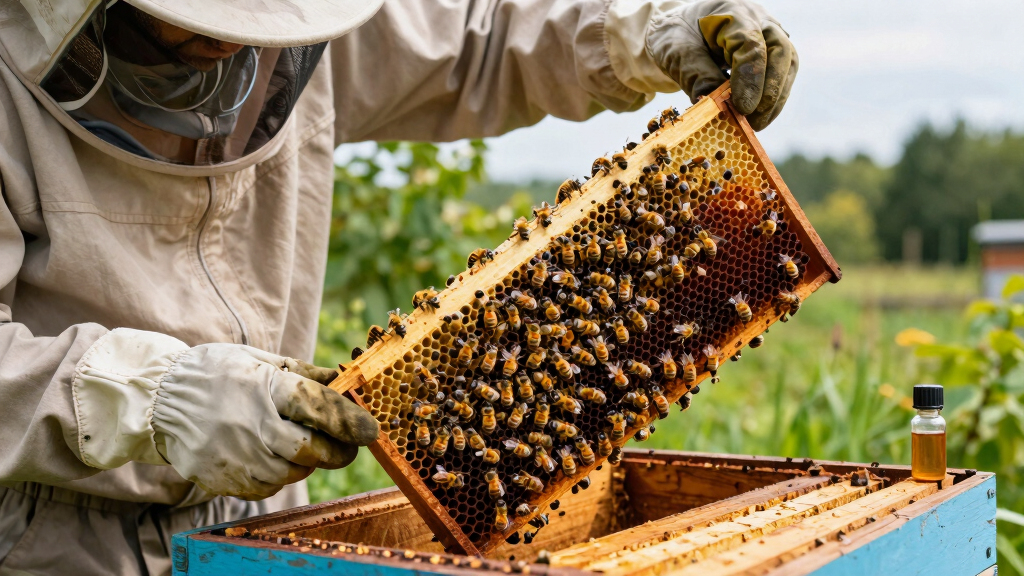
Scientists have found that a component of spider venom can eliminate varroa mites, a major honeybee pest, without harming bees. This breakthrough could lead to safer, more effective pest management in apiculture.
Scientists have confirmed that a specific compound derived from spider venom can kill varroa mites without harming honeybees, offering a promising new method for pest control in beekeeping. This discovery, announced in March 2024, could significantly reduce the reliance on chemical acaricides that often harm bees or lead to resistance.
The research, conducted by a team at the University of California, Berkeley, identified a peptide in spider venom that targets the nervous system of varroa mites. Laboratory tests showed that applying this peptide effectively eliminated mites from infected honeybee colonies with no observable adverse effects on the bees themselves.
According to lead researcher Dr. Emily Carter, ‘This peptide is highly specific to the mites’ neural receptors, which explains its selectivity. Our findings suggest it could be developed into a natural, targeted treatment for varroa infestations.’
Currently, beekeepers rely on chemical treatments that can harm bees, contaminate honey, and lead to resistant mite populations. The new venom-based approach offers a potentially safer alternative, though it remains in the experimental stage.
Potential Impact on Beekeeping Pest Management
This development is significant because varroa mites are a leading cause of colony losses worldwide. An effective, bee-safe treatment could improve colony health, reduce losses, and lessen dependence on chemical acaricides. If commercialized, this method may also decrease environmental contamination and resistance issues associated with current treatments.
natural varroa mite treatment for honeybees
As an affiliate, we earn on qualifying purchases.
As an affiliate, we earn on qualifying purchases.
Background on Varroa Mite Control Challenges
Varroa destructor, a parasitic mite, has become a major threat to honeybees globally, transmitting viruses and weakening colonies. Traditional control methods include chemical acaricides, which can harm bees and the environment, and mechanical methods that are labor-intensive. Resistance to chemical treatments has increased, prompting the search for alternative solutions. Recent research has focused on natural compounds, including peptides from various organisms, as targeted pest control agents.
“Our findings demonstrate that spider venom peptides can selectively target varroa mites without affecting honeybees, opening new avenues for sustainable pest control.”
— Dr. Emily Carter, lead researcher
As an affiliate, we earn on qualifying purchases.
Unanswered Questions About Practical Application
It is not yet clear how the venom peptide would be formulated, administered, or scaled for commercial use. Long-term safety for bees and hive health, potential resistance development, and environmental impacts remain to be studied. Field trials are still pending, and regulatory approval processes are yet to be addressed.
As an affiliate, we earn on qualifying purchases.
Next Steps in Developing Spider Venom-Based Treatments
Researchers plan to conduct field trials to evaluate the peptide’s effectiveness in real hive conditions and assess safety over multiple seasons. They also aim to develop delivery methods suitable for commercial beekeeping. Regulatory pathways will need to be navigated before any product reaches the market.
As an affiliate, we earn on qualifying purchases.
Key Questions
How does the spider venom kill varroa mites?
The venom contains a peptide that targets the mites’ nervous system, disrupting neural signals and leading to their death.
Will this treatment harm honeybees?
According to the study, the peptide is highly specific to varroa mites and has shown no adverse effects on honeybees in laboratory tests.
When might this be available for use by beekeepers?
Field trials are ongoing, and regulatory approval is needed before commercial products can be developed. It may take several years before it is available.
Could mites develop resistance to this venom?
Resistance is a possibility, as with any pest control method. Ongoing research will need to monitor for potential resistance development.
Are there environmental risks associated with using spider venom?
Further studies are required to assess environmental impacts, but the specificity of the peptide suggests lower risks compared to broad-spectrum chemicals.
Source: hn
Halloween Picks
halloween
As an affiliate, we earn on qualifying purchases.