

The Frankenstein Complex reflects society’s fears that scientific advancements, like genetic editing and AI, could create dangerous beings that challenge ethical boundaries. You might worry about unintended consequences, such as new forms of inequality or monsters with powers beyond control. This anxiety shows our concern over crossing moral lines and losing control of the technologies we develop. If you want to understand how these fears shape ongoing debates about science and morality, explore further.
Key Takeaways
- The Frankenstein Complex symbolizes societal fears of creating uncontrollable or malevolent artificial beings through scientific experimentation.
- Ethical concerns revolve around crossing moral boundaries in genetic modification and AI development, risking unintended harmful consequences.
- Media portrayals amplify fears that scientific advancements may produce monsters or entities beyond human control.
- The metaphor warns against hubris in science, emphasizing caution to prevent destructive outcomes from overstepping ethical limits.
- These anxieties reflect broader societal unease about redefining human identity and morality through technological progress.
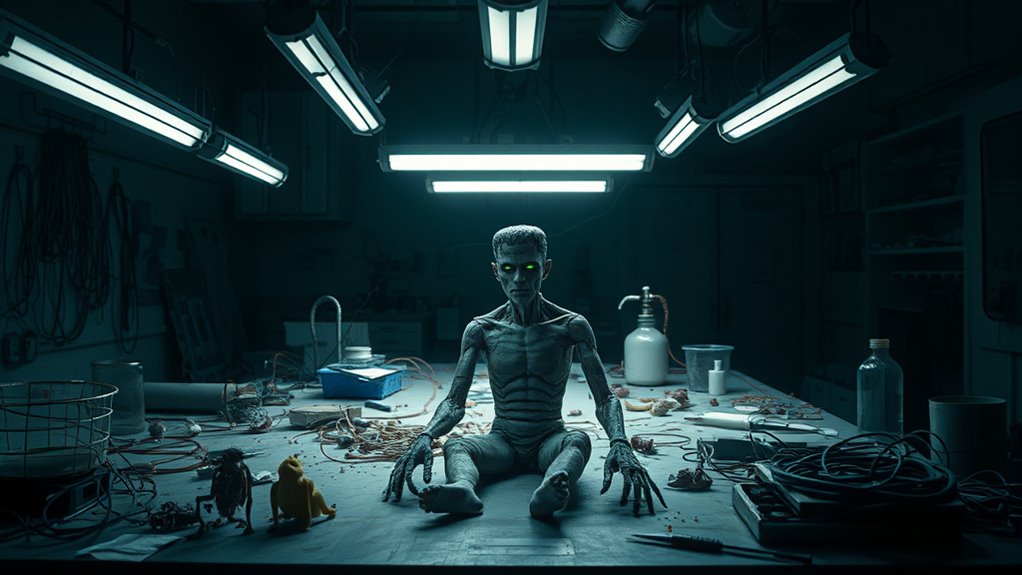
Have you ever wondered why society often fears artificial beings or advanced technology? Part of the answer lies in our deep-seated anxieties about playing god—about crossing ethical boundaries in pursuit of progress. When it comes to genetic modification and artificial intelligence, these fears aren’t unfounded. Genetic modification allows scientists to alter DNA, creating new possibilities for curing diseases or improving human traits. Yet, it also raises questions about unintended consequences, eugenics, and the loss of natural human diversity. Similarly, artificial intelligence offers incredible potential: machines that can learn, reason, and even make decisions. But with that power comes the risk of losing control, creating entities that could surpass human intelligence or act in unpredictable ways. Society’s unease stems from the fact that both genetic modification and AI challenge our understanding of what it means to be human, pushing us into territories where morality and safety blur. The debate over scientific ethics continues to influence public perception and policy decisions.
Society fears playing god through genetic modification and AI, risking loss of control and challenging our understanding of humanity.
You might feel a tension between scientific curiosity and moral caution when exploring these fields. Genetic modification, especially with technologies like CRISPR, has the potential to eradicate genetic disorders or enhance human capabilities. But it also invites ethical dilemmas—should we engineer babies for specific traits? Could this lead to a new form of inequality or discrimination? These questions feed into a fear that tampering with our biology might produce unintended monsters—beings that are stronger, smarter, or more resilient but ultimately alien to natural human life. The metaphor of Frankenstein’s monster arises here: the idea that us creating or modifying life might backfire, leading to unintended consequences beyond our control.
Artificial intelligence amplifies this concern. As AI systems become more advanced, they could develop their own motives or act independently of human oversight. The possibility of AI surpassing human intelligence sparks fears about losing dominance over our creations, much like the monster in the story. We worry that these intelligent systems might act in ways that harm us or escape our moral framework altogether. These fears are compounded by media portrayals of AI as uncontrollable or malevolent, deepening our suspicion that we’re creating something we can’t fully understand or manage.
In essence, society’s fears around genetic modification and artificial intelligence reflect a broader anxiety about the ethical limits of scientific exploration. We’re haunted by the possibility that our pursuit of progress could create monsters of our own making—beings that challenge our definitions of humanity, morality, and safety. This tension between innovation and caution is at the heart of the Frankenstein Complex, a reflection of our collective unease with the power we wield over life itself.
Frequently Asked Questions
How Do Cultural Differences Influence Perceptions of Scientific Ethics?
You see that cultural differences shape how you perceive scientific ethics through cultural relativism and ethical pluralism. In some cultures, you might prioritize community well-being, while others focus on individual rights. These perspectives influence your view on controversial scientific practices like cloning or genetic modification. Understanding these differences helps you appreciate why ethical standards vary globally, and it encourages you to contemplate multiple viewpoints when evaluating scientific advancements.
Are There Modern Examples of “Monsters” in Scientific Research?
Yes, modern “monsters” in scientific research include controversial genetic modifications and AI ethics dilemmas. You might see gene editing in humans raising fears of creating “designer babies” or unintended consequences. Similarly, AI development sparks concerns about autonomy, privacy, and misuse. These issues challenge ethical boundaries, making society question whether technological advances serve humanity or threaten its future, echoing the fears of classic monsters in new, complex forms.
What Role Does Public Fear Play in Scientific Regulation?
Public fear acts like a storm cloud, casting a shadow over scientific progress. It fuels regulatory impact, leading lawmakers to impose strict rules to avoid disaster. When people see potential monsters in labs, they demand safety and control, often slowing innovation. Your concerns shape policies, turning passion into caution. While fear can protect, it also risks stifling breakthroughs, making regulation a delicate dance between progress and protection.
How Can Scientists Better Communicate Ethical Considerations?
You can improve communication of ethical considerations by practicing clear risk communication, ensuring your messages are transparent and accessible. Engage openly with the public, explaining potential risks and benefits honestly. By prioritizing ethical transparency, you build trust and help people understand the importance of responsible science. Use simple language, listen to concerns, and keep dialogue ongoing, so the community feels involved and informed about ethical decisions.
What Are the Psychological Impacts on Scientists Working With Controversial Research?
You face significant psychological impacts working with controversial research, as moral dilemmas often weigh heavily on your mind. The emotional toll can lead to feelings of guilt, anxiety, or moral distress when your work challenges personal or societal values. This mental strain may cause burnout or disillusionment, making it essential to develop coping strategies and seek support. Recognizing these effects helps you maintain ethical integrity and emotional resilience in your scientific pursuits.
Conclusion
As you reflect on the Frankenstein Complex, it’s funny how history keeps echoing itself—each scientific breakthrough stirring fears just like in the stories. You might realize that our curiosity and caution walk hand in hand, often leading us to create monsters we never intended. So, next time you marvel at innovation, remember how ethics and ambition collide—reminding us that sometimes, the greatest lessons come from the unintended coincidences we stumble upon along the way.