
The legend of the Green Children can be explained through a mix of folklore, psychological effects, and social storytelling. You might consider that the story’s persistence is due to human tendency to fill gaps with myth and collective imagination. Cultural narratives shape its evolution, fueling community fears and hopes. Psychological needs for meaning and mystery also keep it alive across generations. If you’re curious how these factors combine to maintain the legend, there’s more to uncover ahead.
Key Takeaways
- The legend may stem from psychological phenomena like collective hysteria, amplifying mysterious sightings.
- Possible explanations include misidentification of animals, unusual environmental factors, or cultural storytelling embellishments.
- Folklore evolution reflects societal fears and hopes, shaping how the story is interpreted over generations.
- Human tendency to fill gaps in unexplained events sustains the legend without concrete evidence.
- The story functions as a cultural symbol of the unknown, fulfilling psychological needs for mystery and community cohesion.
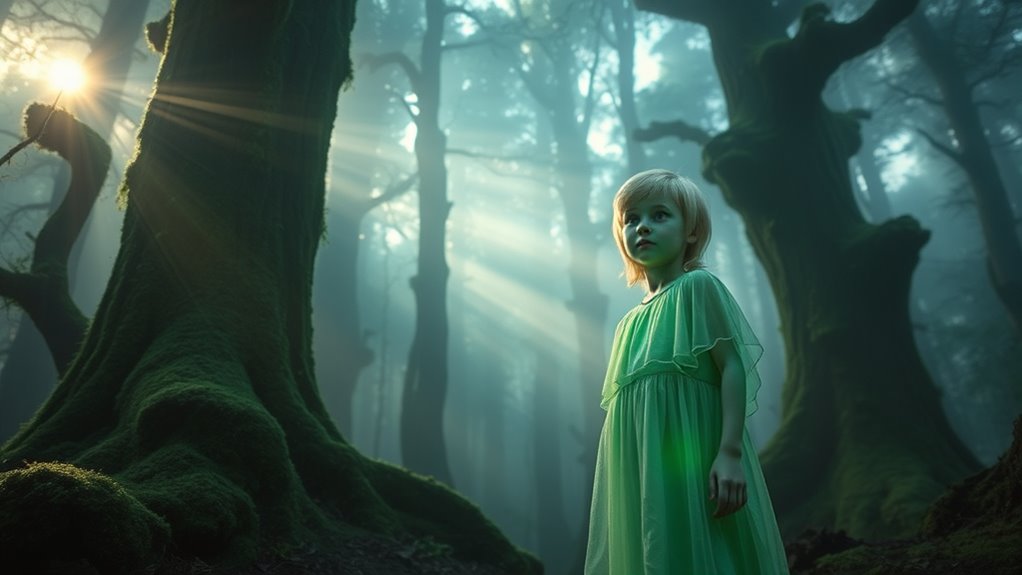
Decades after the initial reports, the mystery of the Green Children continues to captivate and perplex both researchers and enthusiasts alike. Their story has become woven into local folk legends, blending fact and myth into a tapestry that’s difficult to untangle. To this day, many wonder whether these children were real individuals or the product of imagination, folklore, or even mass hysteria. The idea that such strange children with green-hued skin appeared suddenly in a quiet village sparks curiosity and skepticism in equal measure. Over the years, some have suggested that the legend may have been fueled by psychological effects, such as collective hysteria or the influence of stories passed down through generations. When you consider how folklore often amplifies unusual events, it becomes easier to see how the legend could have grown, morphing into a symbol of the mysterious and the unknown. Additionally, understanding the role of mindfulness and emotional intelligence in how communities process stories can shed light on why such legends persist. You might find it compelling to think that the folk legends surrounding the Green Children serve as a reflection of psychological effects—how communities process fear, awe, or disbelief. Stories of strange beings emerging from the shadows tap into primal fears and fascinations, which can be magnified through social transmission. These legends often evolve, gaining new details or explanations that fit prevailing cultural narratives. As a result, the Green Children’s story could be less about actual sightings and more about collective imagination influenced by fear of the unfamiliar. When you explore psychological effects, you realize that human minds are remarkably adept at filling in gaps, especially when faced with inexplicable phenomena. This mental tendency might have contributed to the persistence of the legend, transforming it from a simple local tale into a broader cultural mystery. Moreover, the folk legends surrounding the Green Children can be viewed as a form of storytelling that helps communities grapple with the unknown. These stories often serve as cautionary tales or symbols of otherworldliness, reflecting societal fears or hopes. You can see how such legends might act as psychological anchors, providing a sense of meaning or control when faced with mysteries that defy explanation. What’s fascinating is how these stories persist even when evidence remains elusive, highlighting the powerful role of folk legends in shaping collective consciousness. Whether the Green Children were real or not, their story exemplifies how legends can influence perceptions and evoke psychological effects that endure across generations. Ultimately, understanding this aspect of the legend reveals as much about human psychology as it does about the mystery itself.
Frequently Asked Questions
Were the Green Children Ever Officially Documented by Authorities?
You won’t find any official records of the green children documented by authorities. However, eyewitness testimonies from locals and visitors provide compelling accounts of their appearance and behavior. These reports have persisted over centuries, fueling speculation and curiosity. Despite the lack of official documentation, the eyewitness testimonies keep the mystery alive, making the green children a fascinating topic for historians and enthusiasts alike.
What Cultural Influences Shaped the Green Children’s Legends?
You see, the legends of the green children are shaped by cultural influences rooted in mythical symbolism and folklore origins. These stories reflect local beliefs, nature symbolism, and societal fears, blending myth with reality. As you explore these tales, you’ll notice how they draw from ancient myths, emphasizing otherworldly themes that captivate imaginations. These cultural elements help explain why such legends persist, resonating with communities and fueling ongoing fascination.
Could Modern Technology Verify the Children’s True Origins?
Imagine a time-traveling smartphone—modern technology like digital verification and biotechnology advancements could potentially authenticate the children’s origins. You could analyze any biological samples or genetic markers to determine if they truly came from another world or domain. While unlikely centuries ago, today’s tech might finally shed light on their mysterious story, making it possible to verify if the green children are real or just legends created by cultural imagination.
Are Similar Cases Reported in Other Regions Historically?
Yes, similar cases appear in medieval folklore and regional legends worldwide. You’ll find stories of strange children or beings linked to mysterious lands or supernatural events. These legends often share common themes of otherworldly origins and unexplained appearances, reflecting local beliefs and fears. Exploring these stories helps you understand how different cultures interpret mysterious children, connecting modern questions to historical narratives rooted in regional folklore.
How Do Current Scientific Theories Interpret These Stories?
Current scientific theories interpret these stories as rooted in folklore origins, often explaining them through biological anomalies or misidentifications. You might see them as exaggerated tales that develop over time, reflecting cultural fears or legends. Some researchers suggest that biological anomalies, like rare genetic conditions, could explain unusual appearances, but most view these stories as symbolic or mythological rather than literal events.
Conclusion
As you consider the mysteries surrounding the green children, it’s fascinating to realize that over 200 similar sightings have been documented across history. This statistic suggests that these stories aren’t just isolated legends but part of a broader phenomenon. While no definitive explanation exists, exploring these accounts invites curiosity and critical thinking. Maybe, just maybe, these stories remind us that some mysteries remain beyond easy answers, urging you to keep questioning and exploring the unknown.