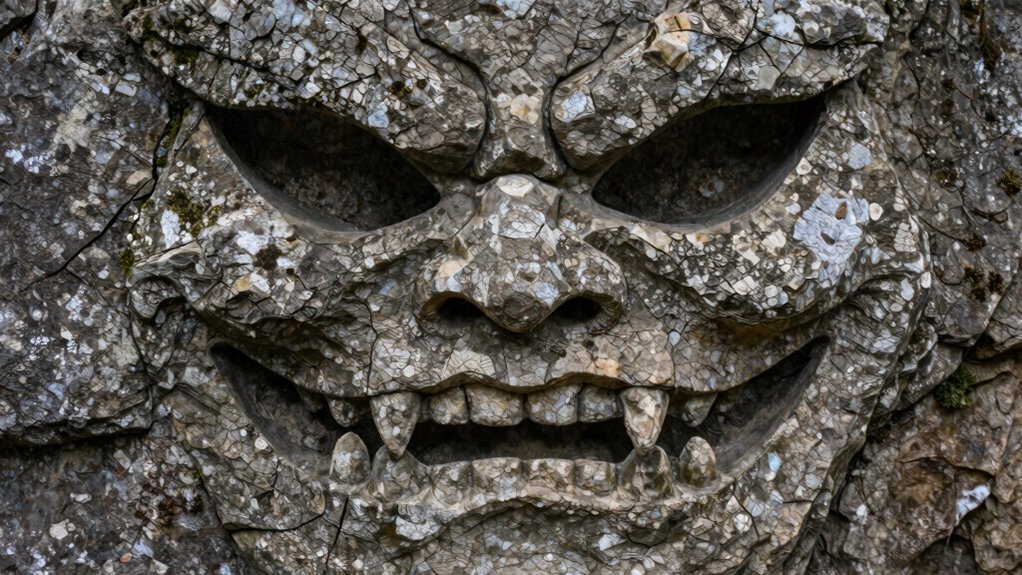

Your brain naturally seeks familiar patterns, which is why you often see faces or monsters in shadows, clouds, or even toast. This tendency, called pareidolia, relies on your neural pathways to quickly recognize familiar images and fill in gaps. It’s a survival trick that helps detect threats or social cues. Because your pattern recognition is so sensitive, it can create illusions of monsters or faces where none exist. Keep exploring to discover how these processes shape what you perceive every day.

Get school and study supplies delivered free — and shop member deals
- Fast, free delivery on millions of items
- Access to Prime Big Deal Days deals on October 6–7
- Prime Video, Amazon Music and more included
Key Takeaways
- Pareidolia results from the brain’s automatic pattern recognition, identifying familiar shapes like faces or monsters in ambiguous stimuli.
- Neural pathways developed through experience enable rapid detection of threat-related or social cues, often leading to illusion.
- Cognitive biases and mental shortcuts cause the perception of monsters in shadows or incomplete images, enhancing survival.
- The brain’s wiring prioritizes certain patterns, filling gaps and creating illusions that evoke curiosity, fear, or wonder.
- Everyday perceptions are influenced by neural architecture, making ordinary objects and shadows potential sources of vivid imagination.
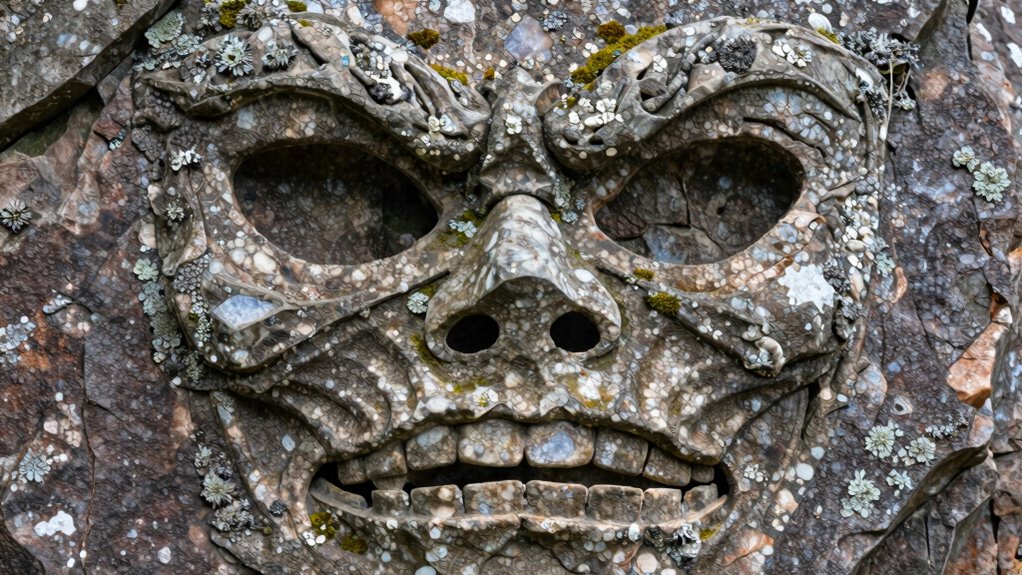
Have you ever looked at a cloud and thought it resembled a face, or seen shapes in random objects that seem to form familiar images? That’s pareidolia in action—your brain’s tendency to interpret vague stimuli as recognizable patterns or objects. It’s a fascinating quirk of human perception rooted in the way your neural pathways are wired. Your brain is constantly seeking meaning, connecting dots, and forming patterns based on past experiences. These neural pathways develop over time, shaped by countless encounters with the world around you. When you see a face in the moon or a face on a piece of toast, your brain’s pattern recognition system kicks in, rapidly matching what it perceives with stored templates of familiar images. This process is so automatic and ingrained that it often bypasses conscious thought, making the experience feel almost instinctive.
Cognitive biases play a significant role here. These mental shortcuts, like the tendency to see faces in inanimate objects, help your brain quickly interpret ambiguous stimuli, but they can also lead you astray. For instance, the bias toward seeing faces in objects—called face pareidolia—is a survival mechanism. Recognizing faces rapidly can be *vital* for social interaction and threat detection. Your brain’s predisposition to find familiar patterns can sometimes cause you to see faces where none exist, leading to moments of wonder, amusement, or even fear. These biases are deeply embedded, influencing how you perceive and interpret your environment without you even realizing it. Additionally, research suggests that our pattern recognition is so finely tuned that it can sometimes create illusory perceptions, further contributing to the phenomenon of seeing monsters in shadows or abstract forms.
The monster-shaped brain is a playful way to describe how your neural architecture influences perception. Your brain’s pattern recognition is so sensitive that it often fills in gaps, completing incomplete images with familiar shapes or figures. This is why, in the dark or in cluttered scenes, you might perceive a creature or monster lurking just beyond your line of sight. It’s not because monsters are hiding there; it’s your brain’s way of making sense of uncertainty. Your neural pathways are wired to prioritize certain patterns, especially those related to threats or social cues. This wiring enhances survival but also fuels the tendency to see monsters or faces in unlikely places. Additionally, research suggests that our pattern recognition is so finely tuned that it can sometimes create illusory perceptions, further contributing to the phenomenon of seeing monsters in shadows or abstract forms.
In essence, your brain’s pattern recognition and the neural pathways that support it are both remarkable and, at times, mischievous. They help you navigate the world efficiently but can also create illusions that spark curiosity, fear, or delight. Understanding these processes reveals how deeply your perception is shaped by your brain’s architecture and biases—making every cloud, shadow, or random object a potential canvas for your mind’s vivid imagination.
As an affiliate, we earn on qualifying purchases.
Frequently Asked Questions
How Does Pareidolia Influence Daily Decision-Making?
Pareidolia influences your daily decision-making by shaping your visual perception, causing you to see familiar objects or faces in random patterns. This often triggers cognitive biases, leading you to interpret ambiguous stimuli based on past experiences or expectations. As a result, your judgments and choices can be subtly affected, making you more prone to assumptions or misinterpretations. Being aware of this can help you make more mindful, objective decisions.
Can Pattern Recognition Lead to False Positives?
Pattern recognition can definitely lead to false positives, like when you hear a strange noise and immediately think of danger. These false alarms happen because your brain’s wired to quickly identify threats, but this can also trigger cognitive biases. Sometimes, your mind overreacts, seeing patterns where none exist, which can cause unnecessary worries or mistakes. In daily life, this tendency keeps you alert but also prone to misjudgments.
Are There Cultural Differences in Perceiving Patterns?
Yes, you perceive patterns differently across cultures due to cultural symbolism and artistic interpretations. Your cultural background influences how you interpret shapes, symbols, and images, shaping your perception. What might seem like a face or figure in one culture could be viewed differently elsewhere. These variations highlight how your cultural context shapes your pattern recognition, making perception a deeply personal and culturally influenced experience.
How Does the Brain Differentiate Real Faces From Illusions?
Your brain is like a detective, quickly distinguishing real faces from illusions. It uses the visual cortex and neural pathways to process facial features, comparing them to stored memories. When it sees familiar patterns, it activates specialized areas that confirm whether it’s a genuine face or an illusion. This rapid, complex process helps you confidently recognize real faces, even amidst confusing or ambiguous visual cues.
What Role Does Evolution Play in Pattern Recognition?
Evolution shapes your pattern recognition abilities through genetic predispositions and neural adaptation. These traits help you quickly identify threats or opportunities, like recognizing predators or food sources. Over time, your brain becomes more efficient at distinguishing meaningful patterns from random stimuli, giving you a survival advantage. This evolutionary process fine-tunes your instincts, enabling you to respond faster and more accurately to your environment, ensuring your continued survival and reproduction.
As an affiliate, we earn on qualifying purchases.
Conclusion
You’ve probably experienced pareidolia yourself—seeing faces in clouds or shapes in shadows. This tendency highlights how your brain is wired to recognize patterns, even where none exist. Notably, studies show that about 90% of people see faces in inanimate objects at some point. This illustrates just how powerful your brain’s pattern recognition is, shaping your perception of the world in fascinating ways. Embrace it—your brain’s pattern-hunting skills are truly remarkable.
As an affiliate, we earn on qualifying purchases.
As an affiliate, we earn on qualifying purchases.
Halloween Picks
halloween
As an affiliate, we earn on qualifying purchases.