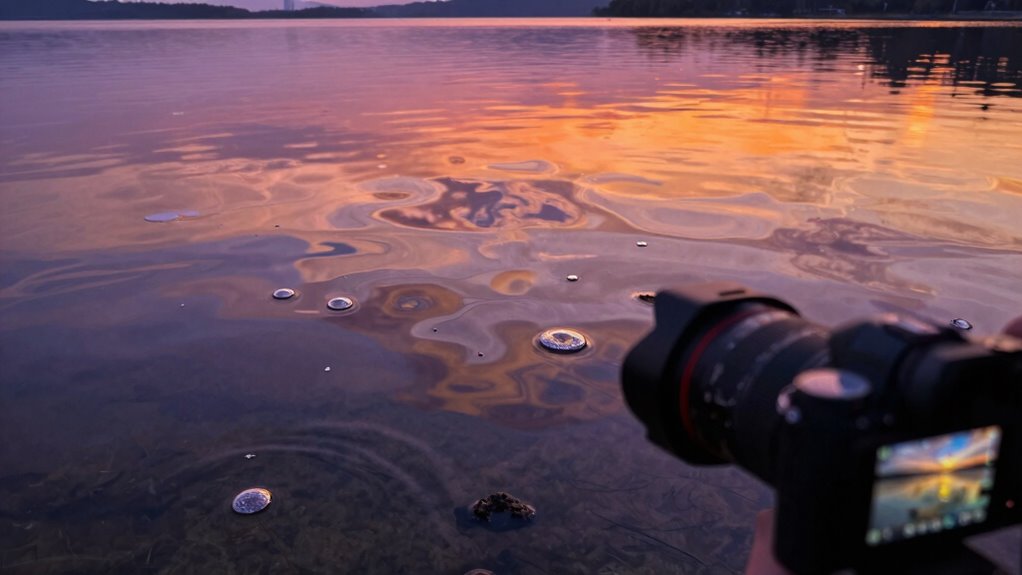

To spot weird things on water, you should use high-quality binoculars or zoom lenses to get a clear, detailed view of the surface. Polarized filters help reduce glare, revealing hidden reflections or objects below. Understanding light refraction and surface anomalies can also improve your interpretation of unusual patterns. By combining the right optics with awareness of water’s optical behavior, you’ll enhance your chances of spotting strange things—and there’s more to uncover if you keep exploring.

Prime made for students and young adults
- Fast, free delivery for dorm and study essentials
- Prime Video and Amazon Music included
- Member-only deals
Key Takeaways
- High-quality binoculars or zoom lenses enhance detection of surface anomalies and underwater reflections.
- Polarized filters reduce glare, clarifying reflections and revealing hidden submerged objects.
- Understanding refraction and light behavior helps interpret distortions and surface patterns accurately.
- Clear, magnified optics improve visibility of ripples, waves, and unusual water surface patterns.
- Optical tools enable differentiation between surface reflections and actual underwater features.

Water can hide surprises that catch even the most seasoned observers off guard. When you’re watching a calm lake or a still pond, it’s easy to assume that what you see on the surface tells the whole story. But sometimes, the water’s surface reveals unexpected secrets through underwater reflections and surface anomalies, making your observations more complex and intriguing. To uncover these hidden details, you need the right optics—tools that enhance your view and help you interpret what’s really there.
Underwater reflections are a key element in spotting unusual things on water. These reflections can distort or duplicate objects beneath the surface, creating illusions or revealing details you might miss with the naked eye. For instance, a submerged object might appear as a strange shape or a distorted image due to how light bounces off the water’s surface. Using polarized lenses or specialized filters can cut through glare and enhance these reflections, making it easier to distinguish what’s underwater from what’s simply reflected on the surface. When you focus on underwater reflections, you gain a better understanding of what’s lurking beneath, even if it’s camouflaged or obscured. Recognizing the importance of surface anomalies can also help you interpret what might be hidden just beneath the water’s surface. Additionally, understanding how light behavior interacts with water surfaces can improve your ability to interpret these visual cues. Being familiar with refraction effects can also help you better anticipate how objects appear underwater compared to their actual positions. Furthermore, knowing how optical distortions influence water surfaces can assist in making more accurate observations. Paying attention to water surface patterns can reveal subtle clues about movement or the presence of objects beneath.
Polarized lenses reveal hidden underwater details by reducing glare and enhancing reflections.
Surface anomalies are another telltale sign that something unusual is happening on or below the water. These anomalies include ripples, waves, or unusual patterns that may indicate movement or the presence of objects just beneath the surface. Spotting these anomalies requires good optics that can reveal subtle shifts in the water’s surface. High-quality binoculars or zoom lenses help you see these surface irregularities in greater detail. When you notice odd ripples or distortions, it can be a clue that something unusual is nearby—perhaps a floating debris, a submerged creature, or even a larger object moving beneath the water. Recognizing these surface cues can be especially useful in dynamic environments where water conditions change rapidly. Your ability to detect and interpret these signs depends on the optics you choose. Clear, well-designed lenses with good magnification and polarization capabilities enable you to see through surface reflections and identify surface anomalies with greater accuracy. The right optics don’t just make distant objects clearer—they help you decode the water’s surface signals. Whether you’re a hobbyist, a researcher, or just someone curious about what’s hiding beneath the water’s calm exterior, investing in good optical tools can turn a simple water view into a fascinating discovery. So, next time you’re observing water, remember that what’s hidden beneath or hiding within surface anomalies might be more intriguing than you initially thought.
high-quality binoculars for water observation
As an affiliate, we earn on qualifying purchases.
As an affiliate, we earn on qualifying purchases.
Frequently Asked Questions
Can Weather Conditions Affect Visibility of Water Anomalies?
Yes, weather conditions can definitely affect your ability to see water anomalies. Optical distortion caused by rain, fog, or haze can obscure your view, making it harder to spot unusual objects or movements on the water surface. Wind and waves also create a choppy water surface, which can distort reflections and make anomalies less visible. Good optics help, but weather still plays a big role in visibility.
Are There Specific Times Best for Spotting Unusual Water Objects?
Like a detective scanning clues, you’ll spot unusual water objects best during early morning or late afternoon. During these times, the water surface acts like a mirror, and light refraction creates clearer images, revealing anomalies. Bright, calm conditions reduce glare and distortions, making it easier to see beneath the surface. So, plan your observation sessions around these times for the clearest view of strange objects lurking in the water.
How Do Water Reflections Influence Optical Clarity?
Water reflections can profoundly influence your optical clarity, often creating reflection distortions that make objects appear warped or unclear. To counter this, you should use optical filters designed to reduce glare and enhance contrast. These filters help minimize the impact of reflection distortions, allowing you to see beneath the water’s surface more clearly. Properly managing reflections improves your ability to spot unusual objects or anomalies on or beneath the water.
Can Underwater Optics Improve Detection of Submerged Objects?
Yes, underwater optics like submersible lenses and acoustic imaging greatly enhance your ability to detect submerged objects. While traditional lenses offer visual clarity, acoustic imaging penetrates murky waters, revealing hidden items. Combining both technologies provides an all-encompassing view, much like seeing the unseen beneath the surface. By using these advanced tools, you improve your chances of spotting unusual or concealed objects in challenging underwater environments.
What Safety Precautions Should Be Taken When Observing Water Anomalies?
When observing water anomalies, you should always stay aware of the water surface and optical distortions. Wear appropriate safety gear like life jackets, especially near deep or unpredictable waters. Keep a safe distance from unstable or unusual water formations, and avoid staring directly through optical devices for long periods. Always observe weather conditions, and never discriminate between real anomalies and optical illusions, ensuring your safety and accurate assessment.
As an affiliate, we earn on qualifying purchases.
Conclusion
When you’re determined to spot the bizarre and elusive on water, the right optics become your greatest allies—turning blurry shapes into crystal-clear mysteries. With high-powered binoculars or a premier spotting scope, you’ll reveal secrets lurking beneath the surface that mere eyes can’t fathom. It’s like having a superpower, transforming every ripple and shadow into a story waiting to be told. So, equip yourself wisely—because missing out on these astonishing water phenomena is simply unthinkable.
zoom lens for water surface viewing
As an affiliate, we earn on qualifying purchases.
As an affiliate, we earn on qualifying purchases.
As an affiliate, we earn on qualifying purchases.
Halloween Picks
halloween
As an affiliate, we earn on qualifying purchases.