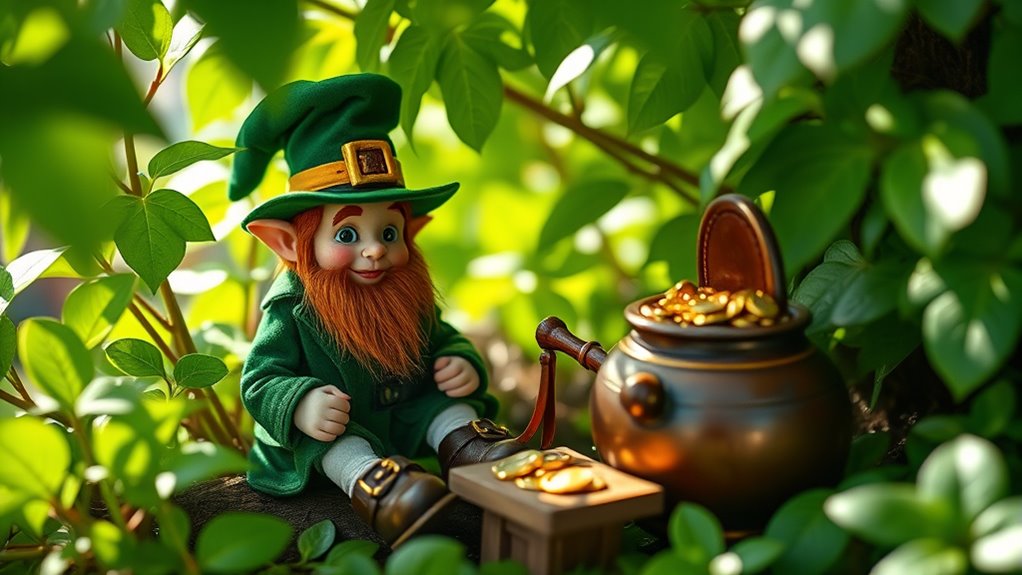

Leprechauns are clever Irish tricksters famous for their shoemaking skills and mischievous nature. They often hide pots of gold at the end of rainbows, using their magical abilities like invisibility and shape-shifting to stay elusive. Known for their quick wit and love of secrets, they can be helpful but also mischievous. If you’re curious about these enchanting beings and their stories, you’ll find much more to discover beyond this glimpse.
Key Takeaways
- Leprechauns are mythical Irish beings known for their skill as shoemakers and their hidden workshops.
- They are tricksters with magical powers like invisibility and shape-shifting, often playing pranks.
- Leprechauns are famous for hiding pots of gold at the end of rainbows, symbolizing luck and wealth.
- Their cleverness and cunning help them evade humans and outsmart those seeking to capture them.
- They embody Irish folklore’s blend of mischief, magic, craftsmanship, and cultural identity.
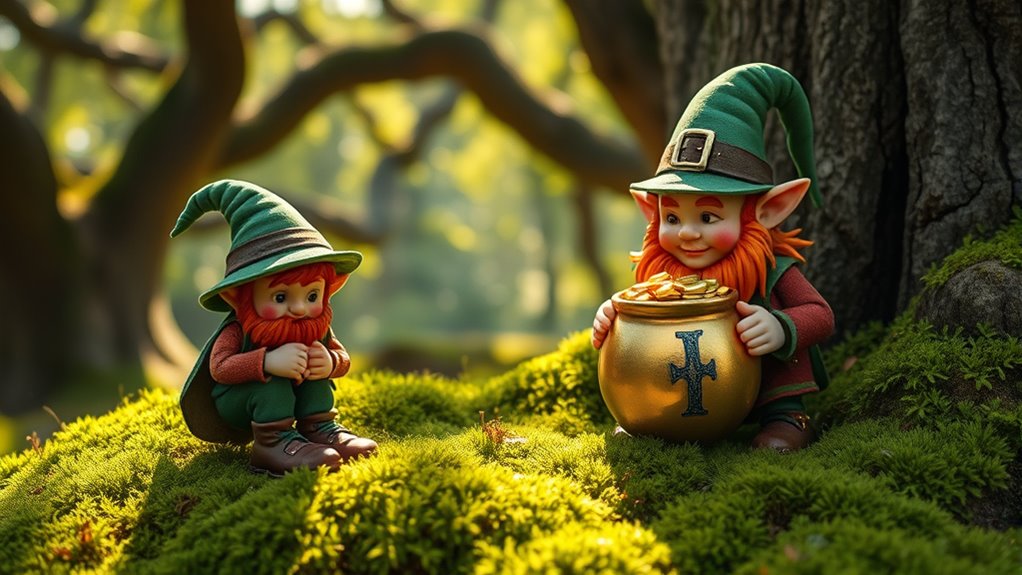
Have you ever wondered if leprechauns really exist? These tiny, mischievous beings are rooted in Irish folklore, with their mythical origins dating back centuries. Legend has it that leprechauns emerged from ancient Celtic stories, embodying the spirit of Ireland’s rich cultural heritage. Over time, their image has become synonymous with mischief and magic, making them one of the most intriguing figures in Irish mythology. You might picture them as shoemakers, busy at work in their hidden workshops, crafting shoes with incredible skill. Their reputation as shoemakers isn’t just for show; it’s a key part of their identity, symbolizing their craftsmanship and cunning. It’s said that leprechauns take great pride in their shoe-making, often hiding their treasures as a way to protect their craft from humans seeking wealth. Interestingly, their skill as shoemakers is sometimes considered a reflection of their meticulous nature and attention to detail, traits that help them evade capture.
What makes leprechauns truly fascinating are their magical abilities. These creatures are believed to possess powers far beyond those of ordinary beings, such as invisibility, shape-shifting, and the ability to grant wishes—though often with a tricky twist. If you ever try to catch a leprechaun, be prepared: they’re known for their cleverness and quick wit. They might appear harmless, but they’re masters of deception, using their magical abilities to outsmart anyone who tries to trap them. It’s said that if you manage to catch one, they must grant you three wishes, but beware—these wishes often come with unexpected consequences, a reflection of their trickster nature. Their magical abilities also include the power to hide pots of gold at the end of rainbows, a symbol of hope and prosperity in Irish folklore.
Leprechauns are often depicted with a mischievous grin, a little green suit, and a shillelagh (a wooden club). Their magical abilities allow them to disappear in the blink of an eye or transform into different shapes, making them elusive and difficult to find. Many stories highlight their love of secrecy and their tendency to play pranks on humans who venture into their territory. You’re encouraged to be clever and cautious if you ever encounter one, as they’re known to be both helpful and mischievous. Their mythical origins and magical abilities have cemented their place in folklore, symbolizing luck, cunning, and the mysterious spirit of Ireland. Whether you believe in them or not, their legend continues to enchant and inspire stories around the world.
Additionally, some modern interpretations of leprechauns incorporate their connection to electricity production, imagining them as energetic beings capable of generating power with their magical skills.
Frequently Asked Questions
Are Leprechauns Real or Just Folklore?
You probably wonder if leprechauns are real or just folklore. While cultural representations portray them as mischievous shoemakers with pots of gold, modern sightings lack solid evidence. Most people see them as mythical figures rooted in Irish tradition, so it’s safe to say they’re part of folklore rather than reality. Enjoy the stories and legends, but don’t expect to encounter one in real life.
What Are the Origins of Leprechauns in Irish Mythology?
You might picture the origins of leprechauns as a tiny spark in Irish fairy tales, part of Celtic folklore’s rich tapestry. These mischievous shoemakers emerged centuries ago, embodying both cleverness and trickery. Legend says a leprechaun once tricked a greedy farmer, symbolizing the playful yet cunning spirit of Irish culture. Their story reflects ancient beliefs, blending folklore and myth, which still charms today.
How Do Leprechauns Choose Their Pots of Gold?
You might wonder how leprechauns choose their pots of gold. They typically select a treasure placement that’s hidden well, often deep underground or in a secret spot, ensuring it’s safe from thieves. As a shrewd treasure keeper, they prefer a gold selection that’s valuable and secure, reflecting their cunning nature. Their choice of pots is strategic, balancing the safety of the treasure with its accessibility for those lucky enough to find it.
Can Leprechauns Grant Wishes or Only Trick People?
You might think leprechauns can grant wishes, but their magic is more about trickster behavior than genuine power. Leprechaun magic revolves around clever tricks and hiding their pots of gold, not fulfilling desires. They enjoy playing pranks and outsmarting people, keeping their treasures safe. So, while they seem magical, leprechauns mainly use their trickster skills to protect their gold and confuse those who seek it.
Are There Different Types or Species of Leprechauns?
You’ll find that leprechaun varieties are part of broader mythical creature classifications, with some differing in appearance, behavior, or stories. While most are small, mischievous shoemakers, others might be more elusive or have unique traits. These variations add richness to their myth, making each leprechaun a different type within the same mythical creature classification. So, yes, there are different species or types, each with its own charm and quirks.
Conclusion
You now see that leprechauns are more than just tiny shoemakers or mischievous tricksters; they’re guardians of legends and symbols of luck. Their pots of gold remind you that sometimes, the greatest rewards come from patience and a bit of cleverness. Keep in mind, the devil is in the details, so look closer and you might just find magic in the ordinary. After all, where there’s a will, there’s a way.