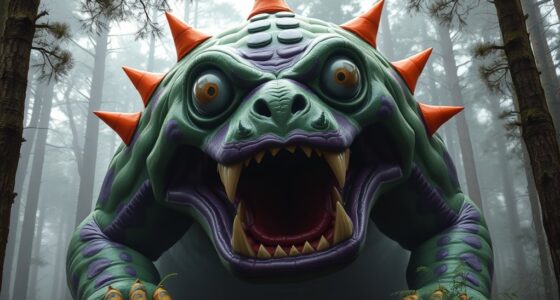
The Beast of Bannockburn is a legendary Scottish creature often linked to wolf-like sightings and myths of shape-shifting monsters. Stories suggest locals saw a terrifying beast during medieval times, symbolizing chaos and primal fears tied to Scotland’s turbulent past. These sightings may have been misidentifications or exaggerated tales passed down through generations. If you want to uncover more about this legends’ origins and what they reveal about Scottish history, keep exploring its fascinating stories.
Key Takeaways
- The Beast of Bannockburn is a legendary creature linked to Scottish folklore, symbolizing chaos and primal fears during wartime.
- Sightings often describe a wolf-like or shape-shifting beast reportedly seen near the Bannockburn battlefield.
- Legends may originate from misidentified wild animals or exaggerated local stories passed through generations.
- The legend reflects societal fears of disorder, war, and the unknown, blending myth and historical conflict.
- Modern interpretations see the creature as a cultural symbol, continuing to inspire storytelling and regional identity.

Have you ever wondered if Scotland’s dark, misty landscapes hide more than just ancient castles and folklore? The legend of the Beast of Bannockburn is a perfect example. Tales of a wolf-like creature roaming the area have persisted for centuries, fueling curiosity and fear alike. To understand these sightings, it helps to explore their folklore origins and see how they connect to broader historical parallels. Many legends about monstrous animals in Scotland trace back to ancient stories that blend myth and reality, often serving as warnings or explanations for unexplained events. These stories weren’t just entertainment—they reflected societal fears, moral lessons, or natural phenomena misunderstood by early communities.
When you look into the folklore origins of these werewolf sightings, you find that they often mirror stories from other cultures, where shape-shifting creatures symbolize chaos or the primal forces of nature. In the case of Bannockburn, stories describe a creature with wolf-like features, snarling and prowling near the battlefield where Robert the Bruce fought for independence. These tales might have originated from real encounters with wolves or other wild animals, which, over time, transformed into more fantastical stories through oral tradition. The legend’s persistence might also be linked to the historical parallels of conflict and upheaval, reflecting the turbulent history of the region. During medieval times, fear of monsters was often intertwined with political or social unrest, making such stories a way to personify chaos or evil.
Additionally, the cultural significance of these legends demonstrates how storytelling served as a means of community identity and resilience during times of hardship. You might consider how these legends compare to other historical parallels, such as the werewolf trials across Europe or stories of shape-shifters in Celtic mythology. These tales often served to reinforce societal norms or to explain bizarre events. In Bannockburn’s case, the creature’s sightings could have been misidentifications of wolves or other animals, exaggerated in local storytelling. Alternatively, some believe these stories symbolize the chaos of war, with the beast representing the brutality of battle and the wildness of nature unleashed during times of conflict.
As you reflect on the legend of the Beast of Bannockburn, it’s clear that these stories are more than mere superstition—they are cultural artifacts. They reveal how communities processed fear, chaos, and the unknown. Whether you see the creature as a real animal, a supernatural entity, or a symbol of wartime chaos, it’s undeniable that these legends continue to grip the imagination. They connect the present to a past filled with tumult and mystery, showing how folklore origins and historical parallels shape the stories we tell about Scotland’s dark, misty landscapes.
Top picks for "beast bannockburn scottish"
Open Amazon search results for this keyword.
As an affiliate, we earn on qualifying purchases.
Frequently Asked Questions
Are There Any Recent Sightings of the Bannockburn Creature?
Recent cryptid sightings of the Bannockburn creature remain unconfirmed, but locals and enthusiasts continue to report strange encounters, fueling folklore preservation. You might find anecdotal evidence or witness accounts online, though no scientific verification exists. These stories keep the legend alive, inspiring curiosity and debate. If you’re interested in cryptid sightings, Bannockburn’s tales serve as a fascinating example of how folklore persists through generations.
What Evidence Supports the Existence of the Scottish Werewolf?
Ever wondered what evidence hints at the Scottish werewolf’s existence? Cryptid footprints found in the Bannockburn area and folklore testimonies from locals add to the mystery. These footprints resemble those of a wolf but are larger, sparking curiosity. Do these traces and stories prove the creature’s existence? While no definitive proof exists, such signs keep the legend alive, fueling speculation about what might be lurking in the shadows.
How Do Local Legends Compare Across Different Scottish Regions?
You’ll find that regional folklore varies across Scottish regions, with each area sharing unique myth comparisons. In some places, legends focus on shapeshifting wolves or beasts, while others emphasize human-wolf hybrids or cursed creatures. These stories reflect local history and beliefs, creating a rich tapestry of myth comparison. By exploring these differences, you gain a deeper understanding of how cultural narratives shape regional identities and fears surrounding legendary creatures like the Scottish werewolf.
Were Any Historical Figures Associated With the Bannockburn Beast?
You might wonder if any historical figures are linked to the Bannockburn beast. While no concrete evidence exists, legendary encounters often associate the creature with figures like Robert the Bruce, symbolizing Scottish resilience. These tales serve as powerful symbols of heroism and mystery, blending history with folklore. Though no direct ties are proven, the legend persists, embodying the fierce spirit of Scotland’s past and its legendary battles.
What Are Common Traits Attributed to the Bannockburn Creature?
You might notice the Bannockburn creature’s mythical characteristics, such as its large, wolf-like appearance and glowing eyes. In folklore symbolism, it often represents chaos or the unknown lurking beyond the battlefield. This creature’s traits evoke fear and mystery, connecting it to ancient legends of supernatural beings guarding secrets or serving as omens. Its fierce, beastly form embodies the dark, mythical aspects of Scottish folklore, leaving a lasting impression on those who claim to have seen it.
Conclusion
As you walk away from the tales of Bannockburn, remember, these stories are like shadows dancing on the edge of reality—faint yet impossible to ignore. Whether true or folklore, they remind you that some mysteries are woven into the fabric of history, lurking just beyond the veil of understanding. Keep your eyes open; sometimes, the beast isn’t just a story but a mirror reflecting our own fears and legends.