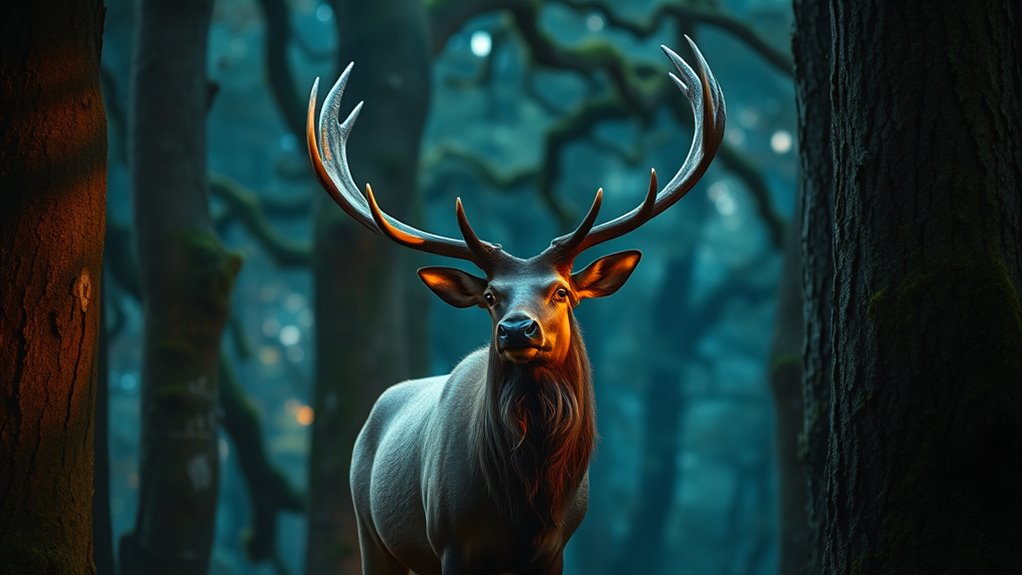

In Norse mythology, the Elk-King is a majestic forest spirit that embodies strength, wisdom, and the sacred bond with nature. With towering antlers filled with ancient secrets, he serves as a guardian and divine protector of the woods, guiding lost souls and punishing harm to the forest. His presence highlights the primal and spiritual power of nature, emphasizing its vibrancy and mysticism. If you continue exploring, you’ll uncover more about this legendary guardian’s deep mythic significance.
Key Takeaways
- The Elk-King is a mythic Norse forest spirit symbolizing strength, wisdom, and sacred bonds with nature.
- He is depicted with towering antlers that hold the history and secrets of the woods.
- As a guardian, he guides lost souls and punishes those who disrespect the forest.
- The Elk-King embodies primal natural forces, emphasizing reverence for nature’s power and mysticism.
- His legend underscores the forest’s spiritual significance and promotes environmental reverence and conservation.
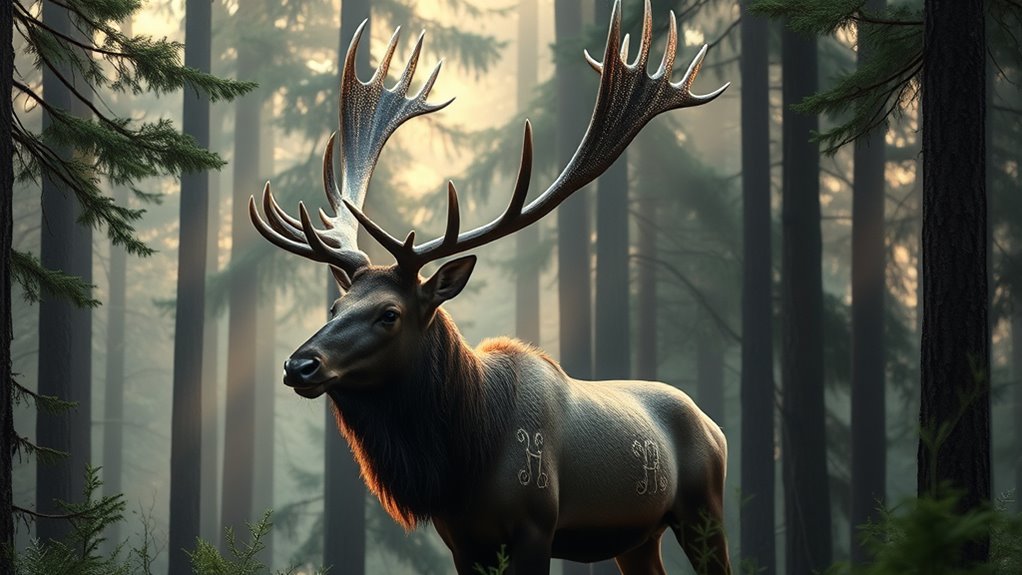
Deep within the ancient forests, the legend of the Elk-King has endured for generations, capturing the imagination of those who hear it. As you wander through towering trees and dense undergrowth, you can almost feel the presence of this mythological creature, a symbol rooted deeply in forest symbolism and spiritual significance. The Elk-King isn’t just a majestic animal; he embodies the spirit of the woods, representing strength, wisdom, and the sacred bond between humans and nature. In many stories, myths, and legends, mythological creatures like the Elk-King serve as guardians of the forest’s secrets, reminding you of the mystical power woven into the natural world.
The Elk-King’s story is woven into Norse mythology, where he stands as a powerful forest spirit. Imagine a creature with the antlers of a mighty stag, towering and regal, yet imbued with an almost supernatural aura. This figure is more than just an animal; he’s a symbol of the forest’s vitality and resilience. The forest symbolism surrounding the Elk-King emphasizes his role as a protector and a bridge between the mortal realm and the divine. When you encounter references to mythological creatures in Norse legends, the Elk-King often symbolizes the primal forces of nature that are both awe-inspiring and intimidating. His presence in stories underscores the idea that the forest is alive, with its own consciousness and spirit, deserving of respect and reverence.
You may notice that the Elk-King’s mythological significance extends beyond mere symbolism. In tales, he’s depicted as a wise and almost mystical being, capable of guiding lost souls or punishing those who disrespect the forest. His antlers are often said to hold the history and secrets of the woods, making him a symbol of ancestral wisdom. As you explore these stories, you realize that the Elk-King embodies a deep connection to the land, a reminder that the forest isn’t just a collection of trees but a living, breathing entity filled with myth and history. His role in Norse legend highlights the importance of respecting nature’s power and recognizing mythological creatures as custodians of the natural world’s sacred mysteries. In essence, he’s a guardian of the forest’s soul, inspiring reverence and awe for the wilderness that surrounds us.
Furthermore, nature-based symbolism plays a crucial role in understanding the Elk-King’s significance, illustrating how mythic figures are intertwined with environmental reverence and conservation.
Frequently Asked Questions
What Are the Origins of the Elk-King Legend?
The elk-king legend has mythical origins rooted in ancient beliefs that link nature spirits to powerful animals. You might see it as a symbol of wilderness and spiritual authority, with stories passed down through generations. These legends often reflect the reverence for nature’s forces, illustrating a deep connection between humans and the natural world. By understanding these ancient beliefs, you gain insight into how cultures viewed the elk as a sacred, almost divine, creature.
How Is the Elk-King Depicted in Modern Culture?
You might think the elk-king is just a myth, but in modern culture, it’s vividly depicted in popular media and modern art. Artists portray it as a majestic, mystical creature, often emphasizing its regal and spiritual qualities. Films, video games, and comics sometimes feature elk-king imagery, blending myth with fantasy. This deepens its legend, making it a symbol of wilderness, power, and transformation in contemporary creative expressions.
Are There Specific Rituals Associated With the Elk-King?
You might find that rituals associated with the elk-king include forest offerings and ritual dances. These practices honor the spirit, seeking protection or guidance from the elk-king. People often leave symbolic gifts in the woods and perform dance ceremonies to connect with the forest deity. Such rituals deepen your bond with nature, reflecting respect and reverence for the elk-king’s power and presence in the wilderness.
What Symbols Represent the Elk-King in Norse Mythology?
Imagine a modern tattoo of an elk intertwined with runes—this visual captures the elaborate symbolism of the Elk-King in Norse mythology. You’ll find symbols like antlers, representing strength and sovereignty, and the forest, symbolizing mystery and protection. These elements hold mythological significance, embodying the Elk-King’s connection to nature, spiritual power, and leadership, making them central symbols that reflect his divine authority and role in the mythic domain.
How Does the Elk-King Influence Local Folklore Today?
You can see the Elk-King’s influence today through Forest Spirit Festivals and Elk King festivals, where communities celebrate nature and mythology. These events often feature storytelling, dance, and rituals honoring the elk as a symbol of strength and harmony with nature. By participating, you keep the legend alive, fostering respect for the forest spirit and inspiring contemporary folklore that emphasizes ecological preservation and cultural heritage.
Conclusion
You’ve discovered the mystique of the Elk-King, the guardian of the Norse forest, the spirit of strength and grace. You’ve seen its power in the wind, felt its presence in the shadows, and heard its call in the silence. You’ve learned that this legend isn’t just a story, but a symbol of nature’s resilience, mystery, and majesty. Embrace its wisdom, respect its domain, and remember—the Elk-King’s spirit lives on, wild and eternal, within the forest’s heart.