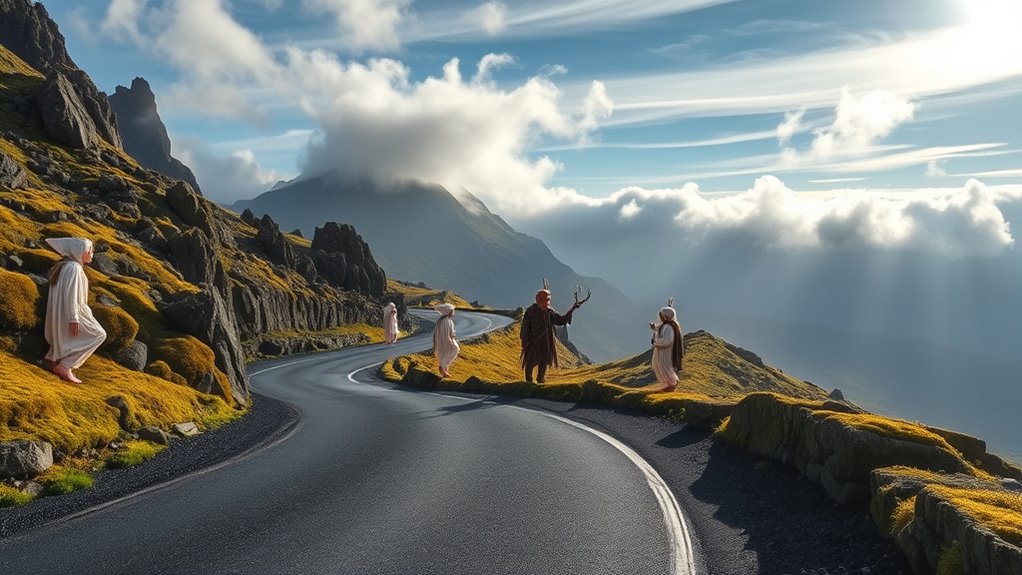

In Iceland, beliefs in the hidden folk, like elves and fairies, deeply influence road planning and construction. Locals and authorities often respect these legends by rerouting roads or delaying projects near elf-inhabited areas. They consult elders, observe traditional practices, and sometimes use signs or ceremonies to honor the unseen world. This blend of myth and modern development creates a respectful approach to land use. To understand how such traditions shape Iceland’s landscape today, keep exploring these fascinating stories.
Key Takeaways
- Icelanders believe in the existence of elves and fairies, influencing cultural traditions and daily life.
- Respect for elf habitats leads to rerouting or delaying road construction near sacred areas.
- Authorities consult local experts and follow traditional practices to avoid disturbing the hidden folk during development.
- Modern technology, like sound recordings, is used alongside traditional beliefs to document sightings and communicate with the unseen realm.
- The integration of old legends with contemporary road planning reflects Iceland’s unique cultural harmony between myth and progress.
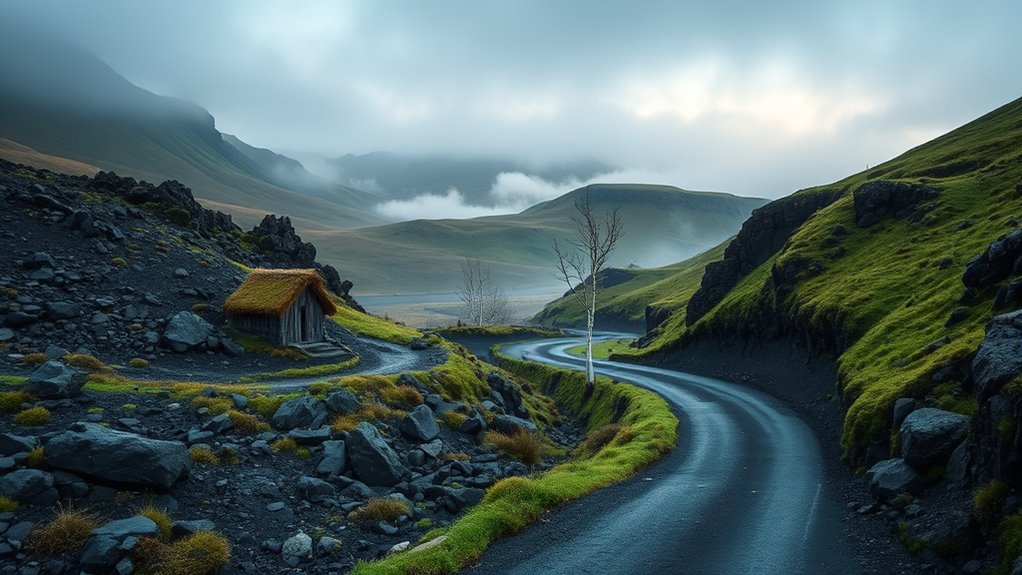
Have you ever wondered if Iceland’s legends hold more than just stories? In a land where the landscape seems to whisper ancient secrets, many locals believe in the existence of the hidden folk—elf and fairy folklore that’s woven into everyday life. For generations, Icelanders have held onto these beliefs, even in the face of modern skepticism. They say elf sightings and encounters with the hidden folk aren’t just tales to scare children but are part of a living, breathing tradition. Some claim to have seen small, luminous figures darting behind rocks or trees, while others feel a strange sense of calm when passing certain hills or mountains, believing they’re near elf dwellings. These stories aren’t dismissed lightly; instead, they’re treated with a respectful curiosity that influences local culture and decision-making.
This deep-rooted belief has even impacted how roads are planned and constructed in Iceland. When authorities and engineers undertake projects near areas believed to be inhabited by elves or other supernatural beings, they often consult local experts or follow traditional practices to avoid disturbing the hidden folk. For example, there are documented cases where road expansions were rerouted or delayed because of perceived elf habitats. This isn’t just superstition but a genuine respect for the cultural heritage and the land’s spiritual significance. Many Icelanders see the elves as guardians of the landscape, and causing them harm might bring bad luck or other misfortunes. So, before breaking ground, planners may hold ceremonies, leave small offerings, or simply heed signs that suggest a site is sacred or inhabited.
The coexistence of modern development with these ancient beliefs creates a unique harmony. While some dismiss it as folklore, many locals follow these traditions diligently, blending old tales with contemporary life. This isn’t about denying progress but about respecting the unseen world that many believe still influences their day-to-day existence. Additionally, sound recording techniques are sometimes used to document sightings or communicate with the unseen realm, blending modern technology with traditional practices. Whenever a new road is mapped out, community elders might be consulted, and stories of elf sightings are kept in mind. This approach ensures that development respects the land’s spiritual essence, preserving a sense of connection to the past. Whether you believe in elves or see it as cultural heritage, it’s clear that in Iceland, the boundary between myth and reality often blurs, and the legends of the hidden folk remain an integral part of the island’s identity.
Frequently Asked Questions
How Do Icelanders Communicate With the Hidden Folk Today?
You can communicate with the hidden folk today through folklore preservation and community storytelling. Icelanders often share stories and traditions that honor these beliefs, keeping the folklore alive. You might hear locals leave small offerings or avoid certain areas to respect these unseen beings. By participating in community events and listening to elders’ tales, you help preserve this cultural connection, ensuring the folklore remains a crucial part of Icelandic life.
Are There Specific Locations Known for Hidden Folk Sightings?
You might be surprised, but some locations in Iceland are famous for hidden folk sightings, fueling urban legends and folklore tourism. Places like Álagablettur and certain rocky outcroppings are believed to be home to the hidden folk. These spots attract visitors enthusiastic to experience Iceland’s mystical stories firsthand, blending local traditions with tourism. While skeptics may doubt, the folklore remains a mesmerizing part of Iceland’s cultural landscape.
What Rituals Are Performed to Appease the Hidden Folk During Construction?
You perform offerings rituals to appease the hidden folk during construction, such as leaving small gifts like bread, alcohol, or flowers at sacred sites. You might also hang protective charms or talismans to guarantee the hidden folk remain pleased and avoid causing accidents or delays. These rituals show respect and seek harmony, helping to maintain good relations and ensure the project proceeds smoothly without disturbing their world.
Have Any Modern Laws Been Influenced by Beliefs in the Hidden Folk?
You’ll find that Iceland’s folklore influence extends into modern laws, symbolizing respect for unseen forces. Mythical legislation reflects this, requiring careful consideration of the hidden folk’s presence during construction. These laws act as a bridge between tradition and progress, reminding you that respecting belief systems helps maintain harmony. By honoring folklore influence, Iceland preserves its cultural identity while embracing development, showing that ancient symbols still shape contemporary policies.
Do Children in Iceland Still Believe in the Hidden Folk?
You’ll find that many children in Iceland still believe in the hidden folk, such as elves and trolls, because these mythical creatures are a essential part of local folklore preservation. Their stories are passed down through generations, keeping the magic alive. While not everyone fully believes, a significant number of kids embrace these tales, reflecting Iceland’s rich cultural heritage and ongoing respect for mythical creatures that shape their community’s identity.
Conclusion
As you explore Iceland’s landscapes, remember that over 70% of Icelanders still believe in the Hidden Folk. This belief influences everything from road planning to daily life, showing how tradition shapes modern development. By respecting these legends, you gain a deeper understanding of Iceland’s unique culture. So next time you’re driving through the rugged terrains, consider that these unseen beings might be watching, reminding you that some traditions remain alive in the most unexpected places.