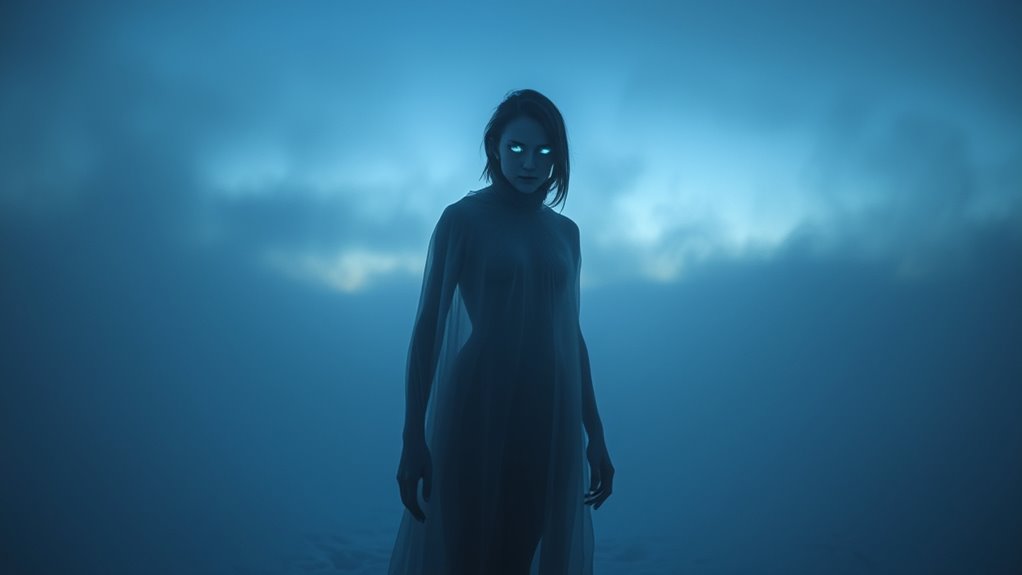

The Ijiraq is a shape-shifting creature from Inuit folklore that can appear as a human, animal, or object to trick you. It snatches children in the night, warning you to stay close and be cautious of unseen dangers in the wilderness. This mystical entity symbolizes the unpredictable forces of nature and the importance of vigilance. Curious about how this creature teaches respect for boundaries? Keep exploring to uncover more about this fascinating legend.
Key Takeaways
- The Ijiraq is a shape-shifting creature from Inuit folklore that often targets children at night.
- It symbolizes the unknown dangers and deceptive forces lurking in natural and wilderness environments.
- Its ability to transform into humans, animals, or objects makes recognition and capture difficult.
- The Ijiraq serves as a cautionary figure, warning children to stay close and heed elders’ advice.
- It embodies themes of unpredictability, natural transformation, and the importance of vigilance in survival.
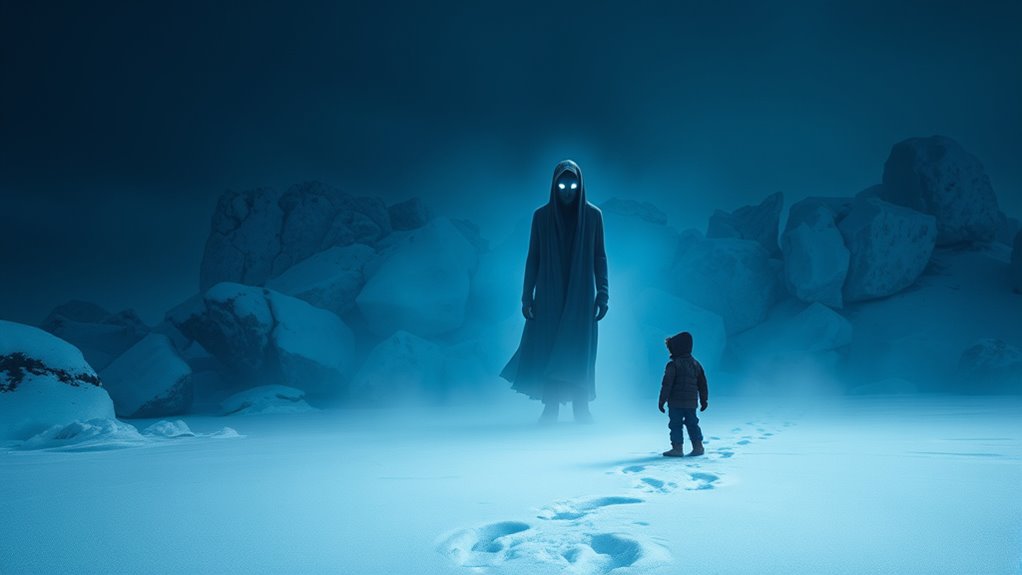
The Ijiraq Shape-Shifter is a mysterious creature from Inuit folklore known for its ability to change form at will. As one of the most intriguing mythical creatures, it embodies the mysterious and sometimes frightening aspects of folklore symbolism. You might wonder why this shape-shifter holds such a prominent place in Inuit stories—it’s because it represents more than just a creature; it’s a symbol of the unknown, of danger lurking beyond what you can see. Its ability to transform makes it a perfect metaphor for deception and the unpredictable forces of nature that the Inuit community respected and feared.
In Inuit legends, the Ijiraq is often described as a cunning and elusive entity that targets children, snatching them away in the night. This myth serves a dual purpose: it warns children to stay close to home and listen to their elders, and it reflects deeper fears about the dangers of the wilderness. Its ability to change forms—sometimes appearing as a human, animal, or even an inanimate object—makes it difficult for anyone to recognize or catch. This shape-shifting trait underscores the creature’s role as a symbol of deception, reminding you that appearances can be deceptive and that danger can be hidden behind familiar or friendly facades.
Folklore symbolism of the Ijiraq also emphasizes its role as a guardian of boundaries, especially those between the known and the unknown. For the Inuit, understanding and respecting these boundaries was *vital* for survival in their harsh environment. The shape-shifter’s ability to infiltrate those boundaries by disguise highlights the importance of vigilance and awareness. Its kidnapping of children isn’t just about fear; it’s a cautionary tale about respecting the natural order and being wary of the unseen threats that could disrupt your life. The stories surrounding the Ijiraq serve as cultural lessons, emphasizing the need for caution and listening to elders’ wisdom.
Additionally, the creature’s ability to adapt its form illustrates the concept of transformation in nature, which is a fundamental aspect of many natural processes. As a mythical creature, the Ijiraq’s symbolism extends beyond just folklore. It embodies the unpredictable and often uncontrollable forces of nature that Inuit communities had to contend with. Its shape-shifting nature reminds you that danger is not always straightforward or obvious. Instead, it can be hidden beneath a familiar exterior, requiring you to stay alert and perceptive. The creature’s role in Inuit mythology encapsulates the themes of caution, respect, and the importance of community knowledge—values that remain relevant today. You can see the Ijiraq not just as a terrifying figure, but as a powerful symbol of the mysterious, ever-changing world around you.
Inuit folklore mythology books
As an affiliate, we earn on qualifying purchases.
As an affiliate, we earn on qualifying purchases.
Frequently Asked Questions
Are There Any Modern Sightings of the Ijiraq?
There are no confirmed modern sightings of the Ijiraq, but occasional cryptid sightings keep folklore preservation alive. People in northern communities sometimes report strange encounters or mysterious shadows, fueling local stories. These reports often get shared during storytelling events, maintaining cultural traditions. While no concrete evidence exists, these tales keep the legend of the Ijiraq alive, reminding us how folklore persists through generations and continues to intrigue and scare.
How Do Inuit Communities Protect Children From the Ijiraq?
You protect your children through community protection rooted in supernatural folklore, like telling stories of the Ijiraq to warn and scare away evil spirits. You might keep children close, especially during dark nights, and perform rituals or ceremonies believed to ward off the supernatural. Sharing these traditions fosters vigilance, ensuring everyone stays alert and united, helping to keep children safe from the Ijiraq’s elusive, shape-shifting threat.
What Are the Origins of the Ijiraq Legend?
You should know that the origins of the ijiraq legend stem from ancient Inuit mythology, where it’s believed to be a mythical creature representing fears and dangers lurking in the Arctic. Its cultural significance lies in teaching children caution and respect for nature, while also serving as a cautionary tale for families. This legend embodies Inuit beliefs, emphasizing the importance of community, tradition, and the spiritual connection to the land and its mysteries.
Can the Ijiraq Be Distinguished From Humans Easily?
You can often distinguish the Ijiraq from humans through cultural symbolism and folklore variations. They tend to have supernatural traits, like shifting shapes or hiding in shadows, which differ from human features. In many stories, their behavior and symbolism highlight their connection to folklore themes of deception and danger. While they may appear human-like, their mystical qualities and the way they’re portrayed across different stories make them uniquely identifiable within Inuit cultural symbolism.
Are There Any Rituals to Ward off the Ijiraq?
Think of your spirit as a glowing fire, and protective amulets as its shield. To ward off the ijiraq, villagers perform ritual dances that symbolize the sun’s power, creating a barrier of light and warmth. These rituals and charms serve as a spiritual armor, helping you stay safe. By embracing tradition, you turn symbolism into a powerful defense against unseen threats lurking in shadows.
shape-shifter costume for kids
As an affiliate, we earn on qualifying purchases.
As an affiliate, we earn on qualifying purchases.
Conclusion
Don’t let fears about the Ijiraq ruin your curiosity. Remember, this shape-shifter is part of myths meant to teach lessons, not scare you. Imagining these stories can spark your imagination and connect you with Inuit culture. So, instead of feeling afraid, embrace the mystery and wonder behind the legend. After all, understanding these stories enriches your perspective and keeps ancient traditions alive in your mind. Let curiosity be your guide, not fear.
wilderness safety flashlight
As an affiliate, we earn on qualifying purchases.
As an affiliate, we earn on qualifying purchases.
cultural folklore storytelling kit
As an affiliate, we earn on qualifying purchases.
As an affiliate, we earn on qualifying purchases.