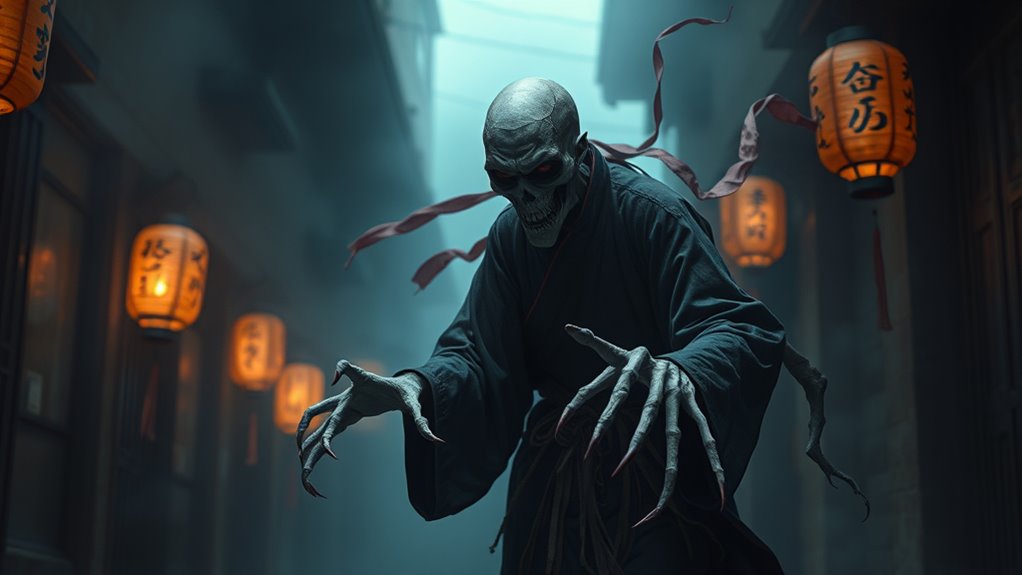

The Jiangshi, known as the Chinese hopping vampire, is a reanimated corpse with stiff limbs that moves by hopping due to rigor mortis. Unlike Western vampires, it’s linked to Chinese folklore and symbolizes the consequences of improper burial or spiritual imbalance. Its unsettling, rigid movements and supernatural origins make it a prominent figure in horror stories and legends. If you keep exploring, you’ll discover more about its origins, beliefs, and cultural significance.
Key Takeaways
- The Jiangshi is a reanimated corpse in Chinese folklore that moves by hopping due to rigor mortis.
- It is often depicted with a stiff, corpse-like appearance and outstretched arms.
- The Jiangshi feeds on the life force of the living and is linked to death and spiritual imbalance.
- Protective measures include mirrors, peach wood, and Taoist charms to ward off or repel it.
- The legend of the Jiangshi reflects cultural beliefs about respecting the dead and spiritual harmony.
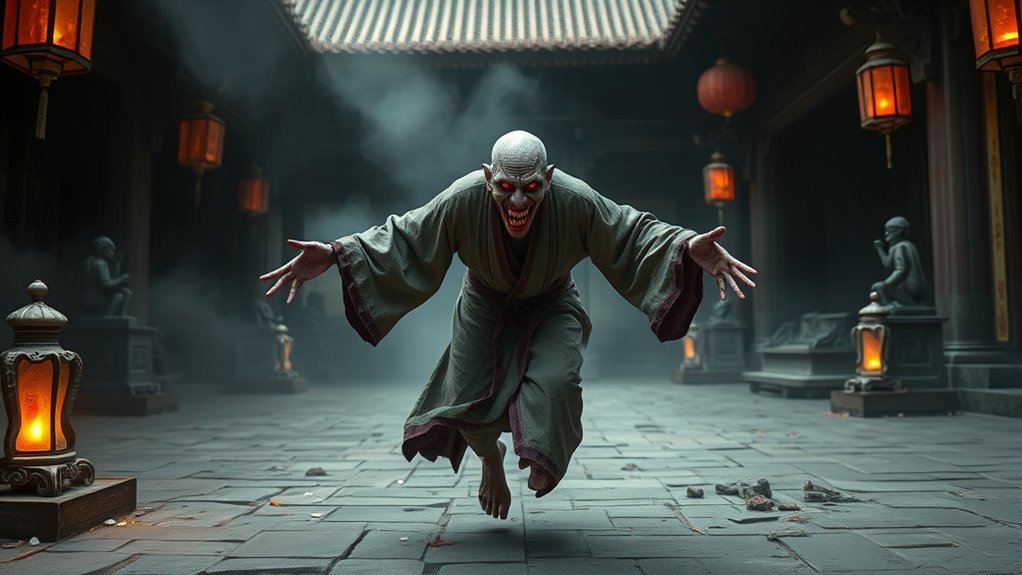
The Jiangshi, often called the Chinese hopping vampire, is a legendary creature rooted in Chinese folklore that has captivated imaginations for centuries. Unlike Western vampires, which are often depicted as seductive or mysterious, the Jiangshi has a unique appearance and behavior that make it stand out. It’s a part of rich Chinese vampire legends, where supernatural beings are woven into cultural stories to explain death, spirits, and morality. You might picture it as a stiff, corpse-like figure with outstretched arms, hopping around rather than walking, which is where it gets its nickname. This hopping motion isn’t just a quirky trait; it’s said to be caused by rigor mortis, and it’s what makes the creature so unsettling to encounter.
The Jiangshi is a stiff, hopping corpse from Chinese folklore, feared for its unsettling, rigid movements.
In Chinese folklore, the Jiangshi is often considered a reanimated corpse that has been brought back to life through dark magic or spiritual imbalance. Unlike its Western counterparts, which are often depicted as charismatic or alluring, the Jiangshi is a terrifying, often mindless entity driven by the desire to feed on the life force of the living. Its stiff movements and unsettling appearance evoke fear and curiosity, making it a popular subject in traditional stories and modern horror tales alike. Chinese vampire legends teach lessons about respect for the dead, the importance of proper burial rites, and the dangers of meddling with dark forces. You might hear stories of villagers setting up talismans or using Taoist charms to ward off these creatures, emphasizing the cultural importance of spiritual protection.
The folklore surrounding the Jiangshi also highlights its supernatural origins. It’s said to be a corpse that failed to find peace in the afterlife, often because of improper burial practices, or because someone disturbed its grave. In some stories, it’s a punishment from the spirits or an act of revenge. The creature’s hopping gait is believed to be an attempt to preserve energy or a result of its stiff limbs. To protect yourself from a Jiangshi, traditional methods include using mirrors, which it fears because it reveals its ghostly nature, or placing peach wood on its path, believed to repel evil spirits. These legends reflect a deep-seated belief in spiritual harmony and the importance of respecting the dead.
Throughout history, Chinese vampire legends like that of the Jiangshi have persisted because they serve as cautionary tales and cultural symbols. They remind you of the fragile boundary between life and death, and the importance of spiritual balance. Whether seen as frightening monsters or symbols of cultural beliefs, these creatures continue to fascinate and inspire stories, movies, and folklore that keep the legend alive today.
Frequently Asked Questions
Are Jiangshi Depicted in Chinese Folklore or Modern Media More Often?
You’ll find jiangshi are more often depicted in modern media than in traditional folklore. While they hold cultural symbolism in Chinese legends, recent films, TV shows, and comics frequently adapt and reinvent these creatures for entertainment. Modern adaptations emphasize their hopping movement and eerie appearance, making them popular in horror and fantasy genres. This shift helps keep the myth alive, blending cultural roots with contemporary storytelling.
What Are the Origins of the Jiangshi Myth?
You’re curious about the origins of the jiangshi myth, rooted in superstitious beliefs and cultural symbolism. These legends emerged from ancient Chinese fears of spirits and the dead, serving as moral lessons or warnings. Combining folklore, Taoist practices, and societal anxieties, the myth evolved over centuries, reflecting deep-seated cultural values. The jiangshi symbolizes the restless dead, embodying fears and superstitions that continue to influence Chinese storytelling today.
How Do Jiangshi Differ From Western Vampires?
You’ll notice that jiangshi differ from Western vampire folklore in their appearance and behavior. Unlike Western vampires, which are often seductive and avoid sunlight, jiangshi are depicted as reanimated corpses with stiff movements and hopping gait. They symbolize death and fear in Chinese culture, emphasizing spiritual imbalance. Western vampires embody seduction and immortality, while jiangshi serve as warnings about the consequences of disrespecting ancestors and the supernatural.
Are There Specific Rituals to Ward off a Jiangshi?
Yes, there are specific rituals to ward off a jiangshi. You might perform traditional exorcisms or use talisman rituals, which involve hanging special paper charms or symbols to prevent the creature from entering your space. These rituals are believed to repel the jiangshi, keeping you safe. It is crucial to follow the proper procedures, often guided by local customs or spiritual practitioners, to guarantee the rituals’ effectiveness.
Has the Jiangshi Appeared in International Horror Films?
Yes, the Jiangshi has appeared in international horror films, showcasing cultural crossover and inspiring horror film adaptations worldwide. You might see it portrayed in movies outside China, often blending traditional elements with modern horror themes. Filmmakers find its unique hopping movement and eerie presence mesmerizing, which helps to introduce this myth to global audiences. Its inclusion in international films highlights how cultural stories can evolve and resonate across different cinematic traditions.
Conclusion
Now that you’ve uncovered the secrets of the Jiangshi, it’s clear they’re not just your typical vampire—they’re a living nightmare that hops straight out of ancient legends. Like a shadow slipping through the night, these creatures remind you that some myths are rooted in fears that refuse to fade away. So, next time you hear a strange noise at midnight, remember: the Jiangshi might just be waiting, ready to leap into your darkest dreams.