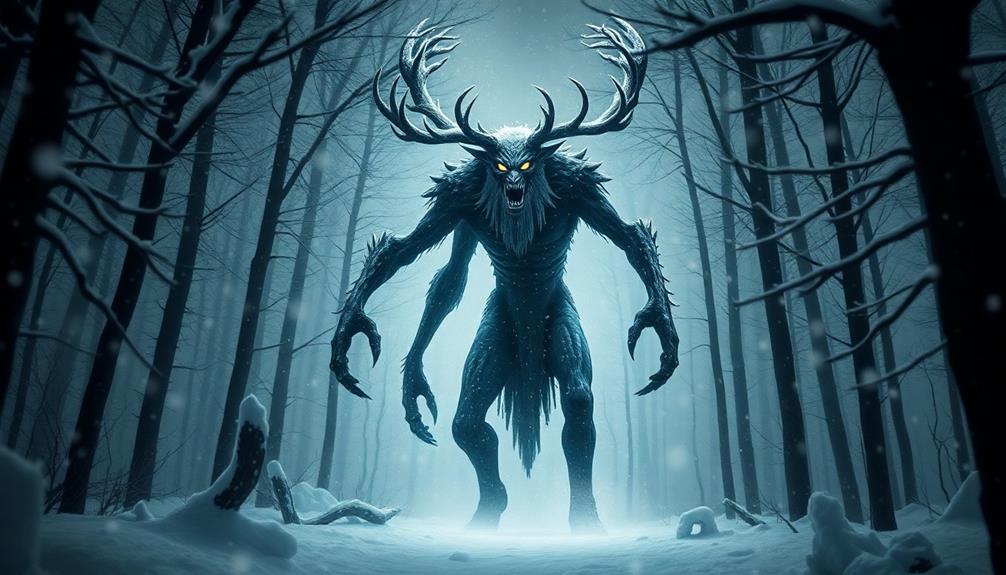
The Jorōgumo is a legendary figure from Japanese folklore, known as Japan’s spider woman. She appears as a seductive woman who lures victims into her web, only to reveal her deadly spider form. Residing in dark, remote places, she symbolizes danger behind beauty and temptation. Her stories serve as warnings about trusting appearances and hidden threats. If you want to uncover the secrets behind her myth and symbolism, there’s much more to discover.
Key Takeaways
- Jorōgumo is a mythic Japanese creature that transforms from a beautiful woman into a deadly spider.
- She symbolizes temptation, deception, and hidden dangers in Japanese folklore.
- Often resides near water or dark, secluded areas, luring victims with charm.
- The legend warns travelers about trusting appearances and the peril behind allure.
- She remains an enduring symbol in Japanese art, literature, and popular culture as a creature of horror and seduction.

Have you ever heard of Jorōgumo, Japan’s legendary spider woman? This mythical creature has captured imaginations for centuries, blending horror and allure in Japanese folklore. The story of Jorōgumo originates from ancient legends, where she is depicted as a seductive spirit capable of transforming from a beautiful woman into a deadly spider. Her folklore origins trace back to stories told around fires and passed down through generations, warning travelers and villagers alike about the dangers lurking in remote areas. She embodies a mix of temptation and treachery, symbolizing the peril that can hide behind a *fascinating* facade.
Jorōgumo, Japan’s alluring spider woman, warns of danger behind beauty and deception in ancient folklore.
As a mythical creature, Jorōgumo is known for her ability to weave intricate webs, both literally and figuratively. In folklore, she often appears as a mesmerizing woman who attracts men with her charm and beauty. Once lured in, she reveals her true form—a giant spider with deadly intentions. Her webs are not just physical traps but also metaphors for deception, illustrating how appearances can deceive, and danger can lurk behind beauty. This dual nature makes her a *compelling* figure in Japanese mythology, embodying the fear of the unknown and the unpredictable nature of evil disguised as allure.
The stories tell that Jorōgumo often resides near water or dark, secluded areas like forests or abandoned houses. Travelers passing through these places are warned to stay alert, as she might appear as a gracious hostess or a mysterious woman seeking help. But beware—her true intention is to ensnare her victims in her web, both physically and spiritually. Once caught, her victims face a gruesome fate, either devoured or transformed into part of her web of deception. This ominous narrative emphasizes her role as a cautionary figure, warning against trusting appearances and the dangers hidden behind charm.
In modern interpretations, the myth of Jorōgumo continues to inspire stories in literature, movies, and art, where she is often portrayed as a symbol of seduction, danger, and the mysterious power of nature. Her folklore origins remain a haunting reminder of the fears and superstitions that shaped Japanese culture. Whether seen as a villain or a tragic creature, the Jorōgumo remains a *entrancing* and enduring figure, embodying the complex relationship between beauty and danger. Interestingly, her story also reflects themes of deception and trust that are universal across many cultures. So, next time you hear about a mysterious woman in the shadows, remember the legend of Jorōgumo—a mythic creature that weaves more than just silk.
Frequently Asked Questions
Are There Any Real-Life Sightings of the JorōGumo?
You won’t find confirmed real-life sightings of the jorōgumo, as these are mainly urban legends and folkloric sightings passed down through generations. People often share stories of mysterious spider-like women in remote areas, but there’s no solid evidence to support their existence. These tales add a spooky allure to Japanese folklore, but they remain just that—stories. So, while intriguing, the jorōgumo stays firmly in the domain of myth and legend.
How Has the JorōGumo Influenced Modern Japanese Culture?
You see her in shadowy alleyways and flickering screens, where urban legends like the jorōgumo weave into modern tales. She influences Japanese culture through films, manga, and art, embodying themes of temptation and danger. These modern adaptations keep her myth alive, reminding you that beneath everyday life lurks a web of stories that challenge your perceptions, blending ancient fears with contemporary imagination.
What Are the Symbolic Meanings Behind the JorōGumo’s Myth?
You see the jorōgumo’s myth as rich with symbolic meanings, representing deception, danger, and temptation in Japanese culture. Its story warns against trusting appearances, highlighting the cultural symbolism of hidden threats behind beauty or charm. The myth also explores themes of transformation and duality, reminding you that what seems alluring might conceal a darker, more dangerous truth, serving as a cautionary tale rooted in cultural symbolism.
Are There Specific Regions in Japan Associated With JorōGumo Legends?
You’ll find the most intense jorōgumo legends in Japan’s Kanto and Kansai regions, where local folklore paints her as an unstoppable, enchanting predator lurking in shadowy forests and abandoned houses. These stories are so vivid, they feel like they could leap off the page and come alive. Each region’s local legends add unique twists, making the jorōgumo’s myth even more mesmerizing and terrifying in its epic scope.
How Does the JorōGumo Compare to Similar Spider Myths Worldwide?
You’ll find that the jorōgumo shares similarities with spider myths worldwide through cultural parallels and mythological archetypes. Like the Greek Arachne or the African Anansi, she embodies themes of deception, craftiness, and danger. These stories often symbolize the fine line between beauty and peril, illustrating how different cultures use spider figures to explore human fears and societal morals. The archetype reveals universal fears of betrayal and temptation.
Conclusion
So, next time you see a beautiful woman with a mysterious smile, remember the Jorōgumo—Japan’s seductive spider woman. She’s the original master of weaving webs, trapping hearts and, apparently, souls. Who knew that beneath those alluring eyes lurks a deadly trap? So, stay cautious, or maybe just enjoy the show. After all, in her web, everyone’s a little bit caught—whether they realize it or not. Sweet dreams, or should I say, sticky dreams!