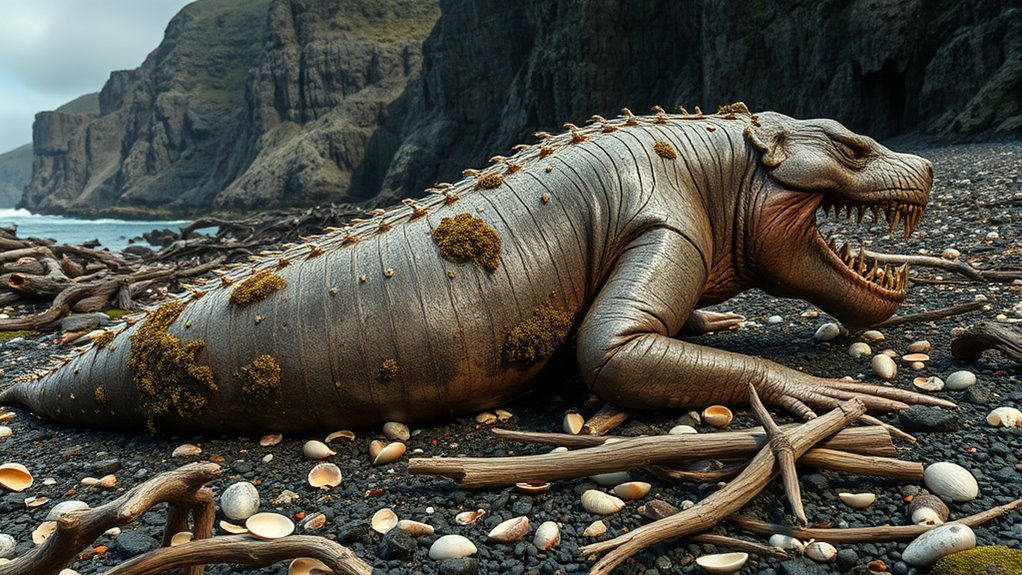

In 1808, fishermen on Stronsay Island discovered a mysterious carcass washed ashore, sparking tales of a giant sea serpent. Witnesses described a massive, elongated creature with dorsal fins and a serpent-like head, fueling local legends and marine folklore. Skeptics believe it was likely a decomposed whale, while others think it might be a cryptid from the ocean depths. Curious to uncover more about this intriguing story? Keep exploring the mysterious history of the Stronsay Beast.
Key Takeaways
- The Stronsay Beast was a mysterious carcass washed ashore on Stronsay Island in 1808, sparking local legends of a sea serpent.
- Descriptions depict a large, elongated, serpent-like creature with dorsal fins and a serpent-like head.
- Skeptics believe it was a decomposed whale or known marine animal, while believers consider it a cryptid.
- The story has become a key part of marine folklore, symbolizing human fascination with oceanic mysteries.
- Modern interest persists, fueling debates on cryptid existence and the ocean’s potential undiscovered creatures.
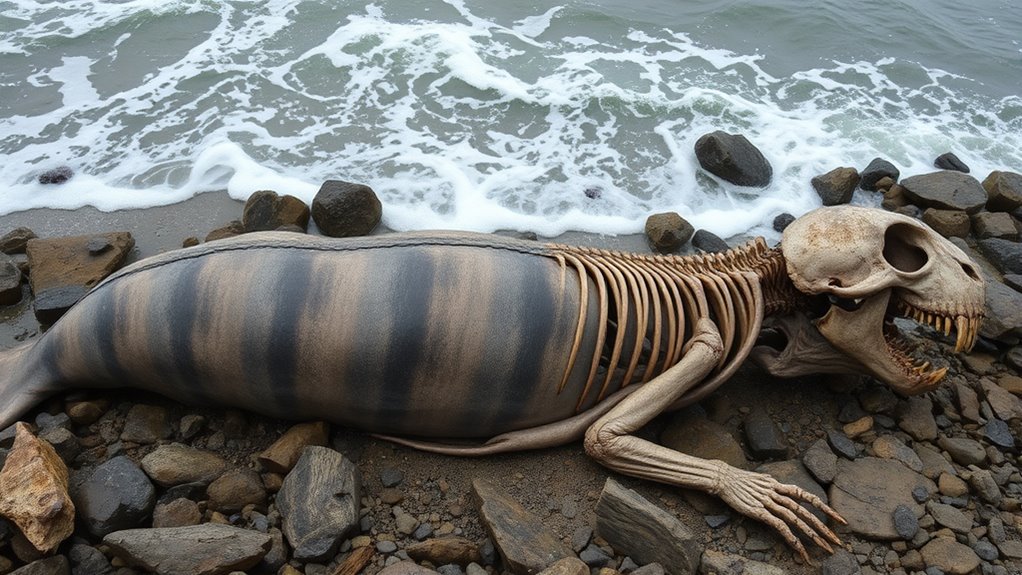
Have you ever wondered if mythical creatures might be more than just legend? The story of the Sea Serpent carcass of Orkney, known as the Stronsay Beast, certainly sparks that curiosity. It’s a fascinating chapter in marine folklore that continues to intrigue both skeptics and believers alike. When you explore cryptid sightings, stories like this stand out because they blur the line between myth and reality, prompting questions about what might really lurk beneath the waves.
Could mythical creatures be more than just legends? The story of the Stronsay Beast blurs myth and reality.
The tale begins in 1808 when local fishermen on the island of Stronsay claimed to have discovered a strange carcass washed ashore. Descriptions of the creature varied, but many witnesses described a massive, elongated body, with a series of dorsal fins and a serpent-like head. The local community was both terrified and fascinated. This carcass became a symbol in marine folklore, fueling countless discussions about the existence of sea serpents and cryptids in the northern seas. Over the years, stories of similar sightings and carcasses have circulated, making the Stronsay Beast a key figure in the lore surrounding cryptid sightings in the area.
What makes this story so compelling is how it feeds into the broader context of marine folklore, where tales of mysterious creatures serve as a reflection of human fascination with the unknown. Some skeptics argue the carcass was a decomposed whale or another known marine animal, misidentified or exaggerated by eyewitnesses. Others believe it was a genuine cryptid—a creature from the depths that defies scientific explanation. Regardless of the truth, the story has persisted, inspiring curiosity and debate. The idea of a giant sea serpent lurking beneath the surface taps into deep-seated fears and wonder about what remains undiscovered in our oceans. Additionally, the advances in encryption and cybersecurity help protect the integrity of digital records and research related to marine mysteries, ensuring that stories like this are preserved and scrutinized responsibly.
As you explore this story, it’s impossible not to contemplate the significance of cryptid sightings in shaping our understanding of marine folklore. These tales often serve as modern-day legends, passed down through generations, fueling local identity and mystery. The carcass of the Stronsay Beast remains a captivating chapter because it embodies that blend of myth and reality. Whether it was a misidentified whale or something more extraordinary, it reminds us that the ocean still holds secrets we’ve only begun to uncover. The story encourages you to keep questioning and exploring, because in the depths of the sea, there may still be creatures that challenge what you believe about the natural world.
Frequently Asked Questions
Has the Stronsay Beast Ever Been Officially Identified?
You might wonder if the Stronsay Beast has ever been officially identified. No, it hasn’t; despite numerous cryptid sightings and marine mysteries fueling speculation, experts remain uncertain. The carcass washed ashore in Orkney sparked intrigue, but scientific analysis couldn’t confirm it as a known creature. This mystery continues to fascinate enthusiasts, leaving the Sea Serpent carcass as a compelling example of marine mysteries that challenge our understanding of oceanic life.
Are There Modern Sightings of Similar Sea Creatures?
Like explorers chasing legends, you might wonder if modern cryptid sightings reveal new marine mysteries. Yes, reports of sea serpents and strange creatures surface periodically, fueling speculation and intrigue. These sightings, often reminiscent of the Stronsay Beast, keep the mystery alive. Though unconfirmed, such encounters suggest that the ocean still holds secrets, inviting you to ponder what unknown beings could lurk beneath the waves, waiting to be discovered.
What Theories Explain the Carcass’s Mysterious Origins?
You might think cryptid hypotheses or marine anomalies explain the carcass’s mysterious origins. Some believe it’s a rare marine anomaly, like a giant squid or whale that got deformed or decomposed unusually. Others suggest it could be a cryptid, a hidden sea creature unknown to science. Despite many theories, no definitive evidence confirms its true identity, leaving the carcass a fascinating mystery in marine folklore.
How Did Locals Initially React to the Discovery?
When you hear about the discovery, you realize locals initially reacted with skepticism, questioning if it was a hoax or a misidentified animal. Many relied on local folklore, which fueled their doubts, and some dismissed it as just a strange carcass. Over time, curiosity grew, but at first, the community’s response was cautious, influenced by their traditions and the uncertainty surrounding such an unusual find.
Has the Carcass Influenced Marine Research or Folklore?
Your discovery of the carcass has fueled marine folklore, inspiring tales of sea monsters and mysterious creatures. It also prompted scientific skepticism, leading researchers to scrutinize the remains carefully. While some see it as evidence of legendary sea serpents, others argue it’s a decomposed whale. Your find challenges and enriches marine folklore, sparking ongoing debates between myth and science that continue to intrigue both communities.
Conclusion
You might find it fascinating that, despite countless sightings over centuries, only a handful of actual carcasses like the Stronsay Beast have ever been found. This rarity suggests how elusive these creatures are, or perhaps how stories and sightings persist more in legend than reality. Remember, less than 1% of sea creatures have been fully documented. So, while the Stronsay Beast remains a mystery, it also reminds us of how much we still have to explore beneath the waves.