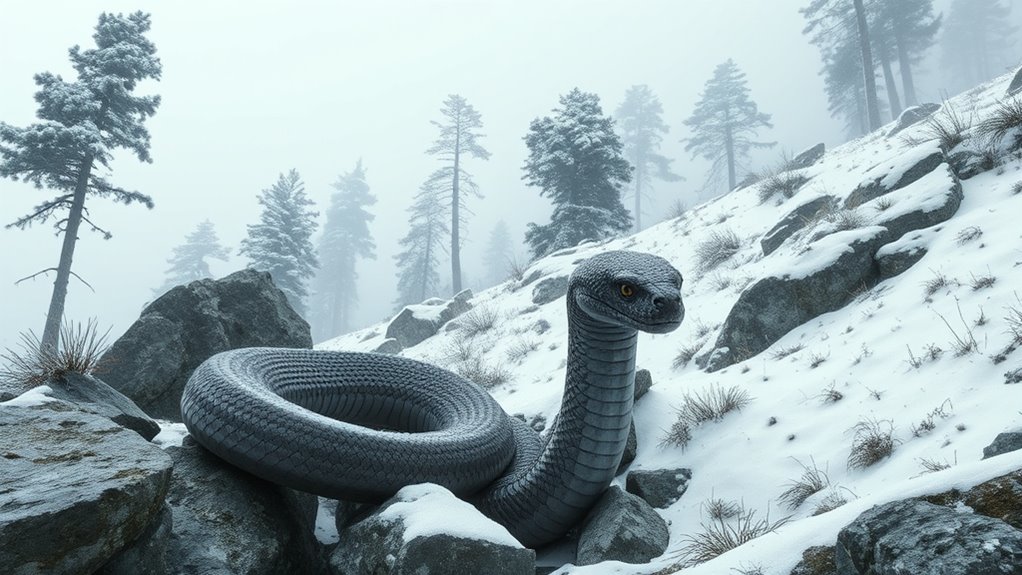
Across Austria and Switzerland, many believe they’ve spotted the elusive Tatzelwurm, described as a serpentine creature with a feline-like head and scaled body. Locals and hikers share tales of sightings in rocky mountain terrains, often disappearing into shadows, fueling legends that date back generations. While skeptics suggest these could be misidentifications of known animals, the myth endures. To uncover more about these mysterious alpine encounters, explore the fascinating stories lurking in mountain shadows.
Key Takeaways
- Sightings of the Tatzelwurm have been reported by shepherds and hikers in remote mountainous regions of Austria and Switzerland.
- Descriptions typically depict a serpentine creature with a feline-like head, long scaled body, and elusive movements.
- Local legends and folklore perpetuate the creature’s existence, with annual festivals celebrating the myth in some villages.
- Scientific skepticism considers most sightings as misidentifications of known animals, with no concrete evidence of the creature’s reality.
- The legend continues to intrigue enthusiasts, fueling stories that emphasize the mysterious and primal nature of the Alps.

Across the rugged mountains of Austria and Switzerland, reports of the elusive Tatzelwurm continue to intrigue both locals and explorers alike. This mysterious creature is deeply rooted in cryptid folklore and alpine legends, fueling curiosity and skepticism in equal measure. You might hear stories from shepherds or hikers who claim to have seen a strange, serpentine figure slithering through the rocky terrain. These accounts often describe a creature with a feline-like head, a long, scaled body, and sometimes, small limbs. Despite the lack of concrete evidence, the tales persist, passing from generation to generation, fueling local superstition and storytelling.
Many researchers suggest that such sightings could be misidentifications of known animals, but the legends maintain their mystique and cultural significance.
As you explore the history of the Tatzelwurm, you’ll find that it embodies the essence of alpine legends—mysterious beings that dwell in the remote, often inaccessible parts of the mountains. These legends serve to explain the unexplained and to preserve the awe of the natural world’s hidden corners. Many stories suggest the creature is a guardian of the mountains or a remnant of ancient times, perhaps even a cryptid representing the primal wilderness. It’s this blend of myth and mystery that keeps sightings alive in local culture, despite modern skepticism.
If you venture into the alpine regions of Austria and Switzerland, you may notice how these stories influence local traditions. Some villages even hold annual festivals celebrating the legend of the Tatzelwurm, emphasizing its role in regional identity. You might encounter old hunters and residents who swear by their encounters, describing the creature’s elusive movements and uncanny ability to vanish into the mountain shadows. Their descriptions often match the classic features of the cryptid folklore—sinister, yet alluring. It’s easy to see how such tales shape the collective imagination, weaving the creature into the fabric of alpine legends.
While scientists and skeptics dismiss the Tatzelwurm as a myth or a misinterpretation of known animals, the legends persist. The allure of the unknown, especially in the remote Alps, keeps the stories alive. For you, exploring these legends offers a glimpse into a world where myth and reality intertwine, where the mountains guard their secrets closely. Whether you believe in the creature or not, the stories remind you that the alpine wilderness remains a place of mystery, where cryptid folklore continues to thrive amid the peaks and valleys, challenging your sense of what’s possible in the shadowy corners of the mountains.
Frequently Asked Questions
What Is the Origin of the Tatzelwurm Legend?
You might find that the origin of the tatzelwurm legend comes from cryptid folklore, with roots in Alpine myth origin stories. People believed these mysterious creatures were based on real animals or exaggerations of sightings, which fueled local legends over centuries. The myth likely evolved from fears of unknown mountain dangers, blending real animal encounters with imaginative tales, creating a lasting folklore that persists today.
Are There Any Recent Scientific Studies Confirming Its Existence?
You’re unlikely to find recent scientific studies confirming the Tatzelwurm’s existence. Like chasing shadows in cryptid research, modern science remains skeptical, focusing on folklore analysis rather than proof. Imagine trying to prove a myth—much like searching for a whisper in a thunderstorm. While intriguing stories persist, credible scientific validation is absent, making the Tatzelwurm remain a fascinating legend rather than a confirmed creature.
How Do Local Communities Respond to Tatzelwurm Sightings?
You’ll find that local communities often respond to tatzelwurm sightings with intrigue and caution, blending local folklore with curiosity. Some embrace the legend, seeing it as a boost to tourism, while others remain skeptical, wary of false reports. The folklore fuels local pride and attracts visitors, but communities also emphasize the need for scientific evidence to prevent misinformation. Overall, responses balance respect for tradition with cautious tourism management.
What Are the Most Famous Tatzelwurm Encounters Documented?
You’ve probably heard stories that are as legendary as the creature itself. The most famous cryptid sightings include the 1920s in the Swiss Alps, where locals claimed to see a serpent-like creature with feline features. These encounters, rooted in folklore origins, fueled curiosity and speculation for decades. Such documented sightings, though unverified, continue to inspire adventurers and skeptics alike, keeping the mystery alive.
Could the Tatzelwurm Be a Misidentified Known Animal?
Yes, the tatzelwurm could be a misidentified known animal. Many misidentification theories suggest it may be based on known animal myths or real creatures like large lizards or otters. Sightings might be mistaken interpretations of these animals or other natural phenomena. Without concrete evidence, it’s likely that some tatzelwurm reports are just folk tales or misidentifications of familiar creatures.
Conclusion
As you imagine wandering through foggy mountain passes, the mysterious tatzelwurm might just slither silently nearby, blending into shadows and rocky crevices. Its elusive form dances between legend and reality, whispering stories of the Alps’ hidden secrets. Keep your eyes peeled and your senses sharp—you never know when you might catch a glimpse of this serpentine creature curling around a rugged boulder or slipping into the mist, forever part of the mountain’s mystique.