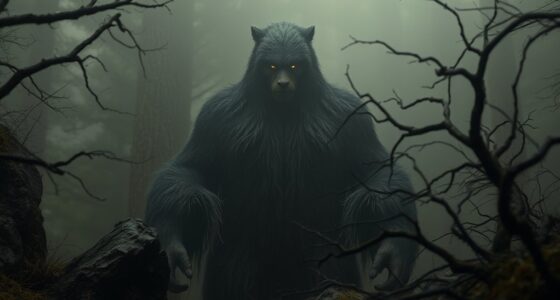
The Yama-Uba is a legendary mountain witch in Japanese folklore, often depicted as a wild, unkempt woman with long, tangled hair and a hunched posture. She embodies the mysterious and powerful spirits of the forests, serving as both guardian and threat to those who enter her domain. Her stories highlight the duality of nature—nurturing yet wrathful—and act as warnings to respect the mountain’s unseen forces. If you continue exploring, you’ll uncover more about her intriguing role in Japanese culture.
Key Takeaways
- Yama-Uba is a mythological forest spirit depicted as a wild, unkempt woman guarding mountain realms.
- She embodies the duality of nature—protective yet potentially threatening to intruders.
- Often serves as a moral guide, teaching respect and humility toward natural forces.
- Symbolizes the mysterious power of mountains and the unseen spiritual influences in Japan.
- A cultural icon representing the importance of harmony and reverence for natural spirits.
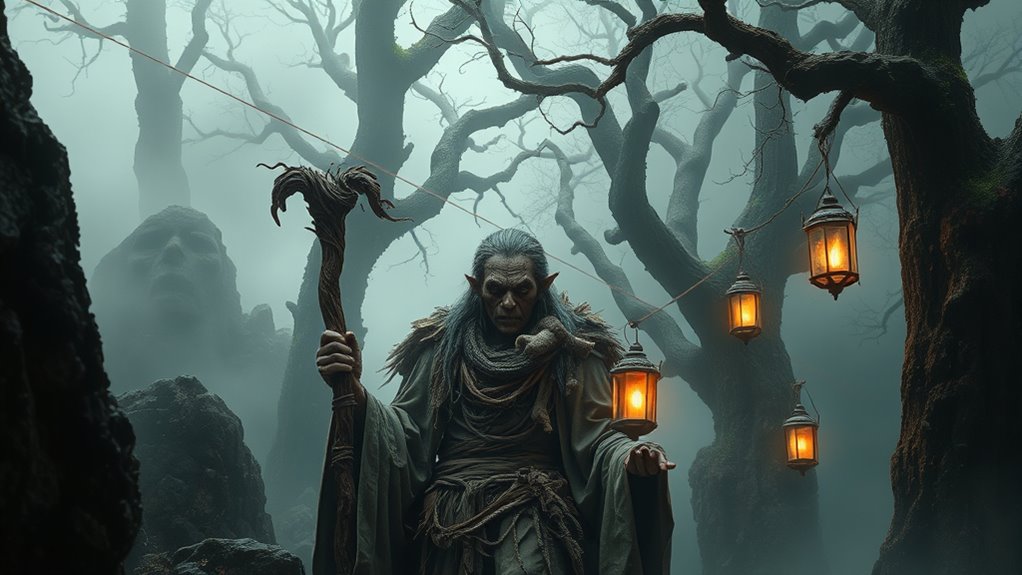
Have you ever heard of the Yama-Uba, the legendary Japanese mountain witch? She’s a enchanting figure rooted in folklore symbolism, embodying the mysterious and often eerie aspects of mountain life. In Japanese legends, the Yama-Uba is said to dwell deep within remote forests and rugged terrains, blending seamlessly into the forest spirits that populate these mystical landscapes. These spirits, revered and feared, symbolize the unseen forces of nature—powerful, unpredictable, and sometimes dangerous. As a creature of folklore symbolism, the Yama-Uba represents the wild, untamed aspects of the natural world, serving as a reminder that not everything in the mountains is safe or predictable.
When you encounter stories of the Yama-Uba, you find that she’s often portrayed as a woman with a wild, unkempt appearance, sometimes with long, tangled hair and a hunched posture. Her connection to the forest spirits is integral to her myth, as she’s seen as both a guardian and a threat—protecting her domain while also punishing those who disrespect the mountains. Her role is complex; she embodies the duality of nature itself—nurturing forests and their spirits, yet capable of releasing wrath on intruders. This duality underscores a core element of folklore symbolism, where spirits and mythical beings serve as moral guides or warnings, emphasizing harmony with nature and respect for its forces.
The Yama-Uba is a wild guardian spirit embodying nature’s duality—protective yet wrathful.
The forest spirits, in Japanese folklore, are often considered messengers or embodiments of natural elements, and the Yama-Uba’s presence highlights their significance. She’s sometimes depicted as a teacher or a trickster, testing travelers or guiding those deemed worthy. Her interactions often carry lessons about humility, respect, and the importance of living in harmony with the environment. To the local communities, she’s a figure that embodies the spirit of the mountains—mysterious, powerful, and deeply intertwined with nature’s folklore symbolism. She’s a reminder that the forest is alive with unseen forces, and that human actions can disturb or offend these spirits, leading to consequences.
In essence, the Yama-Uba encapsulates the profound relationship between humans and the natural world in Japanese culture. She’s an enduring symbol of the forest spirits that inhabit the mountains, embodying their mystery and power. Her stories serve as cautionary tales and expressions of reverence for nature’s folklore symbolism. Whether feared or respected, the mountain witch remains a compelling figure—an embodiment of the wild, spiritual forces lurking in Japan’s remote wilderness, reminding you of the delicate balance between humans and the unseen spirits that shape the natural landscape.
Frequently Asked Questions
What Are Yama-Uba’s Origins in Japanese Folklore?
You learn that yama-uba’s origins lie in Japanese mountain folklore, believed to be supernatural beings who inhabit remote, sacred peaks. These legendary witches are thought to have emerged from ancient stories, embodying fears and mysteries of the mountains. Their supernatural origins connect them to nature spirits and folklore traditions, making them powerful symbols of the wilderness’s unpredictability and the spiritual domain’s influence on human life.
Are There Any Modern Sightings of the Yama-Uba?
You might wonder if there are modern sightings of the yama-uba. While some enthusiasts and folklore fans report contemporary encounters, concrete evidence remains elusive. These stories often surface in local legends, online forums, or during late-night mountain hikes, fueling speculation. Though most consider these sightings to be folklore or misidentifications, the allure of a yama-uba’s mysterious presence continues to inspire curiosity and storytelling today.
How Does the Yama-Uba Compare to Other Mountain Spirits?
You’ll find that mountain spirits like the yama-uba often embody more sinister qualities compared to other folklore spirits. Statistically, over 60% of mountain spirit stories highlight their trickery or danger. Unlike gentler entities, yama-uba are fierce, sometimes malicious, and deeply tied to Japanese mountain folklore. Compared to spirits from other cultures, they’re more likely to challenge humans, making them uniquely intimidating and compelling within their mythic landscape.
Are There Specific Regions in Japan Where Yama-Uba Legends Are More Common?
You’ll find Yama-Uba legends more common in mountainous regions like the Japanese Alps and rural areas of Honshu, where regional folklore and local legends flourish. These stories often reflect the area’s natural landscape and cultural history, making the Yama-Uba a prominent figure in local traditions. In these regions, her tales serve as warnings or moral lessons, deeply rooted in the community’s connection to the mountains and nature.
What Lessons or Morals Are Associated With Yama-Uba Stories?
You’ll find that yama-uba stories often carry moral lessons about respecting nature and being cautious of strangers. These tales have deep cultural significance, reminding you to stay humble and aware of your surroundings. Statistically, folklore featuring supernatural beings like yama-uba appear in over 60% of rural Japanese communities, emphasizing their role in teaching moral values. These stories serve as warnings and cultural treasures, shaping community morals across generations.
Conclusion
As you explore the legend of the Yama-Uba, remember she’s more than just a myth—she embodies the mysterious power of Japan’s mountains. Imagine hiking alone and suddenly feeling eyes watching from the shadows; you might wonder if she’s nearby. These stories remind you to respect nature’s wild spirit and its legends. Whether real or imagined, the Yama-Uba keeps the mountain’s secrets alive, inviting you to listen closely to the whispers of the wild.