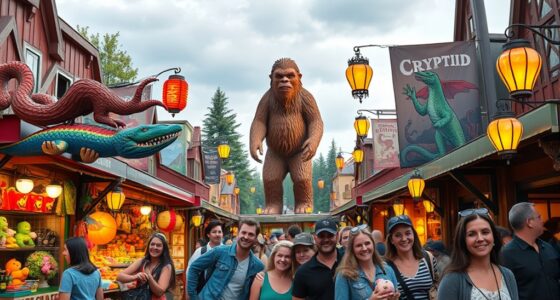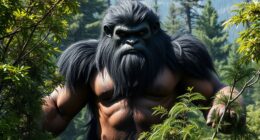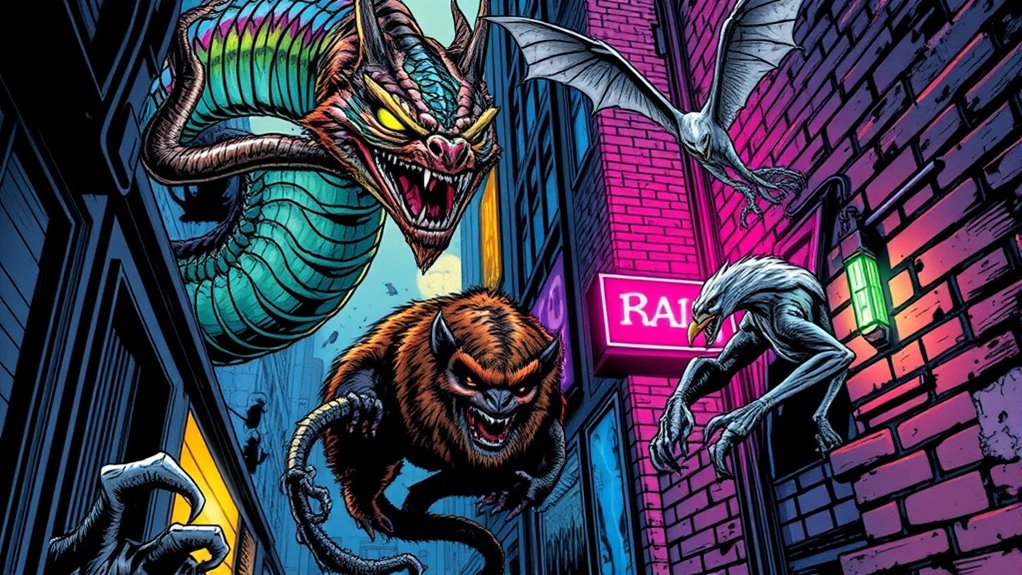

In comics, cryptids like Bigfoot and the Loch Ness Monster are reimagined as more than mysterious legends. Artists use vibrant colors, exaggerated features, and surreal style to give them new depth, making them heroes, villains, or misunderstood creatures. This artistic twist challenges stereotypes and explores complex personalities. These stories blend genres and styles, keeping cryptids fresh and relevant, and often symbolizing environmental themes. If you look further, you’ll discover how these monsters evolve beyond folklore into compelling characters.
Key Takeaways
- Graphic novels reimagine cryptids by blending folklore with modern artistic styles, emphasizing their mythical qualities.
- Creators depict cryptids with exaggerated features and vibrant colors to highlight their supernatural origins.
- Artists assign complex personalities, portraying cryptids as heroes, villains, or misunderstood beings.
- Storytelling across genres allows cryptids to symbolize environmental themes or serve as guardians of hidden worlds.
- Visual reinterpretations influence cultural perceptions, transforming cryptids from folklore to symbols of imagination and wonder.
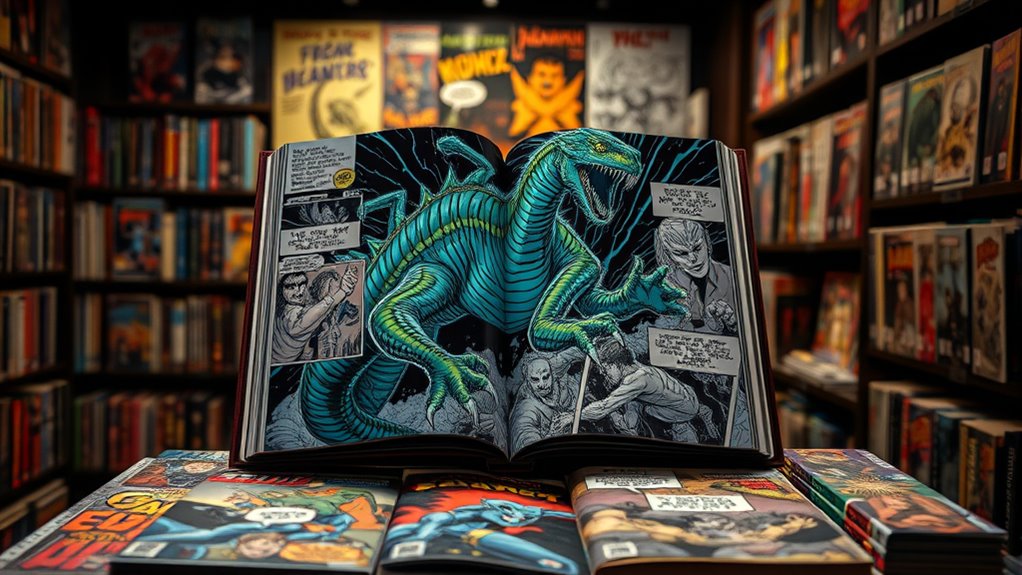
Have you ever wondered how legendary creatures like Bigfoot or the Loch Ness Monster find their way into comic book stories? It’s fascinating to see how these cryptids, once rooted in folklore and myth, are reimagined through the lens of modern art. Their mythical origins provide a rich foundation for artists and writers to craft new narratives, blending tradition with innovation. In comics, these creatures aren’t just mysterious figures from the past; they become characters with depth, personality, and even humor. The artistic interpretations of cryptids allow creators to explore their legendary qualities while giving them a contemporary twist, making them more relatable and engaging for today’s audiences.
Cryptids in comics are reimagined with depth, personality, and modern twists rooted in myth and folklore.
In comic books, cryptids are often depicted with a fresh perspective that emphasizes their mythic qualities, but also challenges traditional perceptions. Artists may exaggerate features, add vibrant colors, or incorporate surreal elements to highlight their supernatural origins. Instead of simply portraying Bigfoot as a giant ape-like creature lurking in the woods, creators might give him a more complex personality, adding layers of emotion or even moral ambiguity. The Loch Ness Monster, typically seen as a mysterious, elusive creature, can be transformed into a symbol of environmental change or a misunderstood guardian of a hidden world. These artistic choices serve to deepen the mythic origins of these creatures, making them more than just legends—they become characters with stories that resonate on multiple levels.
The reinterpretation of cryptids in comics also allows for a playful blending of genres. Sometimes, they’re depicted as heroes fighting to protect their habitats, while other times they’re portrayed as villains or misunderstood monsters. The flexibility of artistic interpretations means creators can experiment with different styles—from dark, gritty realism to vibrant, cartoonish exaggeration—depending on the tone of the story. This versatility breathes new life into old myths and invites readers to see cryptids from new perspectives. Their mythical origins serve as a springboard for creativity, while the visual artistry transforms how we perceive these legendary beings, often challenging existing stereotypes and encouraging us to think about what these creatures represent.
Furthermore, the way cryptids are depicted in comics can influence how people understand and assess the quality of these legendary beings, blending folklore with contemporary artistic standards. Ultimately, comic books give cryptids a platform to evolve beyond folklore, blending mythic origins with contemporary artistic interpretations. This fusion keeps these creatures relevant and intriguing, allowing them to adapt to modern storytelling while honoring their legendary roots. As you flip through pages filled with bold visuals and compelling stories, you’ll see how comics breathe new life into myths, turning cryptids into symbols of imagination and wonder.
Frequently Asked Questions
How Do Comics Influence Public Perception of Cryptids?
You’re influenced by comics because they offer a mythology reinterpretation that shapes how you see cryptids. Through vivid artwork and storytelling, comics bring these monsters to life, making their cultural impact feel more real and relatable. As you follow these reimagined stories, your perception shifts—cryptids become symbols of mystery or fear, blending folklore with modern imagination. This dynamic portrayal influences how you understand and connect with these legendary creatures.
Are Cryptid Characters Based on Real Folklore or Entirely Fictional?
Cryptid characters in comics are often based on a mix of folklore accuracy and fictional inspiration. You’ll find that some are rooted in traditional legends, giving them a sense of authenticity, while others are creatively reimagined, blending myth with imagination. This combination helps comics captivate audiences, making cryptids feel both familiar and fantastical, which enriches the storytelling and broadens your understanding of these mysterious creatures.
What Are the Challenges of Depicting Monsters Visually in Comics?
You face the challenge of balancing visual realism with artistic interpretation when depicting monsters in comics. To make them believable, you need detailed designs that evoke fear or wonder, while also allowing creative freedom to exaggerate features for dramatic effect. Managing this balance ensures your monsters feel both authentic and fantastical, engaging readers and bringing your story’s mythic creatures vividly to life on every page.
How Do Creators Balance Fear and Familiarity in Cryptid Designs?
You strike a delicate balance by weaving visual symbolism that hints at fear’s shadow while maintaining familiar features that comfort the viewer. Using cultural context, you craft cryptid designs that evoke ancestral stories and shared fears, making monsters both uncanny and relatable. This interplay creates a creature that feels like an old friend hiding a dark secret, blending dread and familiarity into a compelling visual dance that pulls readers into your world.
Are There Any Upcoming Comic Series Featuring New Cryptids?
Yes, upcoming comic series are exploring new cryptids rooted in cryptid origin stories and cryptid folklore adaptations. You’ll find fresh monsters inspired by lesser-known legends, blending traditional tales with innovative artwork. These series aim to surprise you with unique designs and rich backstories, expanding the cryptid universe. Keep an eye out for these releases, as they promise to deepen your appreciation for cryptid lore while offering thrilling new creatures to discover.
Conclusion
As you flip through these graphic novels, it’s funny how the creatures you once thought were mere legends suddenly feel closer than ever. Maybe it’s the way artists breathe new life into myth, or how a chance encounter with a comic can change your perspective on monsters forever. In the end, these stories remind you that sometimes, the most extraordinary creatures are hiding just beneath the surface—waiting to be discovered when you least expect it.