
Digital media transforms ancient myths by reimagining monsters as dynamic, interactive beings that challenge you in new ways. Instead of static statues, monsters now surprise you with behaviors and tactics that evolve during gameplay, making each encounter unique. They serve not just to scare but to deepen storytelling and create immersive worlds. By modernizing mythic creatures, digital media keeps ancient stories relevant and engaging—if you want to discover how they continue to evolve, keep exploring.
Key Takeaways
- Digital media transforms static mythological monsters into dynamic, unpredictable entities with evolving behaviors and mechanics.
- Modern games reinterpret ancient myths through innovative visuals, lore, and thematic relevance to contemporary audiences.
- Monsters serve as symbols, enriching storytelling and thematic depth beyond simple combat challenges.
- Interactive mechanics allow monsters to surprise players, increasing engagement and strategic depth.
- Digital reinvention makes mythic creatures more relatable and relevant by reflecting current fears and societal issues.

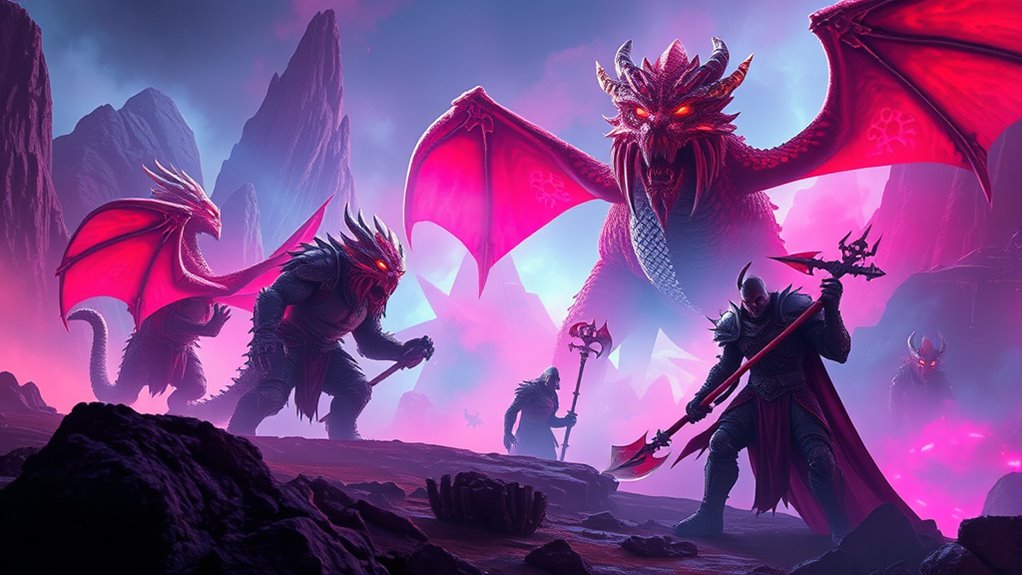
Have you ever wondered why monsters are such a staple in video games? They’re often the first thing you encounter when diving into a new world, and they serve as both obstacles and sources of challenge. The secret lies in how monster design and gameplay mechanics intertwine to create memorable experiences. When developers craft monsters, they don’t just focus on making them look scary; they think about how these creatures fit into the game’s universe, what their strengths and weaknesses are, and how they influence your approach to gameplay. This deliberate monster design ensures that each encounter feels purposeful and engaging, encouraging you to adapt and strategize rather than just brute-force your way through. Moreover, the use of cookie categories in game design can influence how players interact with various game elements, subtly shaping their experience and engagement. Your interaction with monsters is heavily shaped by gameplay mechanics. For instance, a monster’s size, speed, and attack patterns determine how you’ll fight or evade it. Developers often tweak these mechanics to keep encounters fresh, balancing difficulty with fairness. Sometimes, they introduce unique behaviors—like a monster that lurks in the shadows or one that reacts to your actions—adding layers of depth to the experience. These mechanics also serve to reinforce the monster’s mythic qualities, transforming them from mere enemies into symbols of the game’s themes or lore. It’s this careful integration of monster design and gameplay mechanics that makes battles feel meaningful instead of repetitive. In many ways, monsters in video games reinvent ancient myths, giving traditional creatures new life through digital media. Instead of static statues in a mythological story, they become dynamic entities driven by code, capable of surprising you with new tactics or evolving behaviors. This reinvention allows developers to explore mythic themes with modern twists, blending horror, fantasy, and science fiction into monsters that resonate with contemporary audiences. You might encounter a beast inspired by a legendary creature, but with a design that emphasizes modern fears or societal issues, making the myth feel relevant and fresh. Ultimately, monsters in video games aren’t just about scaring you—they’re about immersing you in a world where every encounter challenges your skills and perceptions. Through innovative monster design and carefully crafted gameplay mechanics, they elevate storytelling and gameplay, transforming ancient myths into interactive experiences. As you navigate these digital worlds, remember that each monster’s design and mechanics are purpose-built to keep you engaged, challenged, and enthusiastic to see what’s around the next corner.
Top picks for "monster video digital"
Open Amazon search results for this keyword.
As an affiliate, we earn on qualifying purchases.
Frequently Asked Questions
How Do Monsters Evolve Over Time in Video Game Narratives?
You see monsters evolve over time in video game narratives through innovative evolutionary design, reflecting changing player preferences and technological advances. Their symbolism shifts to represent new fears or themes, making them more complex and engaging. As you progress, monsters adapt in appearance and abilities, mirroring real-world evolution. This dynamic process keeps storytelling fresh, allowing you to explore deeper mythic meanings while experiencing visually stunning, increasingly sophisticated monsters that resonate with contemporary culture.
What Cultural Influences Shape Monster Design in Digital Media?
You notice that cultural influences shape monster design through mythical symbolism and cultural stereotypes, acting as allegories for societal fears and values. These designs reflect collective consciousness, transforming ancient myths into digital icons. By incorporating symbols and stereotypes, creators communicate deeper meanings, allowing players to explore cultural identities and anxieties. This fusion makes monsters more relatable and meaningful, reinforcing or challenging cultural narratives within the immersive world of digital media.
Are There Ethical Concerns in Depicting Monsters in Games?
Yes, there are ethical concerns when depicting monsters in games. You might worry about reinforcing harmful stereotypes or promoting violence portrayal, which can impact players’ perceptions. Developers should be mindful of how monsters are portrayed, avoiding excessive violence or negative stereotypes that could perpetuate discrimination or fear. Balancing engaging gameplay with responsible storytelling guarantees players enjoy the experience without reinforcing harmful ideas or stereotypes.
How Do Player Choices Affect Monster Interactions and Outcomes?
Your choices considerably influence how you interact with monsters, showcasing your player agency. When you decide to fight, negotiate, or flee, it alters the game’s outcome variability, making each encounter unique. These decisions shape not only the immediate interaction but also the story’s progression, allowing you to experience different endings and consequences. Your actions directly impact the monsters’ responses, creating a dynamic and personalized gaming experience.
What Role Do Monsters Play in Fostering Player Empathy?
Monsters in video games foster your empathy through monster symbolism, which reveals their complex stories and struggles. As you interact with these creatures, you see beyond their scary exterior, understanding their motives and emotions. This empathy development deepens your connection, making you consider different perspectives. By engaging with monsters on this level, you become more compassionate, recognizing that even the most intimidating creatures have stories worth understanding.
Conclusion
As you explore these digital worlds, monsters become more than myths—they transform into experiences you can face and conquer. Like shadows dancing on a wall, they shift and evolve, reflecting our fears and creativity. Through this virtual lens, myths breathe anew, blending ancient stories with modern technology. So, next time you encounter a beast in a game, remember you’re stepping into a living myth, a story that you help shape with every move you make.