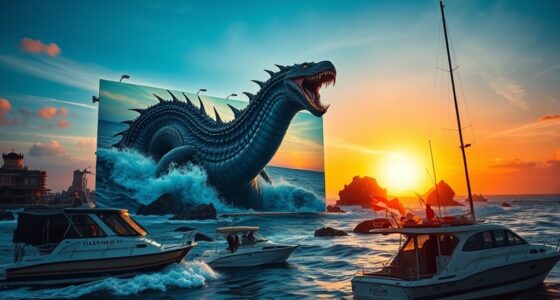
In advertising and tourism, legendary monsters and mythic creatures are powerful tools to spark curiosity and create emotional bonds. Brands and destinations use these myths to craft immersive stories, turning local folklore into memorable experiences that stand out in a crowded market. By tapping into the allure of the mysterious, they invite you to explore hidden stories and foster a sense of adventure. Keep exploring to discover how these legends become enthralling branding strategies.
Key Takeaways
- Brands leverage legendary monsters to evoke curiosity, wonder, and exclusivity, making their advertising campaigns more memorable.
- Tourism campaigns incorporate local cryptids to create immersive storytelling experiences that attract visitors and foster cultural pride.
- Mythic symbols and stories inspire emotional connections, encouraging exploration of destinations associated with legendary creatures.
- Folklore-based marketing transforms local legends into global attractions, enhancing destination appeal through experiential storytelling.
- Design thinking enhances immersive experiences by integrating mythical narratives, strengthening brand identity and visitor engagement.
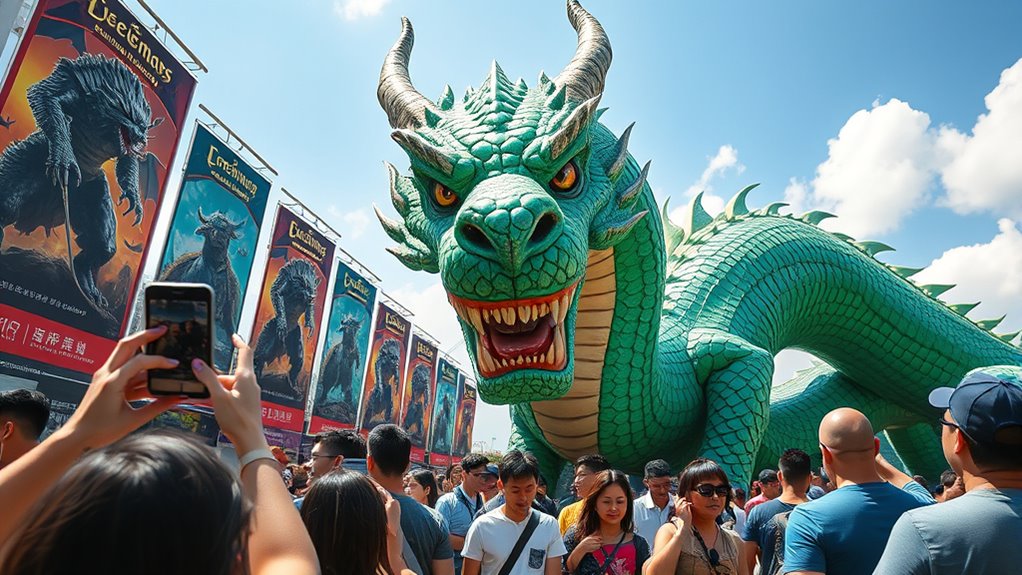
Have you ever wondered why many advertising campaigns and tourist attractions feature monsters or mythical creatures? The answer lies in a clever marketing strategy known as cryptid branding, which leverages the allure of mysterious, unexplained beings to seize attention and spark curiosity. These creatures, often rooted in folklore tourism, serve as powerful symbols that evoke intrigue, adventure, and a sense of the unknown. By incorporating legendary monsters into their branding, companies and destinations tap into deep cultural stories and collective imagination, making their offerings more memorable and enthralling.
When you see a tourism campaign highlighting a local cryptid—like a lake monster or forest beast—it’s not just about the creature itself. It’s about creating a narrative that invites you to explore uncharted territories, discover hidden stories, and connect with local traditions. Folklore tourism thrives on these legends, turning folklore into a tangible experience. Tourists aren’t just visiting a place; they’re immersing themselves in a mythos that feels both authentic and fantastical. This approach encourages visitors to seek out the mystery, making the destination more than just a spot on a map—it becomes a story waiting to be uncovered.
In advertising, cryptid branding often involves crafting a mythic identity around a product or destination. For example, a lake resort might promote itself as the home of a legendary creature, suggesting that visitors could have their own encounter if they come. This tactic creates an emotional connection and sense of exclusivity, enticing thrill-seekers, mystery lovers, and adventure enthusiasts alike. The creature becomes a symbol of uniqueness, a badge of authenticity that sets the brand apart from competitors. It’s a way to evoke wonder and curiosity, tapping into the universal fascination with the unknown.
Folklore tourism and cryptid branding aren’t just about the legends themselves—they’re about the stories they inspire and the experiences they promise. These mythical creatures serve as a bridge between culture and commerce, transforming local myths into global attractions. They turn legends into branding tools that attract visitors enthusiastic to believe, explore, and be part of something larger than themselves. In the end, these monsters are more than just stories; they’re powerful symbols that create a sense of mystery and adventure, making destinations and products stand out in a crowded marketplace. Additionally, design thinking principles can be applied to craft immersive experiences that deepen visitor engagement and foster authentic connections to local folklore.
Frequently Asked Questions
How Do Monster Myths Influence Consumer Behavior in Advertising?
Monster myths influence your consumer behavior by leveraging psychological influence through powerful branding strategies. When you see these myths in ads, they evoke emotions like fear or curiosity, making brands more memorable. This emotional connection encourages you to trust and choose certain products or destinations, believing they hold special qualities. By tapping into deep-seated myths, advertisers shape your perceptions, making their messaging more compelling and driving your decision-making process.
What Cultural Differences Shape Monster Representations in Tourism?
Think of cultural symbolism as the map that guides monster representations in tourism, shaped by folklore variations across regions. You’ll find that in some cultures, monsters symbolize chaos or natural forces, while in others, they embody tradition or protection. These differences influence how destinations market their stories, inviting tourists to explore mythic worlds that resonate locally. Your perception of these monsters becomes a bridge connecting you to diverse cultural narratives.
Are There Ethical Concerns in Using Monster Myths Commercially?
Yes, there are ethical concerns when you use monster myths commercially. You might unintentionally engage in cultural appropriation or myth exploitation, which can disrespect and misrepresent the cultures from which these myths originate. This can lead to stereotypes or trivialization of important cultural stories. As a responsible marketer or creator, you should respect the origins of these myths, ensuring your use is culturally sensitive and does not exploit or distort their true significance.
How Do Digital Media Amplify Monster Myths in Marketing?
Digital media amplifies monster myths in marketing by leveraging visual storytelling, making these myths more vivid and memorable. Did you know that 80% of consumers recall visual content better than text? You can strengthen your brand identity by creating immersive visuals that evoke mythic narratives, engrossing audiences instantly. Social platforms, videos, and interactive content spread these myths rapidly, enhancing brand engagement and making your marketing campaigns more impactful and enduring.
Can Monster Myths Impact Local Tourism Sustainability Efforts?
Monster myths can impact your local tourism sustainability efforts by creating eco-tourism conflicts, as visitors seek to explore myth-related sites, risking environmental harm. These stories encourage preserving myths, but overexposure might lead to commercialization that harms the very narratives you want to protect. Balancing myth preservation with eco-friendly practices is essential to guarantee sustainable tourism that respects both local culture and natural resources.
Conclusion
So, next time you see a monster myth in advertising or tourism, remember, these stories are so powerful they can shape entire worlds—more real than reality itself. They’re not just myths; they’re colossal forces that can turn a simple destination into an epic legend or transform a product into an unforgettable adventure. Don’t underestimate the power of these monstrous tales—they’re the giants lurking behind every compelling campaign, ready to captivate and conquer your imagination.