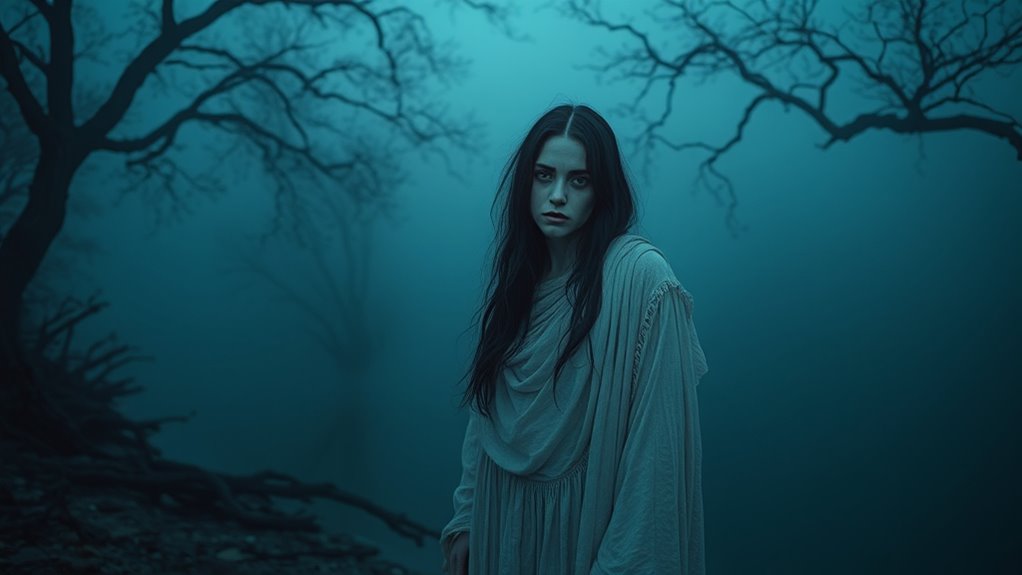

The spirit of La Llorona is a haunting figure rooted in Latin American folklore, symbolizing sorrow, guilt, and unresolved grief. You might hear her forlorn cries near rivers or lakes, often seen as a ghostly woman dressed in white with sorrowful eyes. Her legend varies but always reflects themes of tragedy and remorse. If you keep exploring her story, you’ll uncover the deeper cultural meanings and why her presence continues to haunt collective imagination.
Key Takeaways
- La Llorona is a legendary spirit from Latin American folklore, symbolizing sorrow, loss, and supernatural presence.
- She is often depicted as a ghostly woman in white, crying near water bodies at night.
- The legend warns of dark water at night, where her spirit may appear seeking her lost children.
- La Llorona embodies themes of remorse, tragedy, and cultural morals passed through generations.
- Her haunting cries serve as a cultural symbol of unresolved grief and caution in the unknown.

Have you ever wondered about the haunting legend behind La Llorona, the weeping woman whose spirit is said to roam the night? Her story is deeply rooted in the cultural origins of Latin America, blending indigenous beliefs with Spanish colonial influences. La Llorona’s legend has been passed down through generations, often serving as a cautionary tale for children to behave or stay close to home. At its core, her story reflects the complex history and rich cultural tapestry of the region, where stories of spirits and supernatural encounters are woven into everyday life. You’ll find her legend lurking in the shadows of towns and rural areas, as a reminder of the mysterious forces believed to inhabit the world beyond the physical domain.
La Llorona’s legend warns of spirits lurking in the shadows, blending history, folklore, and caution in Latin American culture.
When it comes to supernatural encounters, La Llorona’s presence is said to be unmistakable. Many who claim to have experienced her haunting describe hearing forlorn, echoing cries piercing the night air, often near rivers or lakes—places tied to her tragic story. Some witnesses report seeing a ghostly woman dressed in white, wandering aimlessly, her eyes filled with sorrow. These encounters can be unsettling, giving you a shiver down your spine as you imagine the ghostly figure searching for her lost children or seeking redemption. Whether you believe in spirits or not, these stories have a way of capturing your imagination and making you wonder about the thin veil separating the living from the dead.
The legend often shifts depending on the region, but the essence remains consistent: La Llorona is a tragic figure, doomed to wander forever because of her own sorrow and remorse. Many stories warn people to steer clear of dark water at night, as her spirit is said to appear near rivers or lakes, where she’s believed to lure unsuspecting victims. Her supernatural encounters are often described as fleeting but intense, leaving witnesses with a lingering sense of unease. These stories serve as both entertainment and a way to preserve cultural values, emphasizing respect for nature and caution in the unknown.
Her legend endures partly because it is connected to the cultural beliefs that shape understanding of spirits and supernatural phenomena in Latin America, reinforcing societal morals and traditions. Ultimately, La Llorona’s legend survives because it taps into universal themes of loss, regret, and the supernatural. Her story is a vivid reminder of how folklore can embody cultural fears and hopes. As you hear her cries echo through the night, you might wonder if she’s just a ghostly legend or a reflection of the collective consciousness, forever haunted by her tragic past. Whether real or myth, La Llorona continues to haunt the imaginations of those who hear her story, a symbol of sorrow that refuses to fade into silence.
Frequently Asked Questions
What Are the Regional Variations of La Llorona Stories?
You’ll find regional folklore variations of La Llorona across Latin America, each with unique cultural symbolism. In Mexico, she’s a mourning mother warning children about danger, while in Central America, her story emphasizes social issues. In some regions, she’s associated with spirits of nature or justice. These variations reflect local beliefs, history, and values, making La Llorona a powerful symbol that adapts to different cultural contexts across Latin America.
How Has La Llorona Influenced Modern Latin American Culture?
You see how La Llorona influences modern Latin American culture through her role as a powerful cultural symbolism. She embodies themes of gender roles, warning about morality, and societal expectations. You might notice her story in festivals, art, and literature, shaping collective identity. Her legend reminds you of the importance of family and respect, keeping traditional values alive while adapting to contemporary issues.
Are There Any Scientific Explanations for Sightings of La Llorona?
You might find that sightings of La Llorona are often explained by psychological phenomena like sleep paralysis or hallucinations, which can cause people to see or hear things that aren’t real. Environmental factors, such as fog, rivers, or night-time conditions, also play a role in creating eerie experiences. These natural explanations suggest that what some interpret as a ghostly presence could be the brain’s response to certain triggers in specific settings.
How Is La Llorona Depicted in Contemporary Media?
In contemporary media, La Llorona gets the Hollywood treatment—think ghostly screams and haunted lakes—turning her into the ultimate urban legend with cinematic portrayals that make you jump. Instead of just folklore, she now haunts screens and stories worldwide, blending fear with drama. You’re left wondering if her tears are real or just a clever ploy to keep us all looking over our shoulders at night.
What Lessons or Morals Are Associated With La Llorona Legends?
You learn that La Llorona legends teach moral lessons about respect, responsibility, and the importance of family. They emphasize cultural values like honoring traditions and avoiding reckless actions that can lead to tragedy. The story warns you to stay cautious about your choices and respects others’ feelings. By listening to these legends, you’re reminded to uphold virtues like love, loyalty, and accountability, keeping these cultural morals alive in your community.
Conclusion
As you walk away, remember that La Llorona’s tears symbolize more than sorrow—they’re a mirror of your own hidden fears and regrets. Her endless weeping reminds you that grief can drown even the strongest spirits, yet her story also calls for hope and redemption. Like her ghostly figure in the night, your own struggles may seem eternal, but through understanding and compassion, you can find a way to silence her cries and embrace the dawn.