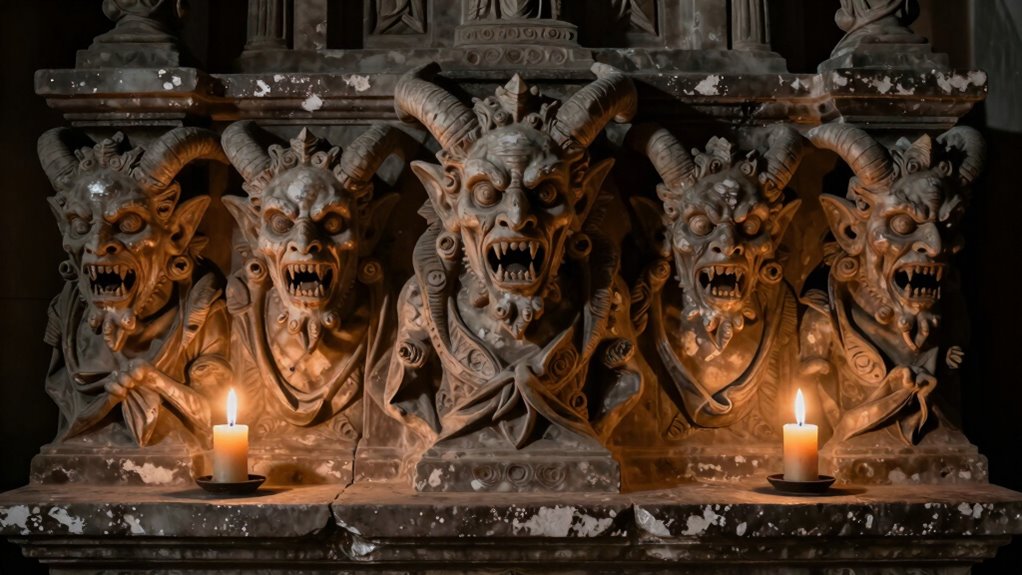

Religious change often rebrands old mythic creatures as demons to emphasize moral boundaries and reinforce social order. You see, temples, stories, and symbols are reinterpreted to depict these beings as malevolent, chaos-causing entities. This process simplifies complex legends into clear good-versus-evil distinctions, helping followers identify moral boundaries. If you explore further, you’ll discover how this transformation shapes cultural narratives and consolidates religious authority over time.

Prime made for students and young adults
- Fast, free delivery for dorm and study essentials
- Prime Video and Amazon Music included
- Member-only deals
Key Takeaways
- Religious change often reinterprets mythic creatures as malevolent to reinforce moral boundaries and spiritual danger.
- Symbols of natural or protective spirits are redefined as demons to align with new theological narratives.
- Older mythic figures are demonized to simplify complex stories into clear moral dichotomies.
- Cultural and religious shifts absorb local legends into dominant doctrines, recasting creatures as evil entities.
- Demonization serves to justify moral lessons and bolster religious authority by emphasizing the threat of the “other.”
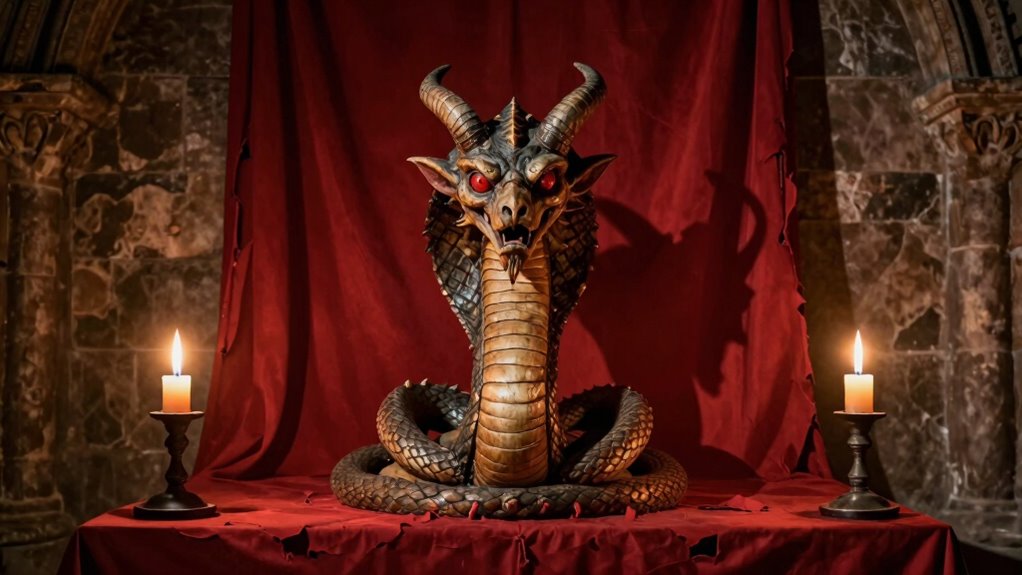
Recent shifts in religious narratives are transforming how we view certain creatures, now often labeled as demons rather than benign or mythic beings. This change isn’t just about labeling; it’s about the deeper layers of mythic symbolism and cultural reinterpretation that shape these perceptions. What once might have been seen as misunderstood or even revered entities are now cast in a darker light, reflecting new theological and moral frameworks. As religious doctrines evolve, so does the way society interprets ancient stories and symbols. These creatures, which may have represented natural forces or protective spirits in older myths, are increasingly seen through a lens of evil and chaos. Additionally, this rebranding often involves the deliberate cultural reinterpretation of mythic figures to serve new religious narratives and moral lessons. You might notice that this rebranding is driven by the way religious narratives adapt to cultural shifts. When spiritual leaders and texts reinterpret these beings, they often do so to reinforce moral lessons, social order, or doctrinal purity. Mythical symbolism, which once conveyed complex ideas about the universe, morality, or human nature, gets simplified or altered to serve new religious agendas. For example, a creature once associated with fertility or wisdom might now be depicted as a malevolent force opposing divine law. This reinterpretation aligns with the broader cultural tendency to categorize and control what was once ambiguous or multifaceted. By transforming these figures into demons, religions create clear dichotomies between good and evil, often emphasizing the danger of the ‘other.’ You also see this process at work in how societies memorialize and communicate their beliefs. Cultural reinterpretation plays a significant role, as local legends and mythic symbols are absorbed into the dominant religious framework. These beings are no longer just mythic or folkloric but become emblematic of spiritual danger or moral failing. This shift often reflects a desire for social cohesion, as demonizing old creatures simplifies complex cultural stories into moral lessons that reinforce religious authority. It also helps clarify moral boundaries, making it easier for followers to distinguish between what is righteous and what is corrupt. Moreover, the reinterpretation of mythic symbols often involves emphasizing the destructive or chaotic aspects of these figures to justify moral narratives. This process can also involve the suppression of older, more nuanced interpretations in favor of a more straightforward moral dichotomy. Recognizing the evolution of mythic symbolism reveals how religious narratives continuously adapt to societal needs and values. In this way, religious change doesn’t just rename creatures; it reshapes their entire symbolism within cultural narratives. You’re witnessing a process where mythic symbolism is repurposed to serve new theological purposes. What was once a revered symbol or neutral mythic figure becomes a demon, embodying evil and chaos. As part of this shift, the tendency to demonize older, ambiguous figures helps reinforce the moral and doctrinal boundaries that define religious communities. This transformation highlights how religion continuously reinterprets its stories to align with evolving cultural values, often casting older mythologies in a new, darker light. As a result, these creatures are no longer just stories from the past but active symbols within a redefined moral universe.
As an affiliate, we earn on qualifying purchases.
Frequently Asked Questions
How Did Ancient Cultures Originally Perceive These Creatures?
You see, ancient cultures often viewed these creatures through their mythical origins, seeing them as divine beings, guardians, or natural forces. Over time, cultural reinterpretation shifted perceptions, turning them into malevolent demons in religious stories. This transformation reflected changing societal values and fears, rebranding once-neutral entities into symbols of chaos or evil. So, their original perception was more nuanced, but later beliefs cast them in a darker, more threatening light.
Did Any Creatures Retain Positive or Neutral Symbolism After Rebranding?
Some creatures did retain positive or neutral symbolism after religious reinterpretation. During cultural reinterpretation, mythic symbolism shifted, and certain beings became symbols of protection or wisdom. You’ll find that some dragons, for example, transformed from fearsome monsters into symbols of strength and good fortune in various traditions. This change reflects how religious and cultural shifts can rebrand creatures, emphasizing their beneficial roles rather than their destructive ones.
Are There Modern Beliefs That Still See These Creatures as Divine?
Yes, some modern beliefs still see certain creatures as divine, thanks to ongoing cultural reinterpretation and their mythic symbolism. You might find spiritual movements or new age practices that honor these beings, viewing them as symbols of transformation, wisdom, or protection. Despite historical demonization, these creatures often retain a positive or neutral significance, demonstrating how cultural reinterpretation keeps their mythic symbolism alive and evolving in contemporary spiritual landscapes.
How Did Language Influence the Demonization Process?
Coincidentally, language played a vital role in demonization through linguistic shifts and semantic evolution. As words changed meaning, what once described divine beings gradually transformed into terms associated with evil. You see, these shifts made it easier for religious authorities to reframe mythical creatures as malevolent demons, shaping perceptions over time. This fluidity in language allowed old stories to adapt, reinforcing new moral and spiritual narratives, ultimately branding ancient creatures as evil entities.
What Role Did Political Power Play in These Religious Changes?
Political influence and power dynamics played a vital role in shaping religious changes. You see, rulers or authorities often used religion to legitimize their authority, which led them to reframe old creatures as demons to control beliefs. They manipulated religious narratives to reinforce their power, influencing societal perceptions. This strategic rebranding helped solidify their political dominance while aligning religious doctrine with their interests, often at the expense of older, pagan traditions.
As an affiliate, we earn on qualifying purchases.
Conclusion
As you step back and reflect, you can see how the shifting tides of faith gently reshape the shadows of old legends. What once were mysterious beings now softly fade into the background, their once intimidating forms transformed into whispers of caution. In this dance of change, your perception evolves, turning the once feared into symbols of moral lessons. The landscape of belief gently redefines, guiding you through a world where darkness becomes a gentle reminder of the light.
spirituality mythic creature statues
As an affiliate, we earn on qualifying purchases.
As an affiliate, we earn on qualifying purchases.
religious history books on demons
As an affiliate, we earn on qualifying purchases.
As an affiliate, we earn on qualifying purchases.
Fall Picks
fall essentials
As an affiliate, we earn on qualifying purchases.