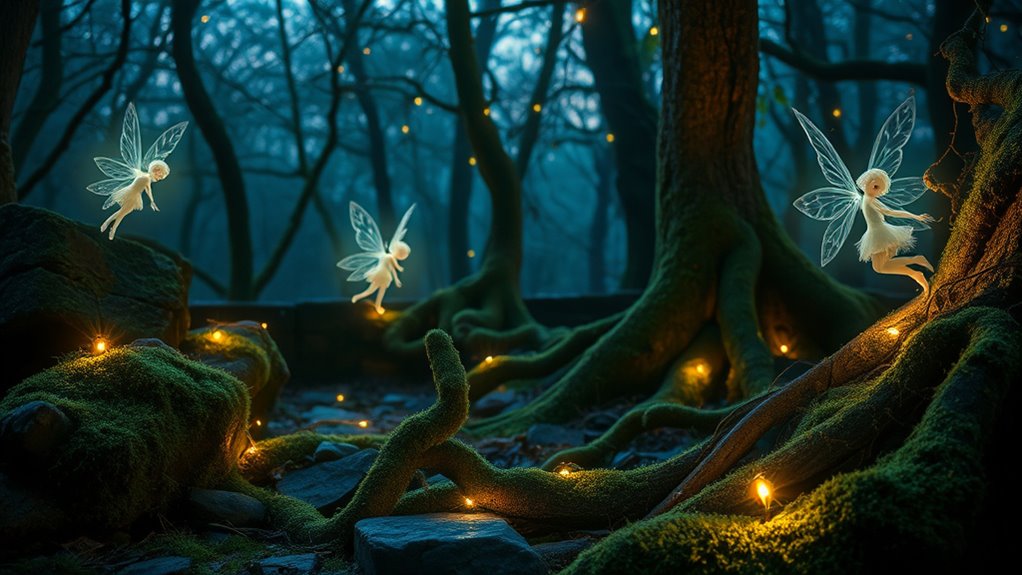

You might have heard that in old folklore, fairy swaps or changelings were believed to cause childhood illnesses. People thought fairies would kidnap healthy children and leave behind frail, sickly lookalikes whenever kids suddenly fell ill or displayed strange behaviors. Parents used folk remedies like exposing children to sunlight or burning herbs to reveal or chase away these supernatural visitors. If you keep exploring, you’ll uncover more about these fascinating beliefs and how they shaped community practices.
Key Takeaways
- Changelings are believed to be sickly fairy swaps left in place of healthy children.
- Illnesses and strange behaviors in children were attributed to fairy mischief or supernatural interference.
- Folk practices aimed to identify changelings, such as exposing the child to sunlight or burning herbs.
- Rituals involving iron, charms, or singing were used to break fairy spells and restore health.
- These beliefs reflect historical community efforts to explain and combat childhood illnesses through folklore.

Throughout history, many cultures have believed that illnesses result from supernatural causes, often involving fairies or spirits. One of the most intriguing explanations is the idea of fairy encounters leading to sickness. People thought that fairies, mischievous or jealous spirits, could swap healthy children with changelings—frail, sickly lookalikes left in their place. These swaps were believed to be the result of fairy mischief or a way for spirits to punish or tease humans. When a child suddenly fell ill without apparent cause, families might suspect a fairy encounter. They saw the child’s strange behavior, physical ailments, or unusual appearances as evidence of a changeling’s presence.
Throughout history, cultures believed fairies could swap children, causing mysterious illnesses and prompting folk remedies to restore health.
In folk traditions, people responded to such circumstances with folk remedies aimed at reversing the fairy’s curse or forcing the changeling to reveal itself. These remedies ranged from physical acts, like exposing the suspected changeling to sunlight or burning certain herbs, to more elaborate rituals. For example, some believed that placing iron objects or sharp implements near the child’s cradle would ward off fairies or cause the changeling to be exposed. Others thought that singing specific songs or reciting charms could break the spell. These folk remedies were often rooted in community knowledge passed down through generations, emphasizing the importance of tradition in dealing with supernatural causes of illness. Additionally, the belief that supernatural forces could influence health reinforced the use of ritualistic practices and community involvement to combat unseen threats.
You might have heard stories where parents, desperate to cure their sick child, resorted to such folk remedies, believing they could restore health by outsmarting the fairy spirits. These practices reflected a deep understanding—if you could identify and confront the fairy or the changeling, you could undo the spell and bring the real child back. The idea was that fairies, being mischievous and unpredictable, could be kept at bay or expelled with the right combination of herbs, charms, and rituals. This belief system provided comfort and a sense of control in times when medical knowledge was limited or unavailable. It also reinforced social bonds, as communities would gather to perform these rituals together.
While modern medicine has replaced many of these folk remedies, the stories of fairy encounters and changelings reveal how deeply people once believed in supernatural explanations for illness. They show a fascinating intersection of myth, community practice, and the universal desire to protect loved ones from unseen, magical threats.
Frequently Asked Questions
How Do Changelings Influence Modern Medicine?
You might not realize it, but fairy influence still affects modern medicine through lingering medical misconceptions. Some people historically believed illnesses were caused by fairy swaps or fairy influence, leading to superstitions and false treatments. These myths have shaped how we understand health and disease, reminding us to challenge outdated beliefs. Recognizing this history helps improve scientific approaches and promotes evidence-based medicine, ensuring you get accurate diagnoses and effective care today.
Are There Cultural Variations of Fairy Swap Beliefs Worldwide?
Yes, there are cultural variations of fairy swap beliefs worldwide. You’ll find fairy myths and folk narratives in many cultures, from European stories of changelings to African and Asian legends involving spirits or spirits’ children. These cultural narratives often explain unexplained illnesses or behaviors, reflecting universal human attempts to understand and cope with the mysterious or challenging aspects of life. Each tradition weaves its own unique fairy myths into its folklore.
What Are Common Signs of a Fairy Swap in Folklore?
Imagine you notice a usually lively child becomes unusually withdrawn and irritable; these fairy swap symptoms might raise suspicion. Common folklore signs include sudden changes in behavior, odd physical features, or a child’s refusal to eat. In some stories, the swapped child may have a strange affinity for shiny objects or display uncanny knowledge. Recognizing these signs helps identify a suspected fairy swap according to traditional folklore.
How Did These Beliefs Affect Historical Treatment Practices?
You’d notice that these beliefs led people to rely heavily on medieval superstitions and folk healing practices. When children or loved ones showed strange symptoms, you might seek out charms, spells, or rituals to ward off or identify fairy influence. These practices often replaced or delayed medical care, reflecting a deep mistrust of doctors and a reliance on superstitions rooted in folk traditions to explain and treat mysterious illnesses.
Can Understanding Fairy Swap Legends Aid in Mental Health?
Understanding fairy swap legends can genuinely aid your mental health by offering psychological interpretations of feelings and behaviors. By exploring folklore through therapy, you might find new perspectives on personal struggles, seeing them as symbols rather than problems. This approach encourages cultural awareness and emotional insight, helping you process experiences more effectively. Embracing these stories can foster resilience and self-awareness, turning ancient folklore into meaningful tools for mental well-being.
Conclusion
As you explore these fairy swaps and folk explanations, you realize they’re like shadows cast by ancient fears, dancing just beyond reach. They remind you that stories and beliefs are the whispers of a world trying to understand its mysteries. Though science now sheds light, these legends still cling like dew on a spider’s web, shimmering with the magic of human imagination. In the end, they’re a mirror reflecting our endless quest to make sense of the unknown.