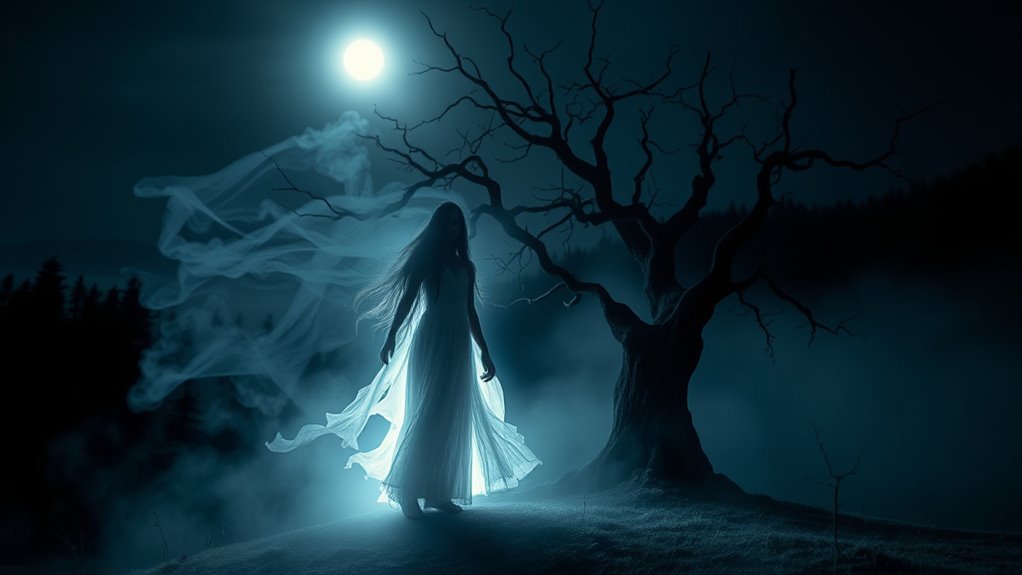

The Tuscarora Banshee is an American adaptation of the Irish legend, blending Native beliefs with Irish influences. Unlike the mourning female spirit in Ireland, the Tuscarora version often acts as a guardian or warning figure, symbolizing community bonds and respect for ancestors. This legend helps preserve cultural identity and spiritual values, emphasizing life’s impermanence. If you explore further, you’ll uncover how these stories continue to shape traditions and community resilience today.
Key Takeaways
- The Tuscarora Banshee blends Irish mourning spirits with Native cultural themes, emphasizing community, ancestors, and spiritual warnings.
- It adapts Irish folklore by portraying the banshee as a guardian or warning figure rather than solely an omen of death.
- The legend reflects cultural exchange, integrating Irish and Native beliefs to reinforce community identity and resilience.
- As an American adaptation, it emphasizes moral lessons, spiritual continuity, and respect for elders within the Tuscarora community.
- The legend’s evolving stories serve to preserve cultural heritage and foster intergenerational connection through shared spiritual symbolism.
Have you ever heard whispers of a chilling scream echoing through the night near the Tuscarora Territory? If so, you’re likely confronting the legend of the Tuscarora Banshee, a haunting figure deeply rooted in both cultural significance and folklore variations. This spectral entity isn’t just a spooky story; it embodies the community’s history, fears, and spiritual beliefs. For the Tuscarora people, the banshee’s wails serve as a powerful reminder of ancestors and the ongoing connection between the living and the spiritual *domain*. Its legend has evolved over time, blending traditional Native beliefs with broader influences from Irish folklore, creating a unique cultural tapestry. The banshee, in the Tuscarora context, is often seen as a harbinger of death, an omen that signals significant life events. The cultural significance of this spirit extends beyond mere superstition; it functions as a spiritual messenger, emphasizing respect for elders and ancestors. When the banshee’s scream pierces the night, it’s believed to be a warning, a call to prepare oneself or to honor a loved one’s passing. This deep-rooted symbolism underscores the importance of community, respect, and the acknowledgment of life’s transient nature. It’s not just a frightening legend but a *crucial* part of cultural identity, reminding the community of their shared history and spiritual responsibilities. Additionally, the varying stories about the banshee reflect the community’s efforts to preserve their cultural identity through storytelling. Folklore variations surrounding the Tuscarora Banshee reflect a mix of indigenous storytelling and influences from Irish legends. While Irish folklore describes the banshee as a female spirit mourning her lost loved ones with wails, the Tuscarora version often presents her as a more active, sometimes even protective figure. Some stories depict her as silently watching over the community, while others tell of her wailing as a sign of impending death. These variations demonstrate how stories adapt to cultural contexts, emphasizing different morals or spiritual truths. This blending of traditions shows how cultural exchange and storytelling serve to strengthen community bonds and preserve history. As you explore this legend, remember that the Tuscarora Banshee is more than just a ghost story. Its significance lies in its ability to connect generations, serve as a spiritual warning, and reflect the community’s resilience. Whether viewed as a spiritual guardian or a foreboding omen, the banshee’s cry embodies a *crucial* aspect of Tuscarora cultural identity. It reminds us that legends are living entities—ever-evolving stories that carry the weight of history, belief, and collective memory. In the quiet of the night, when a distant scream echoes, you might just be hearing the echoes of a legend that continues to shape lives.
Frequently Asked Questions
How Did the Legend of the Banshee Reach Native American Communities?
You might not realize it, but the legend of the banshee reached Native American communities through cultural exchange and myth adaptation. As Europeans and Native peoples interacted, stories blended and evolved, allowing the banshee’s image to become part of local folklore. This process of myth adaptation helped the legend resonate within Native traditions, creating a unique American version that reflected both Irish influences and indigenous storytelling.
Are There Any Recorded Sightings of the Tuscarora Banshee Today?
You might be skeptical, but modern folklore suggests there are occasional reports of Tuscarora Banshee sightings. While concrete evidence remains elusive, some community stories recount paranormal encounters, hinting at the banshee’s lingering presence. These accounts keep the legend alive, inspiring curiosity among locals and enthusiasts alike. So, if you’re interested in unexplained phenomena, staying alert could reveal new sightings or stories about this mysterious figure.
What Materials or Symbols Are Associated With the Tuscarora Banshee?
You’ll find that spiritual symbols like the crescent moon or wailing figures are often linked to the Tuscarora Banshee. Ceremonial artifacts such as carved talismans or ritual masks are also associated with its legend. These materials serve to evoke its haunting presence and connect with the spiritual domain. You might notice these symbols during storytelling or rituals, emphasizing its role in cultural memory and spiritual traditions.
How Does the Legend Compare to Irish Banshee Stories?
Imagine stepping into a shadowed woods, where legends come alive. Like Irish banshee stories, the Tuscarora Banshee signals supernatural encounters, embodying mythological symbolism of death and warning. Both tales feature mournful wails and ghostly appearances, but the Tuscarora version often reflects Native American cultural elements, blending Irish influences with local traditions. You see a shared theme of mourning spirits, yet each legend uniquely echoes its community’s beliefs.
Has the Legend Influenced Local Customs or Rituals in Tuscarora?
You’ll find that the legend influences local customs and rituals by incorporating Native rituals and spiritual symbolism. People may hold ceremonies to honor the banshee’s spirit, believing it offers protection or warnings. These rituals serve as a way to connect with the spiritual domain, blending Irish-inspired stories with Native traditions. This cultural fusion strengthens community bonds and keeps the legend alive through meaningful practices rooted in spiritual symbolism.
Conclusion
As you close this story, imagine the Tuscarora Banshee still whispering through the shadows, a ghostly echo of Irish legend woven into Native American lore. Like a haunting melody drifting on the wind, her presence reminds you that stories transcend borders, blending cultures into a shared tapestry of myth and memory. So, keep your ears open and your heart tuned—you never know when the spectral cry of the banshee might ripple through your world again.