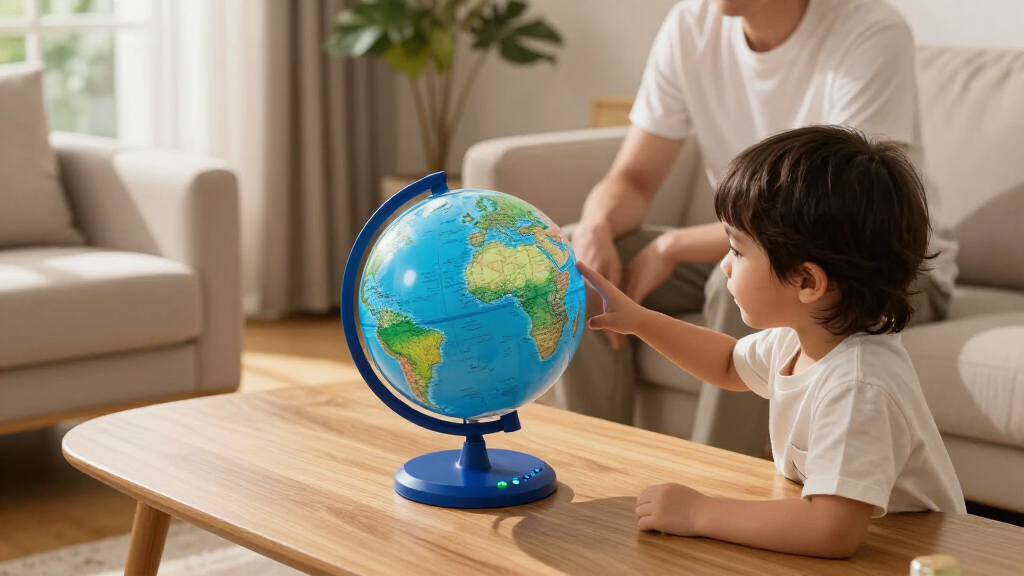

Talking globes for kids turn geography from memorization into play, but the category splits sharply between pen-based quiz globes and app-connected AR globes, and the right pick depends on your child’s age and how much screen time you allow. The LeapFrog Magic Adventures Interactive Globe earns my best overall pick for its depth of content and kid-friendly touchscreen-style interaction, while the Replogle Intelliglobe II stands out as the premium choice for older kids who want serious reference detail, and the Little Experimenter Talking Globe delivers the best value for younger children. The main tradeoffs to weigh: app-dependent globes like the PlayShifu Orboot line offer richer animation but require a tablet and ongoing app support, while standalone pen globes work out of the box but can feel limited once the quizzes run dry. Durability is another sticking point, since smart pens and stylus tips are the most commonly damaged parts. Read on for the full breakdown of all 11 models, ranked by age fit, content depth, and long-term play value.

Prime made for students and young adults
- Fast, free delivery for dorm and study essentials
- Prime Video and Amazon Music included
- Member-only deals
Key Takeaways
- Standalone globes like the LeapFrog Magic Adventures and Replogle Intelliglobe II held the top spots because their content lives in the product itself — no tablet, app downloads, or future app-discontinuation risk.
- The PlayShifu Orboot globes offer the richest visuals in the lineup, but they are really augmented-reality experiences with a globe as the anchor, so they only make sense if your child already has a compatible device.
- Smart pens are the weakest link across nearly every pen-based model (Little Experimenter, Dr. STEM, Faburo) — the globes outlast their electronics, so pen replacement availability should factor into any purchase.
- Bindi Irwin’s GeoSafari Talking Globe and the Intelliglobe II show that quiz depth scales with price; budget 8-inch models mostly repeat basic country-name facts that kids outgrow within a year or two.
- Bilingual options are rare — only the 8-inch LED Core globe offers English and French out of the box, making it a niche pick for bilingual households rather than a general recommendation.
| LeapFrog LeapGlobe Light-Up Interactive Globe for Kids |  | Best for Preschoolers | Age range: 3 years and up | Touch points: 48 | Modes: Exploration, Music, Find-It | VIEW LATEST PRICE | See Our Full Breakdown |
| Little Experimenter Interactive Talking Globe with Smart Pen, 9 Inch |  | Best Value Smart-Pen Globe | Globe diameter: 9 inches | Included accessory: Interactive smart pen | Audio: Voice recordings through built-in speaker | VIEW LATEST PRICE | See Our Full Breakdown |
| PlayShifu Orboot Earth Explorer Interactive AR Globe for Kids |  | Best for Nighttime Exploration | Age range: 4+ years | Globe diameter: 10 inches | Constellations: 60+ illuminated | VIEW LATEST PRICE | See Our Full Breakdown |
| Dr. STEM Toys Interactive Talking Globe with Smart Pen |  | Best for Quiz-Driven Learning | Age range: 6 years and up | Quiz questions: 300+ | Difficulty levels: 30 | VIEW LATEST PRICE | See Our Full Breakdown |
| PlayShifu Orboot Earth – Interactive AR World Globe for Kids |  | Best Content Depth Without Buttons | Age range: 4–10 years | Globe diameter: 10 inches | Facts: 1,000+ | VIEW LATEST PRICE | See Our Full Breakdown |
| Science Can 8″ Interactive Globe for Kids |  | Best for Hands-On Earth Science | Brand: Science Can | Diameter: 8 inches | Recommended age: 5–12 years | VIEW LATEST PRICE | See Our Full Breakdown |
| Replogle Intelliglobe II Interactive Talking World Globe for Children, 12-Inch |  | Best for Book-Supported Exploration | Brand: Replogle | Globe diameter: 12 inches | Included book: 60-page World Discovery Book | VIEW LATEST PRICE | See Our Full Breakdown |
| Faburo Interactive Globe with Smart Pen for Kids |  | Best for Quiz Variety | Brand: Faburo | Recommended age: 6+ | Quiz games: 300+ | VIEW LATEST PRICE | See Our Full Breakdown |
| LeapFrog Magic Adventures Interactive Globe |  | Best for Video and Animation | Brand: LeapFrog | Globe diameter: 10 inches | Screen size: 2.8 inches | VIEW LATEST PRICE | See Our Full Breakdown |
| Interactive Talking Globe with LED Core, English and French, 8-Inch |  | Best for Bilingual Bedside Learning | Diameter: 8 inches | Recommended age: 6 years and up | Languages: English and French | VIEW LATEST PRICE | See Our Full Breakdown |
| Educational Insights GeoSafari Talking Globe Featuring Bindi Irwin |  | Best for Young Animal Lovers | Globe diameter: 12 inches | Audio content: Over 1,000 facts and quiz questions; over 10 hours of interactive audio | Voice: Bindi Irwin | VIEW LATEST PRICE | See Our Full Breakdown |
| talking globes for kid | Globe diameter |
|---|---|
| LeapFrog LeapGlobe Light-Up In | — |
| Little Experimenter Interactiv | 9 inches |
| PlayShifu Orboot Earth Explore | 10 inches |
| Dr. STEM Toys Interactive Talk | — |
| PlayShifu Orboot Earth | 10 inches |
| Science Can 8" Interactive Glo | — |
| Replogle Intelliglobe II Inter | 12 inches |
| Faburo Interactive Globe with | — |
| LeapFrog Magic Adventures Inte | 10 inches |
| Interactive Talking Globe with | — |
| Educational Insights GeoSafari | 12 inches |
More Details on Our Top Picks
LeapFrog LeapGlobe Light-Up Interactive Globe for Kids
Most talking globes aim at school-age kids, but the LeapGlobe is built squarely for the preschool crowd. Its 48 touch points and three modes keep everything simple: tap an animal, hear its sound, move on. The rainbow light show while it spins gives younger children a reward even before they grasp geography. Compared with the Little Experimenter, which targets ages 8–12 with trivia, the LeapGlobe trades quiz depth for approachability — a smart swap for a 3-year-old. The Find-It mode does introduce early quiz play without the pressure of 300-question banks.
The tradeoff is longevity: an 8-year-old will outgrow the content quickly, and it runs on AA batteries you’ll replace early since the included set is demonstration-only.
Pros:- Designed specifically for ages 3 and up
- Three modes add variety without complexity
- Rainbow lights and music reward exploration
- No smart device or screen required
Cons:- Content depth is limited and kids outgrow it fast
- Included batteries are demonstration-only, so factor in replacements
Best for: Parents of kids aged 3–5 who want a screen-free first globe with music and lights
Not ideal for: Families with children over 7 — the content is too shallow to hold their interest
- Age range:3 years and up
- Touch points:48
- Modes:Exploration, Music, Find-It
- Power:2 AA batteries
- Batteries:Included for demonstration only
- Screen required:No
Our verdict“If your child is still in preschool, this is the gentlest entry point into talking globes on this list.”
Little Experimenter Interactive Talking Globe with Smart Pen, 9 Inch
Smart-pen globes usually cost far more — the Replogle Intelliglobe II sits at a premium tier — but the Little Experimenter delivers the core pen-tap experience: touch a country, hear its capital, language, and geography facts. Its 300 built-in trivia questions make it a legitimate classroom tool, not just a novelty. The pen-and-speaker setup gives kids the tactile satisfaction that app-based options like the PlayShifu Orboot Earth can’t match, and it does so without requiring a tablet.
The compromises are real, though. At 9 inches, countries are small and dense regions are hard to tap accurately, and the 8–12 age recommendation means younger siblings won’t get much from it. Still, for the price of admission, the fact coverage is honest and usable.
Pros:- Smart pen delivers classic touch-to-learn interactivity
- 300 trivia questions support structured learning
- No device, app, or screen time needed
- Works equally well at home or in classrooms
Cons:- 9-inch size limits map detail and makes small countries hard to tap
- Narrow 8–12 age range
Best for: Budget-conscious buyers and teachers who want pen-based interactivity and trivia without app dependence
Not ideal for: Kids under 8 — the trivia format and pen precision assume stronger reading and motor skills
- Globe diameter:9 inches
- Included accessory:Interactive smart pen
- Audio:Voice recordings through built-in speaker
- Trivia questions:300
- Recommended age:8–12 years
- Screen required:No
Our verdict“The most sensible low-commitment way to get the smart-pen globe experience for an elementary schooler.”
PlayShifu Orboot Earth Explorer Interactive AR Globe for Kids
The Orboot Earth Explorer differentiates itself from its sibling, the PlayShifu Orboot Earth, with two things: 60+ illuminated constellations and a magic stylus with a black light that reveals hidden details. That turns the globe into a two-in-one toy — a geography teacher by day and a mini planetarium by night. The included Zap-on panels, passport, and stamp extend play beyond the app, which helps justify the tablet requirement.
Unlike pen-based globes such as the Dr. STEM Toys model, everything here routes through a companion app on a device you must supply. Parents managing screen time will need to weigh that, and the AR novelty depends heavily on having a compatible tablet or phone in the house.
Pros:- Constellation lighting adds a second play mode after dark
- Magic stylus and Zap-on panels reward hands-on discovery
- Games, quizzes, and quests keep content varied
- Engaging for kids as young as 4
Cons:- Requires a separate compatible device that isn’t included
- Geography learning depends on app quality and screen time
Best for: Families with a spare tablet who want a globe that doubles as a constellation projector for ages 4 and up
Not ideal for: Households without a compatible smart device — the globe’s best features are locked behind the app
- Age range:4+ years
- Globe diameter:10 inches
- Constellations:60+ illuminated
- Accessories:Magic stylus with black light, 2 Zap-on panels, passport, stamp, sticker book
- App:Free companion app (device not included)
- Connectivity:USB cable included
- Model number:Shifu072
Our verdict“Pick this over the standard Orboot Earth if constellation play and the black-light stylus would excite your child more than straight geography.”
Dr. STEM Toys Interactive Talking Globe with Smart Pen
Where the Little Experimenter offers 300 flat trivia questions, the Dr. STEM Toys globe escalates: 300+ questions spread across 30 difficulty levels, meaning it grows with a child from first-grade basics to genuinely challenging material. Touching a country surfaces its capital, language, population, currency, and climate — a fact set that’s deeper than most pen globes in this size class and closer to what the larger Replogle Intelliglobe II offers. The dedicated game panel plus music rounds out the package for classroom or home use.
Two things hold it back: the batteries aren’t in the box, so it’s dead on arrival until you supply them, and the 9.25-inch footprint means the same cramped map detail as its rivals.
Pros:- 30 difficulty levels let the challenge grow with the child
- Deep fact set including population, currency, and climate
- Dedicated game panel organizes quiz play
- Works for both home and classroom settings
Cons:- Batteries not included, so it can’t be used out of the box
- Compact 9.25-inch map limits detail in dense regions
Best for: Parents and teachers who want a quiz system that scales in difficulty as a child progresses
Not ideal for: Gift-givers expecting a ready-to-play present — no batteries in the box means an immediate shopping trip
- Age range:6 years and up
- Quiz questions:300+
- Difficulty levels:30
- Dimensions:9.25 in wide × 12.75 in tall
- Features:Smart pen, game panel, talking functions, music
- Power:2 AAA batteries (not included)
- Part number:D104
Our verdict“The strongest choice here for sustained, structured learning thanks to its tiered quiz system.”
PlayShifu Orboot Earth – Interactive AR World Globe for Kids
The original Orboot Earth remains the content heavyweight among app-based globes: over 1,000 facts spanning animals, cultures, monuments, and places — far more audio depth than a 48-touch-point globe like the LeapFrog LeapGlobe can physically hold. Because facts live in the app rather than on hardware buttons, updates and categories keep the experience fresh. The passport, visa stamp, and sticker booklet give kids a tangible travel narrative that balances the screen time.
Compared with its sibling, the Orboot Earth Explorer, this version drops the constellation lighting and stylus — choose the Explorer for those extras. The core drawback is structural: no compatible device means no product, and parents limiting screens may find the AR dependency a dealbreaker despite the rich content.
Pros:- 1,000+ facts offer the deepest content library in this lineup
- Passport and sticker book extend play off-screen
- Builds memory and problem-solving skills, not just recall
- Broad 4–10 age range with year-long warranty
Cons:- Requires a compatible smart device and app to function
- No pen or buttons, so it’s less engaging without a tablet at hand
Best for: Families with a tablet who want maximum educational content and a gamified, collect-them-all learning style for ages 4–10
Not ideal for: Parents strictly limiting screen time — nearly every feature requires the app and a device
- Age range:4–10 years
- Globe diameter:10 inches
- Facts:1,000+
- Included components:Globe, how-it-works booklet, flag sticker booklet with boarding passes, passport, visa stamp
- App:Free Orboot app (device not included)
- Warranty:1 year against manufacturer defects
- Model number:Shifu014
Our verdict“The richest content choice if your household already embraces app-based learning and has a device to spare.”
Science Can 8″ Interactive Globe for Kids
The openable Earth design gives this globe a distinct job: children can look inside the crust, mantle, and LED-lit core while learning geography. Its 48 spoken facts and quiz mode add country and landmark content, with English and French audio for bilingual households. Compared with the similarly sized Interactive Talking Globe with LED Core, English and French, 8-Inch, this model is listed for ages 5–12 and puts its learning focus on the visible layers of Earth. That makes it a stronger fit for kids curious about geology as well as maps. The tradeoff is a smaller fact library than globes built around broad quiz catalogs, and aligning the triangle markers to open it may frustrate some younger children. I’d choose it for tactile science interest, not maximum audio variety.
Pros:- Opening the globe reveals the crust, mantle, and inner core for tactile Earth science learning
- LED-lit core makes the interior structure easier to see
- English and French audio suits bilingual learning
- Quiz mode gives children a way to recall the 48 geography and landmark facts
Cons:- The triangle markers can make opening it difficult for younger children
- The 48-fact library may offer less replay variety than globes with larger quiz collections
Best for: Children ages 5–12 who enjoy hands-on science demonstrations alongside geography and benefit from English or French audio
Not ideal for: Young children who may struggle to align the opening markers, or families seeking a large, frequently refreshed library of spoken facts
- Brand:Science Can
- Diameter:8 inches
- Recommended age:5–12 years
- Earth structure:Openable globe showing crust, mantle, and inner core
- Core lighting:LED-lit
- Audio content:48 geography and landmark facts
- Languages:English and French
- Modes:Knowledge mode and quiz mode
Our verdict“Choose this for a child who wants to see inside Earth as well as hear geography facts, provided the opening mechanism is manageable.”
Replogle Intelliglobe II Interactive Talking World Globe for Children, 12-Inch
The 12-inch globe and 60-page World Discovery Book make this a good match for children who like to move between spoken learning and printed maps. Its pen adds 20 Touch & Explore features, games, trivia, challenges, and time comparisons, so there’s more to do than listen to a sequence of facts. Compared with the Faburo Interactive Globe with Smart Pen, which emphasizes a large quiz count and many difficulty levels, Replogle pairs its activities with a substantial companion book, including supplemental maps of the United States and Europe. That can suit guided study, though the English-only narration offers less language flexibility than the bilingual Science Can and LED Core globes. The pen runs for up to 2.5 hours per charge, which may interrupt extended sessions, and the provided product information flags possible pen or label-reading issues.
Pros:- The 12-inch globe gives children a larger surface to explore
- The 60-page book adds supplemental maps of the United States and Europe
- Pen activities include time comparisons, games, trivia, and challenges
- Rechargeable pen avoids disposable batteries, with up to 2.5 hours of use per charge
Cons:- The pen’s stated battery life is limited to up to 2.5 hours per charge
- Narration is in English only
- Product information mentions possible pen or label-reading issues
Best for: Families and educators who want a larger globe with a printed companion book for map-based activities
Not ideal for: Bilingual households, children who need long uninterrupted sessions, or buyers concerned by the noted potential pen and label-reading issues
- Brand:Replogle
- Globe diameter:12 inches
- Included book:60-page World Discovery Book
- Included accessory:Rechargeable Intelliglobe II pen
- Pen battery life:Up to 2.5 hours
- Interactive features:20 Touch & Explore features, time comparisons, games, trivia, and challenges
- Narration language:English
- Made in:USA
Our verdict“Pick this for book-supported globe sessions and varied pen activities if English narration and the stated charge limit fit your household.”
Faburo Interactive Globe with Smart Pen for Kids
For children who learn by answering questions, Faburo’s 300-plus quiz games and 30 difficulty levels are its clearest advantage. A stylus also calls up country facts such as capitals, languages, and currencies, turning the globe into a prompt for active recall. Compared with the Replogle Intelliglobe II, Faburo emphasizes a broad, graded quiz set rather than a companion book and a mix of time comparisons and trivia. It may be the better fit for repeat quiz sessions, while Replogle offers more support for reading maps alongside the globe. Faburo is listed for ages 6 and up and uses English narration only, so it has less language flexibility than the bilingual Science Can globe. The two AAA batteries are not included, and its listed dimensions call for space in a playroom or classroom.
Pros:- More than 300 quiz games support repeated practice
- Thirty difficulty levels give children a range of challenge
- Stylus prompts cover capitals, languages, and currencies
- ABS and PVC construction is specified for home or classroom use
Cons:- English is the only listed language
- Requires two AAA batteries, which are not included
- Listed dimensions may make it less convenient where display space is limited
Best for: English-speaking children age 6 and up who enjoy repeated quizzes that progress through different difficulty levels
Not ideal for: Bilingual households, younger children, or buyers who want batteries included and a more compact setup
- Brand:Faburo
- Recommended age:6+
- Quiz games:300+
- Difficulty levels:30
- Language:English
- Materials:ABS and PVC
- Dimensions:14.56 × 9.45 × 9.45 inches
- Power:2 AAA batteries, not included
- Included items:Globe and stylus pen
Our verdict“Choose Faburo for a child who wants a large, graded quiz collection and is comfortable learning in English.”
LeapFrog Magic Adventures Interactive Globe
The 2.8-inch screen with BBC videos and animations gives this globe a screen-led way into geography, cultures, animals, and habitats. Children use a stylus to explore the content, then can switch to three games built around exploring, competing, and solving mysteries. Compared with the Replogle Intelliglobe II, which adds a 60-page book and a wider set of pen-led geography activities, LeapFrog puts more emphasis on viewing short visual content. That may suit children who respond well to animation, though it also makes power planning part of ownership: it takes four AA batteries, and the included ones are for demonstration only. The product data lists a 90-day manufacturer-defect warranty. I’d favor it for a child drawn to video and varied subject matter, rather than someone seeking a print companion or bilingual narration.
Pros:- BBC videos and animations add visual explanations
- Content spans geography, cultures, animals, and habitats
- Three games offer different ways to interact
- USB cord is included
Cons:- Requires four AA batteries, and included batteries are for demonstration only
- The 2.8-inch screen may not suit buyers looking for a primarily map-and-audio experience
- No language options beyond those stated in the product data are specified
Best for: Children age 5 and up who stay engaged with videos, animations, and a mix of geography, culture, animal, and habitat content
Not ideal for: Families seeking a globe with a printed companion book, bilingual audio, or fewer batteries to manage
- Brand:LeapFrog
- Globe diameter:10 inches
- Screen size:2.8 inches
- Age range:5 years and up
- Power:4 AA batteries
- Included components:Globe, USB cord, and parent’s guide
- Interactive content:BBC videos, animations, and three games
- Manufacturer warranty:90 days against manufacturer defects
- Model number:80-605401
Our verdict“Pick this for a screen-friendly child who will enjoy video and animation as part of globe exploration and whose family can supply four AA batteries.”
Interactive Talking Globe with LED Core, English and French, 8-Inch
This compact globe combines English and French audio with an opening Earth model and an illuminated core, so it can serve as both a geography activity and a softly lit display. Its 48 geography, landmark, and cultural facts plus quiz mode give children structured ways to listen and recall. Compared with the similarly designed Science Can 8″ Interactive Globe for Kids, the product data here recommends it for ages 6 and up, while Science Can lists ages 5–12 and names the crust, mantle, and inner core. This one’s bedside appeal is clear, but its description does not specify its power source or battery life, so buyers cannot plan around charging or battery replacement from the listed information. Durability details are also absent. I’d choose it when bilingual audio and the glowing core matter more than those unknowns.
Pros:- English and French audio supports bilingual learning
- Opening design reveals Earth’s internal structure
- LED-lit core adds visual interest and can serve as a nightlight
- Quiz mode pairs with 48 facts on geography, landmarks, and culture
Cons:- Power source and battery life are not specified
- Durability details are not provided
- The 48-fact set may offer less replay variety than globes with larger quiz libraries
Best for: Bilingual families seeking an 8-inch globe with spoken geography content and a lighted Earth interior for a child’s room
Not ideal for: Buyers who need clear power and battery-life information, or children who need product details on construction and durability before use
- Diameter:8 inches
- Recommended age:6 years and up
- Languages:English and French
- Audio content:48 geography facts, landmarks, and cultural details
- Earth structure:Opening globe showing Earth’s crust, mantle, and core
- Core lighting:LED-lit
- Modes:Fact audio and quiz mode
Our verdict“Choose this for bilingual bedside learning with a glowing Earth interior if the unspecified power details are acceptable.”
Educational Insights GeoSafari Talking Globe Featuring Bindi Irwin
Most talking globes in this lineup lean hard into geography drills, but this one splits its attention between maps and life science, which makes it a natural fit for kids who light up over animals rather than capitals. The Bindi Irwin narration gives the audio a warm, wildlife-TV personality that feels distinct from the quizmaster tone of the Replogle Intelliglobe II or the Dr. STEM Toys globe, both of which target older kids with denser factual content. Three modes — Explore, Find It, and Measure It — keep a four-year-old entertained without the reading demands of the PlayShifu Orboot globes, which depend on a paired tablet. The tradeoff is longevity: an eight- or nine-year-old will outgrow the 4–8 content range fairly quickly. Compared with the Science Can 8-inch globe, the larger 12-inch ball and dual-swivel rotation make detail easier to point at, though parents should note the stylus runs on AAA batteries that aren’t in the box.
Pros:- Blends geography with life science instead of maps alone
- Over 10 hours of narrated facts and quizzes keeps content fresh for young attention spans
- Three distinct play modes grow with a child from free exploration to challenge quizzing
- Stylus stores in the base, so the required accessory is harder to lose
Cons:- Content is capped at an early-elementary level, limiting how many years it stays useful
- Requires two AAA batteries that are not included, so it needs a separate purchase before first use
Best for: Parents of ages 4–8 whose kids love animals and nature and want geography introduced through a friendly, character-driven voice rather than pure quiz pressure
Not ideal for: Families with kids over 8 or buyers wanting long-term shelf life — the age-targeted content will be mastered quickly, and older siblings will find it too easy
- Globe diameter:12 inches
- Audio content:Over 1,000 facts and quiz questions; over 10 hours of interactive audio
- Voice:Bindi Irwin
- Play modes:Explore, Find It, Measure It
- Globe movement:360-degree views with dual-swivel rotation
- Included:Globe, stand, and smart stylus pen with speaker
- Power:2 AAA batteries for the pen (not included)
- Recommended age:4–8 years
Our verdict“Pick this globe for a 4-to-8-year-old who cares more about koalas than countries — and skip it if you’re buying for an older child who wants deeper, longer-lasting geography challenges.”
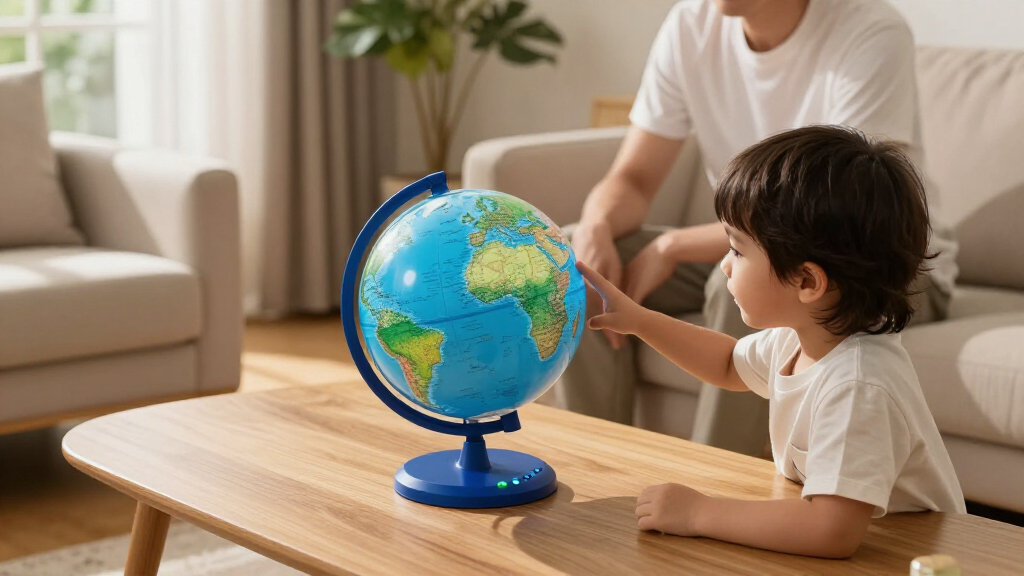
How We Picked
I ranked these talking globes on four factors that actually shape a family’s experience: age fit and content depth (does the material challenge a child for more than a few weeks?), independence of use (does it work without a paired device and ongoing app support?), build durability (especially the smart pen, stylus tip, and speaker quality), and long-term value (whether the globe stays useful as a reference after the talking features lose novelty). I also weighed how well each product balances structured quizzes against free exploration, since kids who only drill facts tend to abandon a globe quickly.
The ranking favors models whose interactivity is self-contained, which is why the LeapFrog Magic Adventures and Repole Intelliglobe II lead the list while app-dependent Orboot models sit mid-pack despite their impressive visuals. Smaller 8-9 inch budget globes rank lower not because they are bad products, but because their content ceilings are lower — a fair trade for a low price, but one buyers should make knowingly. Every product in the lineup earned a place for a specific buyer, and each review names who should buy it and who should skip it.
Factors to Consider When Choosing Talking Globes For Kids
Before picking a specific model, it helps to understand what actually separates a globe that gets played with for years from one that gathers dust by spring. These are the factors I weighed most heavily, plus the mistakes I see buyers make repeatedly.Standalone vs. App-Dependent Interaction
The single biggest decision is whether the globe talks on its own or requires a paired tablet. App-connected globes like the Orboot line deliver 3D animations, games, and constantly refreshed content, but they inherit all the friction of app ecosystems: device compatibility, storage space, account setup, and the real possibility that the developer stops updating the app years from now. Standalone pen or touch globes work the moment batteries go in, with no screens and no dependency on a company’s roadmap. A useful rule of thumb: if you’re deliberately limiting screen time, a talking globe that adds tablet hours partially defeats its own purpose. If your child already uses a tablet daily and you want geography to claim some of that time, an AR globe can be the stronger hook.
Age Range and Content Ceiling
Manufacturers’ age labels are optimistic, so plan around content ceiling rather than the box’s sticker. A globe marketed for ages 4-10 usually means the quizzes are genuinely engaging for maybe 6-8 and too simple afterward. Younger kids (4-6) respond best to touch-triggered sound effects, lights, and short facts — the LeapGlobe Light-Up approach. Kids 7 and up need multi-level quizzes, comparisons, and challenge modes to stay interested, which is where the Intelliglobe II and Magic Adventures pull ahead. Buying ‘too old’ for a child is the more common mistake: a detail-heavy reference globe will bore a 5-year-old long before it challenges them, while a light-and-sound globe will feel babyish to a 9-year-old within weeks.
Smart Pen Durability and Replacements
Across this category, the pen is the most fragile component — more so than the globe sphere itself. Stylus tips bend, internal wires fatigue from repeated tapping, and battery doors break. Before buying any pen-based globe, check whether the manufacturer sells replacement pens separately or whether third-party pens are compatible; a globe with a dead pen and no replacement path is just a regular globe. Also look at how the pen connects: tethered cords prevent loss but limit reach and fray at the base over time. If your household is rough on electronics, a touch-sensitive globe with no pen at all eliminates the failure point entirely.
Size, Base Stability, and Room Placement
Globe diameter ranges from 8 to 12 inches in this lineup, and the difference matters more than it sounds. An 8-inch globe fits a desk and small hands but crams labels together, making smaller countries hard to tap accurately with a pen tip. A 12-inch model offers legible detail and a steadier base, but needs dedicated shelf or table space and costs more. Check the base design too: narrow plastic stands tip easily when kids spin the sphere enthusiastically, and a tipped globe with a heavy sphere can crack the base or damage the internal electronics. Heavier, wider bases are a genuine safety and longevity feature for younger children.
Speaker Quality and Volume Control
A talking globe lives or dies by its audio. Muddy, low-volume speakers force kids to hold the globe close or repeat taps, which quickly kills the fun, while speakers with no volume control or headphone jack can make a globe unbearable in a shared room or classroom. Some models also localize poorly — robotic pronunciation of place names undermines the educational value when your child learns the wrong pronunciation. If possible, look for models with adjustable volume and clear audio specs, and be skeptical of ultra-compact globes: the smaller the housing, the weaker the speaker tends to be.
When to Pay More — and When Not To
Premium globes justify their cost with deeper content libraries, better build, and years of extra use, not with gimmicks. If you have multiple children spanning several ages, or a child who genuinely loves geography, the higher-priced models spread their cost over much more use. But for a gift, a younger child whose interest is unproven, or a classroom on a budget, an inexpensive 8-9 inch talking globe is a rational choice — the risk of it being outgrown is priced in. The mistake to avoid is paying mid-range prices for a budget globe dressed up with lights and sound effects; that money is better saved toward a genuinely content-rich model or spent on a cheap one honestly bought as a starter.
Frequently Asked Questions
What age is the right age to introduce a talking globe?
Most children get real value starting around age 5, when they can hold a stylus accurately and follow spoken instructions, but the sweet spot for pen-based quiz globes is 6 to 10. Before 5, kids mostly respond to lights, sound effects, and one-tap facts — which is why simple touch globes like the LeapGlobe Light-Up make sense for preschoolers. From around 8 or 9, look for multi-level quizzes and reference-style detail so the globe doesn’t feel babyish. If you’re buying for a single child rather than a family, aim slightly above their current age so the globe grows with them instead of being outgrown within a year.
Are AR globes like the PlayShifu Orboot better than regular talking globes?
They’re different tools rather than better or worse. AR globes deliver richer visuals, animation, and gamified learning that a speaker-and-pen globe can’t match, and they tend to hold fidgety kids’ attention longer. The tradeoffs are real, though: you need a compatible tablet or phone, setup takes time, and if the app is ever discontinued the globe loses most of its magic. A standalone talking globe works forever with just batteries. If your child already uses a tablet for learning and you’re comfortable supervising that, the Orboot is a strong choice; if you want a screen-free toy, stick with pen or touch globes.
Do smart pen globes break easily, and can the pen be replaced?
Yes — the pen is the most commonly damaged part of any pen-based talking globe. Tapping force, drops, and frayed cords account for most failures, and the globe sphere itself usually survives long after the pen stops working. Replacement availability varies widely by brand: some manufacturers sell spare pens directly, while others don’t, effectively ending the interactive features when the pen dies. Teach kids to tap lightly rather than press hard, store the pen in its holder, and check replacement availability before you buy. If durability worries you, a touch-activated globe with no pen sidesteps the problem entirely.
How much content do cheap talking globes actually have?
Budget 8-9 inch models typically cover country names, capitals, continents, oceans, and a set of basic facts, usually organized into a handful of quiz modes. That’s genuinely engaging for a 5-7 year old but often exhausted within months by an older child. Higher-end models layer in hundreds more facts, multi-tier quizzes by difficulty, comparison features, and population or climate data that keep working as a child’s knowledge grows. The honest framing: a cheap talking globe is a starter geography toy, not a reference. If your child shows real interest, buying up once is cheaper than buying a starter globe and replacing it a year later.
Can a talking globe actually help with school geography, or is it just a toy?
The quiz-based models have real academic value because they replicate the recall practice kids do in school — naming countries, capitals, and continents — but with instant feedback and game mechanics that make repetition tolerable. Globes like the Intelligible II and GeoSafari are even used in classroom settings for exactly this reason. The limitation is scope: talking globes teach place-name and fact recall well, but they won’t cover map skills, topographic reading, or cultural geography in depth on their own. Treat a talking globe as a strong supplement that builds spatial awareness and factual fluency, best paired with books, maps, and conversation about the places being tapped.
Conclusion
For most families, the LeapFrog Magic Adventures Interactive Globe is the best overall pick — it packs deep, self-contained content into a design kids can operate without help, and it doesn’t depend on an app to stay useful. If budget leads the decision, the Little Experimenter Talking Globe is my best value choice: it covers the fundamentals at a starter price, with the honest caveat that older kids will outgrow it. For a premium, long-haul purchase, the Replogle Intelliglobe II offers reference-grade detail and quiz depth that lasts well into the tween years, making it the model to buy once for multiple children. Younger beginners ages 4-6 are best served by the LeapGlobe Light-Up, whose lights and simple touch facts match preschool attention spans. For specific needs: choose the PlayShifu Orboot Earth if your child learns best through screens and AR animation, the bilingual LED Core globe for French-English households, and the GeoSafari Talking Globe with Bindi Irwin if wildlife-focused, quiz-heavy learning fits your child’s interests. Whatever you choose, match the content ceiling to your child’s age — that single decision predicts whether the globe becomes a favorite or closet filler better than any feature list.
Fall Picks
fall essentials
As an affiliate, we earn on qualifying purchases.