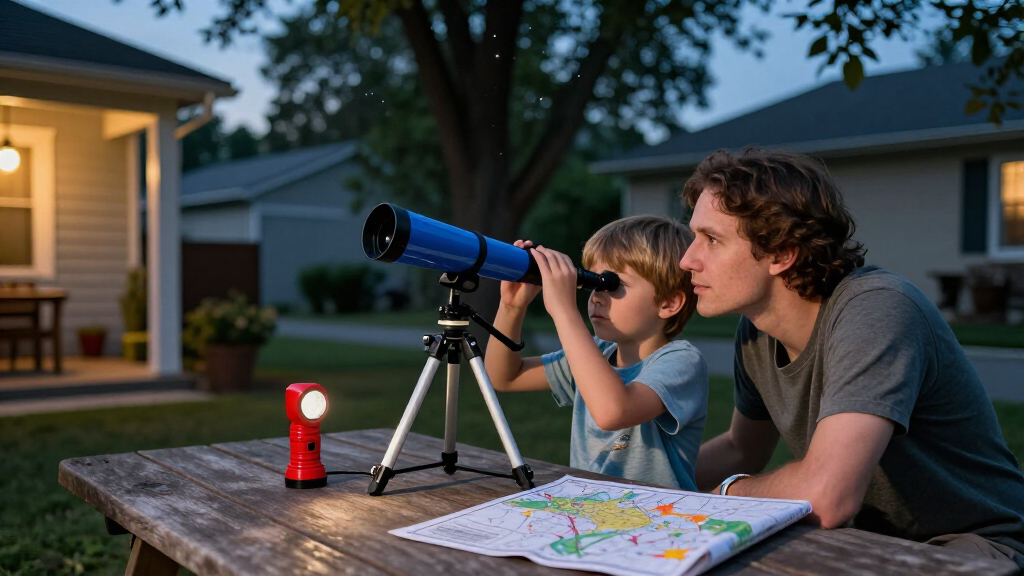
For kids’ astronomy, I’d start with the 70mm Gskyer AZ refractor as the best overall balance of light-gathering ability and beginner-friendly setup; the Wow in the World kit stands out for guided learning, while the 80mm Koolpte offers more aperture for families who want room to grow. The main tradeoff is between simple, child-friendly handling and the larger optics that can make faint sky targets easier to see. Magnification claims alone can be misleading, since a telescope’s aperture, mount stability, and usable eyepieces matter more to a satisfying astronomy session. I compare all 15 options by what they can realistically offer a young observer, where each falls short, and who should choose it. Continue reading for the full breakdown and a buying guide tailored to your child’s age, interests, and observing conditions.

Prime made for students and young adults
- Fast, free delivery for dorm and study essentials
- Prime Video and Amazon Music included
- Member-only deals
Key Takeaways
- 70mm apertures form the most versatile group: several models offer a more capable starting point than the 50mm options, though their mounts and focal lengths still shape the observing experience.
- The Gskyer 70mm/400mm refractor is the roundup’s best overall direction for families seeking a recognizable, straightforward beginner format rather than a kit centered on activities or accessories.
- The Wow in the World telescope differentiates itself through learning support: its star wheel and audio content may help children engage with astronomy, even though its 25x and 50x views are less flexible than higher-magnification listings.
- The 80mm Koolpte and 80mm backpack model stand apart by aperture, but larger optics are only a benefit if a child or adult can manage setup, alignment, and the added equipment.
- Phone adapters and high magnification figures are not automatic upgrades: the lineup shows that ease of aiming, stable viewing, and usable optical performance deserve more weight than accessory counts or maximum-power claims.


| kids telescopes for astronomy | Eyepieces | Focal length | Mount | Focus |
|---|---|---|---|---|
| Koolpte Telescope for Adults & | 25mm and 10mm | 600mm | Altazimuth | — |
| Wow in the World Kids’ Telesco | — | — | Altazimuth | Manual |
| Telescope for Kids | — | — | Altazimuth | Manual |
| 80mm Aperture 600mm Refractor | K20mm and K9mm | 600mm | Altazimuth | — |
| Telescope for Kids and Adults | 6mm and 20mm | 300mm | — | — |
| Telescope for Kids | 6mm and 20mm | 400–600mm | — | Manual |
| Koolpte Kids Telescope Ages 3+ | Two | — | — | — |
| Refractor Telescope with Finde | H20mm, H12.5mm, and SR4mm | 360mm | — | Manual |
| NASA Lunar Telescope for Kids | Two: low and high power | — | Tabletop | Manual |
| Telescope for Kids and Beginne | 12.5mm and 20mm | 400mm | Altazimuth | — |
| Kids Telescope 8-12 | 2 included | 400mm | Altazimuth | Manual |
| Gskyer 70mm Aperture 400mm AZ | 25mm (16X) and 10mm (40X) | 400mm (f/5.7) | Altazimuth | — |
| Telescope for Kids | 20mm and 6mm | 300mm | — | Manual |
| Telescope for Adults & Kids | 20mm and 6mm | 300mm | — | Manual |
| Koolpte Telescope for Kids | 25mm and 10mm | 500mm | Altazimuth | Manual |
More Details on Our Top Picks
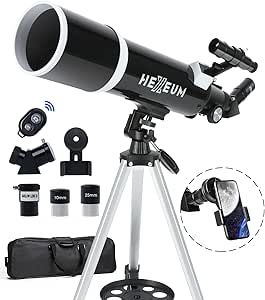
Koolpte Telescope for Adults & Beginners – 80mm Aperture, 600mm Focal Length, Fully Multi-Coated Optics, AZ Mount Tripod, Phone Adapter, Carrying Bag, Wireless Remote
For families who want a children’s first telescope that can still suit an adult, this Koolpte offers a stronger starting point than the smaller 50mm Telescope for Kids, 50mm 100x Silver Beginner Telescope. Its 80mm aperture gathers more light, which can help lunar views look brighter, while the 600mm focal length and two eyepieces give beginners straightforward viewing choices. Setup is described as tool-free, and the carrying bag makes it easier to take outside for a clear-sky session. The phone adapter and remote add a way to try basic sky photos, though they do not turn this into a deep-sky imaging setup. The tradeoff is a simple altazimuth mount: it is approachable to point, but the listed tripod may wobble at higher magnification. I’d choose it for versatility, not advanced planetary detail.
Pros:- 80mm aperture offers more light-gathering capacity than the 50mm beginner models in this roundup.
- 600mm focal length and two eyepieces provide simple options for changing views.
- Tool-free setup and a carrying bag support family outings.
- Phone adapter and wireless remote add basic smartphone capture options.
Cons:- Tripod stability may limit useful viewing at higher magnification.
- Manual focusing and mount adjustments still require patience and may need adult help.
- Its beginner-level design and stated magnification limits make it a poor fit for advanced observing.
Best for: Families with an older child and an adult who want one 80mm telescope for Moon viewing, casual astronomy, and occasional daytime use.
Not ideal for: Young children expecting to carry and aim it alone, or experienced observers seeking a highly stable mount and advanced planetary detail.
- Aperture:80mm
- Focal length:600mm
- Optical coating:Fully multi-coated
- Mount:Altazimuth
- Finderscope:5×24
- Eyepieces:25mm and 10mm
- Barlow lens:3x
- Included accessories:Phone adapter, wireless remote, and carrying bag
Our verdict“Choose this for a family seeking a portable, relatively capable first astronomy telescope, but skip it if tripod steadiness matters most.”
Wow in the World Kids’ Telescope & Astronomy Kit, 25x & 50x Magnification, Adjustable Tripod, Includes Star Wheel & Audio Content
This kit puts learning the sky before magnification, making it the most lesson-oriented option here. The star wheel and illustrated guide give children a starting point for finding targets, while the accompanying audio content can make a first observing session feel like part of a broader astronomy activity. Its two stated settings, 25x and 50x, are modest but sensible for beginner exploration; they are less ambitious than the 20x–100x range listed for the 50mm Silver Beginner Telescope, which may appeal more to kids focused on trying different magnifications. The Wow in the World kit instead offers a more guided introduction, with a tripod that extends up to 48 inches. Its main compromise is that the short focal lengths and beginner-focused setup are not aimed at detailed or advanced observing. At 2.6 pounds, a young child may also need help carrying and setting it up.
Pros:- Star wheel and illustrated guide help children learn how to locate celestial targets.
- Audio content adds an educational activity beyond looking through the eyepiece.
- Two beginner-friendly magnification settings keep the viewing choices simple.
- Adjustable tripod extends up to 48 inches.
Cons:- The 25x and 50x options are limited for viewers seeking more detailed planetary observation.
- Its 2.6-pound weight may be awkward for some young children to carry.
- Setup and aiming may require adult supervision.
Best for: Children who enjoy guided activities and need a star wheel, illustrated directions, and audio material to get started with astronomy.
Not ideal for: Families seeking a telescope with more advanced observing potential, or very young children expected to transport and set it up independently.
- Magnification:25x and 50x
- Focal lengths:250mm and 500mm
- Eyepiece:Kellner
- Mount:Altazimuth
- Focus:Manual
- Maximum tripod height:48 inches
- Weight:2.6 pounds
- Included learning materials:Star wheel, illustrated guide, and Wow in the World podcast audio content
Our verdict“Pick this kit for a child who benefits from guided sky-learning materials more than a broad magnification range.”
Telescope for Kids, 50mm 100x Silver Beginner Telescope with Tripod
At 1.3 pounds, this is the easiest model in this group for a child to handle, and its accessories make the first session feel more like a learning activity than a toy pulled straight from a box. A moon observation guide, two eyepieces, and a finderscope give kids several ways to practice aiming and observing. Its 50mm objective is smaller than the 70mm and 80mm options, including the Koolpte 80mm model, so I’d set expectations around simple lunar viewing rather than brighter, more capable astronomy. The listed 20x–100x range sounds broad, but the lightweight build may be less steady when children push toward the upper end. Manual focus can also frustrate younger users who are still learning to make small adjustments. This makes the most sense as an inexpensive-to-carry first instrument, not a telescope a budding observer will quickly grow into.
Pros:- At 1.3 pounds, it is lighter to handle than the larger 80mm options.
- Moon observation guide supports a focused first astronomy activity.
- Includes two eyepieces and a finderscope for practicing basic observing.
- Multi-coated optics are specified.
Cons:- The 50mm objective gathers less light than the 70mm and 80mm telescopes in this batch.
- Lightweight construction may make the view shaky, especially at higher magnification.
- Manual focus may be difficult for younger children to adjust precisely.
Best for: Ages 6–12 and families who want a very lightweight starter telescope with a moon guide for supervised first observations.
Not ideal for: Children ready for brighter views or families prioritizing stability and room to grow beyond basic Moon watching.
- Objective lens diameter:50mm
- Listed magnification range:20x–100x
- Mount:Altazimuth
- Focus:Manual
- Optical tube length:27.5 inches
- Weight:1.3 pounds
- Coating:Multi-coated
- Included accessories:Two eyepieces, finderscope, moon observation guide, and tripod
Our verdict“Choose this as a light, guided introduction for a child, but move to a larger aperture if brighter and steadier astronomy views are the priority.”
80mm Aperture 600mm Refractor Telescope for Adults & Beginners, Portable Travel Telescope with Backpack
This 80mm refractor is a strong pick for families who plan to carry their telescope to a darker viewing spot: it weighs 840g and comes with a backpack. Like the Koolpte 80mm/600mm model, it pairs an 80mm aperture with a 600mm focal length, so the core astronomy potential is similar on paper. The distinction is its compact travel emphasis and stated 30x–66x range, which keeps expectations more grounded than the other model’s included 3x Barlow. Two eyepieces and a 5×24 finderscope give beginners practical tools for locating and changing views, while the phone adapter can support casual snapshots. The tradeoff is manual focusing and limited stated magnification; it is better suited to broad beginner observing than chasing fine planetary detail. Build-quality specifics are sparse, so I would not choose it for buyers who need firm reassurance about long-term durability.
Pros:- 80mm aperture and 600mm focal length offer a capable beginner format for astronomy.
- 840g listed weight and included backpack suit travel and outdoor sessions.
- Two eyepieces and a 5×24 finderscope support basic target finding and viewing changes.
- Phone adapter adds an option for simple smartphone photography.
Cons:- The stated 30x–66x range is limited for viewers seeking stronger magnification.
- Manual focus requires fine adjustments that can be challenging for children.
- Product data provides little detail about build quality.
Best for: Families who want an 80mm telescope they can pack for camping, park visits, and beginner Moon or landscape viewing.
Not ideal for: Observers looking for a high-magnification planetary setup or buyers who need detailed information about construction and durability.
- Aperture:80mm
- Focal length:600mm
- Magnification:30x–66x
- Eyepieces:K20mm and K9mm
- Finderscope:5×24
- Mount:Altazimuth
- Weight:840g
- Included accessories:Backpack and smartphone adapter
Our verdict“Pick this over the Koolpte 80mm if packability and a backpack matter more than extra included viewing accessories.”
Telescope for Kids and Adults, 15X-150X Refracting Telescope with 70MM Aperture, Fully Multi-Coated Optics, Phone Adapter, and Tripod
The standout here is its advertised 15x–150x range, which gives a child more room to experiment than the Wow in the World kit’s fixed 25x and 50x settings. Its 70mm aperture sits between the 50mm silver starter and the two 80mm refractors in this roundup: a useful middle ground for families who want more light-gathering capacity than a compact beginner model without choosing the largest tubes. Fully multi-coated optics and a 3x Barlow are included, alongside a phone adapter and wireless remote for trying basic image capture. But the wide magnification range should not be read as a guarantee of sharp views at the maximum; a manual altazimuth setup can be harder to steady and focus as magnification rises. With a 300mm focal length, I’d favor sensible lower-power viewing over chasing the highest number.
Pros:- 70mm aperture is larger than the 50mm beginner model in this batch.
- 15x–150x range offers multiple viewing options for a growing beginner.
- Fully multi-coated optics and a 3x Barlow are included.
- Phone adapter and wireless remote support basic smartphone capture.
Cons:- The high end of the stated magnification range may be difficult to focus and steady on the included manual mount.
- Its 70mm aperture is smaller than the 80mm refractors listed here.
- The finderscope’s inverted image may take adjustment for a first-time user.
Best for: Families with a curious beginner who wants to try different magnifications and use a smartphone adapter for casual Moon photos.
Not ideal for: Buyers who prioritize the larger 80mm aperture, a simpler fixed-power learning kit, or stable high-magnification viewing.
- Aperture:70mm
- Focal length:300mm
- Magnification range:15x–150x
- Optical coating:Fully multi-coated
- Eyepieces:6mm and 20mm
- Barlow lens:3x
- Mount and focus:Altazimuth mount; manual focus
- Tripod height:Up to 45 inches
Our verdict“Choose this for a beginner who wants magnification options and phone capture, but favor an 80mm model if light gathering is the priority.”
Telescope for Kids, 50mm 100x Beginner Telescope with Tripod
For children ages 6–12 who want to handle the setup as part of the fun, this 50mm refractor offers more learning pieces than the simpler NASA Lunar Telescope for Kids, including two eyepieces, a reflex finderscope, and a Barlow lens. That accessory mix gives a beginner ways to explore different views, though the stated 100x maximum should not be mistaken for consistently sharp, detailed planetary viewing from a small 50mm aperture. Its lightweight 600g build is easier to carry outdoors than the 1.9kg 70mm Telescope for Kids and Beginners, but the compact design also points to a starter instrument rather than a long-term astronomy rig. I’d choose it for supervised lunar viewing and learning how a telescope works; manual focusing and the basic mechanism may frustrate children who expect effortless setup.
Pros:- Includes two eyepieces, a reflex finderscope, and a Barlow lens for trying different viewing configurations.
- Light 600g weight makes it easier for children to carry outdoors than the 1.9kg 70mm Telescope for Kids and Beginners.
- Manual operation supports learning how telescope aiming and focus work.
- Designed for children ages 6–12 and outdoor exploration.
Cons:- The 50mm aperture limits useful detail, especially when pushing toward the advertised 100x magnification.
- Manual focusing and basic controls may require adult assistance.
- Better suited to beginner activities than to children ready for sustained, more demanding astronomy.
Best for: Families with children ages 6–12 who want an accessory-rich starter telescope for supervised Moon viewing and hands-on STEM activities.
Not ideal for: Young astronomers seeking detailed planetary or deep-sky views, or children who need a telescope that can be focused and aimed without adult help.
- Objective lens diameter:50mm
- Focal length:400–600mm
- Eyepieces:6mm and 20mm
- Finderscope:Reflex
- Focus:Manual
- Coating:Multi-coated
- Weight:600g
- Power source:None
Our verdict“Choose this for a child who wants to learn through setup and accessories, but not for a buyer prioritizing detailed views or simple independent operation.”
Koolpte Kids Telescope Ages 3+, 50mm Aperture, Tripod & Finder Scope
The defining difference here is its age-3+ positioning: this is aimed at introducing a very young child to looking at the Moon and sky, not at matching the more adjustable 70mm Telescope for Kids and Beginners. A 50mm aperture, finder scope, two eyepieces, and learning guide provide a simple starting kit, while the guide gives adults a way to turn an observing session into a short space lesson. The supplied information does not specify magnification, tripod construction, or weight, so I would avoid choosing it on expectations of high-power performance or easy portability. Adult supervision is part of the package in practice, and its basic build is less suited to a child who is ready for more independent, frequent observing.
Pros:- Designed for children ages 3 and up, making it the youngest-child option in this group.
- 50mm aperture, finder scope, and two eyepieces provide core beginner telescope components.
- Includes a learning guide to support space-related activities.
- Can be used for basic sky and outdoor viewing.
Cons:- A 50mm aperture and beginner-level design limit astronomical detail.
- Setup and use require adult supervision.
- Build quality may not suit serious or frequent astronomy use, and the provided data does not specify weight or magnification.
Best for: Parents introducing preschoolers and early elementary-age children to supervised Moon and sky observations with a learning guide.
Not ideal for: Older children seeking stronger light-gathering ability, detailed planetary views, or a telescope with clearly documented magnification and construction specs.
- Aperture:50mm
- Recommended age:3+
- Eyepieces:Two
- Finderscope:Included
- Tripod:Included; adjustable
- Learning material:Space learning guide
- Intended observations:Moon, stars, and outdoor scenery
Our verdict“Pick this as a supervised first telescope for a very young child, not as an upgrade for an older beginner seeking more capable optics.”
Refractor Telescope with Finder Scope for Kids & Beginners, Travel Telescope with 3 Eyepieces, 18X–135X Magnification
Among the 50mm choices, this refractor gives beginners the most eyepiece combinations: three included eyepieces are listed, compared with two on the Telescope for Kids, 50mm 100x Beginner Telescope. That variety can help a child see how changing eyepieces affects magnification, while the 5X24 finderscope and star and Moon maps support learning to locate and identify targets. Its 360mm focal length and 50mm aperture make it a portable starter for the Moon and brighter targets, not a substitute for a larger-aperture telescope when gathering light is the priority. The stated 18X–135X range also spans more than the supplied optics may usefully support at the upper end. Manual focus takes patience, and the 1kg weight is heavier than the 600g 50mm model.
Pros:- Three eyepieces offer more ways to compare magnification than the two-eyepiece 50mm 100x Beginner Telescope.
- Includes a 5X24 finderscope and star and Moon maps for target-finding practice.
- Fully multi-coated optics are specified.
- Portable design and easy assembly suit beginner observing sessions.
Cons:- The 50mm aperture limits light gathering compared with the 70mm Telescope for Kids and Beginners.
- The advertised 135x upper magnification may exceed what the small aperture can usefully show.
- Manual focusing requires adjustment, and the 1kg weight is not the lightest option in this roundup.
Best for: Older children and first-time observers who want to compare eyepieces and use included maps while learning to find the Moon and bright sky targets.
Not ideal for: Buyers focused on stronger light gathering, the lightest carry setup, or reliably useful detail at the advertised upper magnification.
- Objective lens diameter:50mm
- Focal length:360mm
- Magnification range:18x–135x
- Eyepieces:H20mm, H12.5mm, and SR4mm
- Finderscope:5X24
- Field of view:3.57 degrees
- Focus:Manual
- Weight:1kg
Our verdict“Choose this if learning to use different eyepieces and maps matters more than gaining the light-collecting advantage of a 70mm telescope.”
NASA Lunar Telescope for Kids Ages 8-12 with Tripod and Finder Scope
This is the most narrowly focused pick in the group: its 25mm objective lens and lunar framing make it a straightforward choice for a child whose main goal is looking at the Moon, rather than exploring a broad range of celestial objects. The tabletop mount may be easier to steady on a firm surface than the adjustable tripod included with the 70mm Telescope for Kids and Beginners, but it also limits where the telescope can be set up. Compared with the 50mm beginner models, its smaller aperture gathers less light, so I would not expect it to serve as a flexible astronomy instrument or a deep-sky option. Two eyepieces and a finder scope keep the basics approachable; the tradeoff is a more restricted viewing role and a narrow 0.85-degree field of view.
Pros:- Focused lunar purpose gives beginners a clear first target.
- Tabletop mount can provide a stable platform on a suitable surface.
- Includes a finder scope and two eyepieces.
- Designed for children ages 8–12 and beginner use.
Cons:- The 25mm objective is substantially smaller than the 50mm apertures on the Koolpte and 50mm 100x models.
- Moon-focused design and small aperture make it a poor fit for deep-sky viewing.
- Tabletop mounting restricts setup locations compared with adjustable tripod models.
Best for: Children ages 8–12 whose first astronomy goal is learning to find and observe the Moon from a stable tabletop surface.
Not ideal for: Families wanting a versatile telescope for stars and broader observing, or buyers who want a larger aperture and adjustable freestanding tripod.
- Objective lens diameter:25mm
- Magnification:90x
- Eyepieces:Two: low and high power
- Mount:Tabletop
- Focus:Manual
- Field of view:0.85 degrees
- Age range:8–12
Our verdict“Select this for a child who wants a simple, Moon-centered introduction, but choose a 50mm or 70mm option for broader astronomy use.”
Telescope for Kids and Beginners, 70mm Aperture, 400mm Focus Refractor Travel Telescope with AZ Mount
For a child likely to keep exploring after the first Moon session, this is the strongest general-purpose choice in this batch: its 70mm aperture gathers more light than the 50mm models, giving it a better starting point for bright celestial targets. The 12.5mm and 20mm eyepieces provide a modest 20x–32x range, which is less ambitious than the 18x–135x claim on the 50mm travel refractor but avoids leaning on very high magnification. An altazimuth mount, crosshair viewfinder, and adjustable 12–38-inch tripod make it more adaptable to a child’s setup than the tabletop NASA Lunar Telescope. The cost of that added capability is weight: at 1.9kg, it is less convenient to carry than the 600g 50mm model, and manual controls still call for patience.
Pros:- 70mm aperture offers more light gathering than the 50mm models in this batch.
- Adjustable 12–38-inch tripod accommodates different viewing setups.
- Altazimuth mount and 5X24 crosshair viewfinder support straightforward aiming.
- Phone adapter provides a simple way to attach a smartphone for casual image sharing.
Cons:- At 1.9kg, it is heavier to transport than the 50mm 100x Beginner Telescope.
- The supplied 20x–32x range is modest for detailed planetary observation.
- Manual focusing and beginner-level construction may limit ease of use and long-term upgrade potential.
Best for: Families seeking one beginner telescope for a child and an adult to share, with a larger aperture and adjustable tripod for Moon and bright-target viewing.
Not ideal for: Very young children who need a lightweight, highly simplified setup, or observers seeking high-magnification planetary detail and advanced astrophotography.
- Objective lens diameter:70mm
- Focal length:400mm
- Magnification range:20x–32x
- Eyepieces:12.5mm and 20mm
- Viewfinder:5X24 with crosshairs
- Mount:Altazimuth
- Tripod height range:12–38 inches
- Weight:1.9kg
Our verdict“Choose this as the most capable all-round starter here if the larger aperture and adjustable tripod matter more than low weight or high magnification.”
Kids Telescope 8-12, 100x Magnification Beginner Telescope with Tripod and Accessories
For a child who is just starting to look at the Moon, this 50mm aperture telescope keeps the setup straightforward: it includes a tripod, finder scope, and two eyepieces, so there is less need to piece together a starter kit. Its 20x–100x range suits basic lunar viewing, though the listed magnification ceiling should not be mistaken for a promise of sharp detail at every setting. Compared with the Gskyer 70mm refractor, this model gathers less light and offers fewer stated optical details, so it is the simpler, more limited choice for astronomy. That simplicity can help a young beginner get started, but unspecified build details make durability harder to judge, and younger children may need an adult to help aim and focus it.
Pros:- Includes a tripod, finder scope, and two eyepieces for a ready-to-start kit.
- 20x–100x range supports basic Moon observation.
- Designed around children ages 8 to 12 and beginner use.
Cons:- The 50mm aperture gathers less light than the 70mm models in this group.
- Build quality and weight are not specified, making sturdiness and portability harder to judge.
- Manual aiming and focusing may require adult help, especially for younger children.
Best for: Children ages 8 to 12 taking their first steps in backyard Moon viewing, with an adult available to help with setup and focusing.
Not ideal for: Families seeking brighter views of faint objects, more optical detail, or a telescope with clearly specified construction; its 50mm aperture and limited product details are less reassuring than the Gskyer 70mm.
- Magnification:20x–100x
- Aperture:50mm
- Focal length:400mm
- Optical tube length:17 inches
- Eyepieces:2 included
- Mount:Altazimuth
- Focus:Manual
- Finder scope:Included
Our verdict“Choose this as a straightforward first telescope for a child focused on the Moon, but pick a 70mm model for greater light gathering and more room to explore.”
Gskyer 70mm Aperture 400mm AZ Mount Astronomical Refracting Telescope for Kids and Beginners
The Gskyer is a flexible family pick for nights when the telescope may travel from the backyard to a campsite: its 70mm aperture offers more light-gathering capacity than the 50mm kids model, while the compact 400mm refractor is also suited to daytime viewing. Two eyepieces provide 16x and 40x, and the included 3X Barlow extends the range, though beginners should expect to adjust focus carefully rather than assume higher magnification will always look clearer. Its phone adapter and wireless remote add a way to experiment with lunar snapshots, a feature not listed for the 50mm beginner telescope. The tradeoff is that its short focal length and included tripod may not give the steadiest high-power views, and temperature changes can cause condensation. Never point it at the Sun.
Pros:- 70mm objective gathers more light than the 50mm beginner models in this roundup.
- Includes two eyepieces, a 3X Barlow, and a 5×24 finder scope.
- Phone adapter and wireless remote support beginner astrophotography experiments.
- Refractor design and compact format work for celestial and terrestrial viewing.
Cons:- Manual focus takes practice, and high magnification can make steady aiming harder.
- Moving between temperatures can cause condensation on the optics.
- The compact tripod may be less steady for extended high-power observing.
Best for: Families who want a portable 70mm telescope for Moon viewing, casual daytime observation, and trying smartphone photos on trips.
Not ideal for: Children who need a particularly stable high-magnification setup or a telescope for detailed views of faint deep-sky objects; the compact format and manual adjustments can limit those sessions.
- Type:Refractor
- Objective lens:70mm
- Focal length:400mm (f/5.7)
- Eyepieces:25mm (16X) and 10mm (40X)
- Barlow lens:3X
- Maximum magnification:120X
- Mount:Altazimuth
- Finderscope:5×24 with cross-hair lines
- Tripod height:65cm (31.5 inches, as listed)
Our verdict“Pick the Gskyer for a portable family telescope with useful phone accessories, rather than for the simplest child-only setup or the most stable high-power views.”
Telescope for Kids, 70mm Aperture Refractor Telescope with 15X-150X Magnification, Phone Adapter, Portable Astronomy Gift
This 70mm refractor is aimed at children and adults who want astronomy to include taking pictures, not just looking through an eyepiece. The phone adapter and wireless remote make it easier to try lunar snapshots, while the two eyepieces and 3X Barlow offer several viewing combinations. Its stated 15X–150X range is broad, but the 300mm focal length and beginner-level design mean maximum magnification should be treated as an advertised range, not a guarantee of crisp planetary detail. Compared with the Gskyer 70mm, this model has a shorter focal length and a higher stated maximum, but the Gskyer provides specified 16X and 40X eyepiece views. Tool-free setup and a gift box suit a new hobbyist; manual focus and a battery-powered remote add small hurdles.
Pros:- 70mm aperture offers more light gathering than the 50mm models in the roundup.
- Phone adapter and wireless remote encourage lunar photo experiments.
- Includes 20mm and 6mm eyepieces, a 3X Barlow, and a 5×24 finder.
- Tool-free setup is approachable for beginners.
Cons:- The 300mm focal length and beginner optics limit expectations for detailed high-power views.
- Remote control requires batteries.
- Manual focusing and an inverted finder image may take practice for children.
Best for: A child or family who wants a beginner refractor for Moon viewing and smartphone photography, with an adult nearby to help focus and frame images.
Not ideal for: Young astronomers seeking detailed planetary observing or a no-battery, no-phone setup; its high stated magnification does not replace the steadiness and optical limits of a beginner telescope.
- Aperture:70mm
- Focal length:300mm
- Magnification range:15X–150X
- Eyepieces:20mm and 6mm
- Barlow lens:3X
- Finder scope:5×24
- Focus:Manual
- Phone compatibility:Smartphone; phone adapter included
- Other included accessory:Wireless remote
Our verdict“Choose this model for a beginner who will enjoy pairing Moon observation with phone photography, not for advanced or high-detail planetary viewing.”
Telescope for Adults & Kids, 70MM Aperture FMC Optics, 300MM Refractor Telescope, 15X-150X Magnification with Phone Adapter and Tripod
This option makes sense when a child and an adult will share one telescope for both skywatching and daytime scenery. The 70mm aperture, 20mm and 6mm eyepieces, and 3X Barlow provide several ways to explore the Moon, while the phone adapter and star chart add practical learning activities. At 3.5 pounds, it is easier to carry outdoors than a heavier setup, but its 300mm focal length and 15X–150X range point toward casual observing rather than advanced planetary detail. Compared with the similar 70mm phone-adapter model from B0H7HNYM8D, this one explicitly lists its weight and dimensions and includes a star chart; the core optical specifications are otherwise close. The short focal length, manual focus, and need for a stable tripod still call for realistic expectations.
Pros:- 70mm aperture and two eyepieces support varied beginner viewing.
- Includes a phone adapter, tripod, and star chart for observation and learning.
- Listed 3.5-pound weight helps families plan for carrying it outdoors.
- Designed for both children and adults, including daytime scenery viewing.
Cons:- The 300mm focal length is better suited to casual viewing than detailed planetary observation.
- Manual focus and tripod steadiness affect image clarity.
- Build details are limited for buyers seeking a more robust long-term instrument.
Best for: Families who want one light, shared refractor for children and adults to view the Moon, observe outdoor subjects, and learn basic sky navigation.
Not ideal for: Serious amateur astronomers or buyers prioritizing detailed planetary views; the 300mm focal length, basic build description, and manual setup favor casual exploration.
- Aperture:70mm
- Focal length:300mm
- Magnification:15X–150X
- Eyepieces:20mm and 6mm
- Barlow lens:3X
- Finderscope:5×24
- Focus:Manual
- Weight:3.5 pounds
- Dimensions:5.5″D × 13.6″W × 20.9″H
Our verdict“Choose this shared-use model if a family values a listed light weight, a star chart, and daytime versatility more than advanced sky detail.”
Koolpte Telescope for Kids, 70mm/500mm AZ Refractor for Beginners
Among these child-friendly refractors, the Koolpte stands out for its 500mm focal length, longer than the 300mm designs and the Gskyer’s 400mm tube. Paired with a 70mm aperture, its 25mm and 10mm eyepieces give beginners a more conventional starting point for Moon and landscape viewing; the 3X Barlow adds magnification, though it cannot remove the limits of a basic telescope or a manual mount. A carrying case, phone adapter, and wireless remote make it more travel-ready than the 50mm starter model, but its listed 5-pound weight is not the lightest choice here. The tradeoff for the longer focal length and accessory bundle is a larger carry load and less suitability for advanced astronomy. Manual focusing also takes patience with young observers.
Pros:- 500mm focal length is longer than the 300mm and 400mm refractors elsewhere in this group.
- 70mm aperture is a stronger light-gathering starting point than the 50mm child models.
- Includes 25mm and 10mm eyepieces, a 3X Barlow, and a 5×24 finder.
- Carrying case, phone adapter, and wireless remote support outings and beginner photo attempts.
Cons:- At 5 pounds, it is heavier than the 3.5-pound shared-use model.
- Manual focusing and an altazimuth mount require hands-on aiming and adjustment.
- Its beginner design is not intended for advanced astronomical observing.
Best for: Families looking for a 70mm beginner telescope with a longer focal length, a carrying case, and phone accessories for trips and backyard Moon viewing.
Not ideal for: Children who need the lightest possible kit, or experienced observers expecting advanced planetary or deep-sky performance; this is a manual beginner refractor weighing 5 pounds.
- Aperture:70mm
- Focal length:500mm
- Mount:Altazimuth
- Focus:Manual
- Eyepieces:25mm and 10mm
- Barlow lens:3X
- Finderscope:5×24
- Optical coating:Fully coated
- Weight:5 pounds
Our verdict“Pick the Koolpte for a beginner who prefers a longer 500mm focal length and a travel-ready accessory kit, but skip it if low carry weight is the priority.”

How We Picked
I compared these 15 telescopes around the needs of a young astronomy beginner: aperture and optical design, how approachable the listed setup appears, and whether the product is geared toward actual sky observation rather than a large accessory bundle. I also weighed portability, finder scopes, mount style, learning materials, and extras such as phone adapters or carrying bags. A specification only mattered when it offered a plausible buyer benefit; a high advertised magnification figure did not outrank a larger aperture or a simpler path to finding targets.
The ranking favors balanced astronomy use over a single standout number. The Gskyer 70mm/400mm model leads as a familiar, beginner-oriented refractor with a useful aperture class, while the Wow in the World kit earns a different place for its structured learning extras. The 80mm models rank as options for families willing to handle a larger setup; 50mm models suit simpler, younger-child use but offer less room to grow. Several listings share similar specifications, so I distinguish them by stated accessories and intended use rather than assuming unlisted performance differences.
| kids telescopes for astronomy | Mount |
|---|---|
| Koolpte Telescope for Adults & | Altazimuth |
| Wow in the World Kids’ Telesco | Altazimuth |
| Telescope for Kids | Altazimuth |
| 80mm Aperture 600mm Refractor | Altazimuth |
| Telescope for Kids and Adults | — |
| Telescope for Kids | — |
| Koolpte Kids Telescope Ages 3+ | — |
| Refractor Telescope with Finde | — |
| NASA Lunar Telescope for Kids | Tabletop |
| Telescope for Kids and Beginne | Altazimuth |
| Kids Telescope 8-12 | Altazimuth |
| Gskyer 70mm Aperture 400mm AZ | Altazimuth |
| Telescope for Kids | — |
| Telescope for Adults & Kids | — |
| Koolpte Telescope for Kids | Altazimuth |
Factors to Consider When Choosing Kids Telescopes For Astronomy
Choosing a telescope for a child is less about finding the biggest number on the box and more about matching the instrument to the way your family will use it. I’d weigh the child’s patience for setup, the observing location, and whether an adult will help before deciding which specifications justify a step up.
Match Aperture to Your Expectations
Aperture is the diameter of the telescope’s main lens, and it affects how much light the instrument gathers. That matters for astronomy because faint targets need more than a high magnification claim to become visible. In this lineup, 50mm models are the more modest entry point, while the 70mm options offer a stronger general-purpose starting class and the 80mm models provide a larger lens. A bigger aperture can also mean a bulkier setup, so consider whether the telescope will be carried outside often or mostly used from a fixed spot. Avoid choosing by magnification alone: pushing power too far can make the view dimmer and harder to keep centered. Set expectations around bright, prominent targets rather than assuming a child-sized telescope will show every image seen in books or online.
Prioritize an Easy-to-Use Mount and Finder
Finding a target is often harder for a beginner than looking through the eyepiece, particularly when the sky is dark and the telescope’s field of view is narrow. A finder scope can help a child point the main tube toward a target, but it needs to be aligned before observing. An AZ, or alt-azimuth, mount moves up-down and side-to-side, a straightforward arrangement for learning how to aim. Stability matters too: a shaky tripod can turn a clear view into a frustrating one, especially at higher magnification. Before buying, think about who will assemble and adjust the telescope, rather than assuming a product labeled for kids needs no adult help. A simpler mount that stays steady can be more useful than a longer accessory list.
Choose for the Child’s Age and Patience
A child who enjoys hands-on setup may welcome a telescope with multiple eyepieces and accessories, while a younger child may do better with a quick routine and adult guidance. The Wow in the World kit’s star wheel and audio content show how educational support can make the activity feel more approachable without adding optical capability. For younger observers, plan to help with aiming, focusing, and taking turns; these tasks can be challenging even when the telescope is marketed to children. For older children, involve them in setup and target selection so the telescope becomes a skill-building tool rather than a gift that depends on an adult doing everything. Age labels are useful starting points, not guarantees of independent use. Match the product to attention span and interest, not just birthday age.
Treat Magnification Claims as a Starting Point
Several models advertise ranges such as 15x–150x or maximum figures around 100x, but the number alone does not tell you how sharp, bright, or steady an image will be. The telescope’s aperture, eyepieces, focus, and mount all affect what power is comfortable to use. High magnification narrows the view and makes small movements more noticeable, which can make a target harder for a beginner to track. A lower-power view can be easier for locating objects and can make observing feel more rewarding. Read the listed eyepiece and optical details where available, and be cautious about treating a maximum-power claim as a promise of useful views. A telescope that is easy to aim at moderate power can build confidence faster than one chosen for its biggest advertised figure.
Decide Whether Portability or Aperture Matters More
A telescope that is easy to move may get used more often, particularly if the family needs to carry it to a darker observing spot. The 80mm options in this roundup include travel-oriented extras such as a backpack or carrying bag, but their larger optics still deserve a practical check for size and setup. Smaller models can be easier for a child to handle, though that convenience comes with less aperture. Consider where the telescope will be stored, how far it will be carried, and whether the tripod and accessories fit into the same plan. A carrying case helps with transport and organization; it does not make the telescope lighter or simpler to operate. Pick the largest setup your family will realistically bring outside and assemble.
Pay for Useful Support, Not Just More Accessories
Phone adapters, remotes, star wheels, and bags can add convenience, but they do not replace good optics or a stable mount. A phone adapter may help with casual photography, yet holding a phone in alignment with an eyepiece can take patience and may not produce the kind of images seen in professional astrophotography. Learning aids can be more valuable for a child who needs help identifying what to observe, while a finder scope may matter more to a family focused on locating targets. A bundle is a better fit when its extras solve a problem your child will actually encounter. If the accessories add setup steps without making observing easier, a simpler telescope may be the wiser choice. Spend extra for a meaningful improvement in light gathering, stability, or guidance—not for a longer list of included parts.
Frequently Asked Questions
Is a 50mm telescope enough for a child’s first astronomy sessions?
A 50mm telescope can be a reasonable first step when ease of handling and a simple introduction matter more than room to grow. It is the smallest aperture class in this roundup, so it gathers less light than the 70mm and 80mm options. That makes expectations and observing conditions especially important: bright targets and a steady setup are more realistic goals than faint objects. If your child is already enthusiastic about observing regularly, a 70mm model may offer a more flexible starting point. Choose 50mm when simplicity is the priority and an adult can help with aiming and focus.
Should I choose the 80mm telescope over a 70mm model?
An 80mm aperture gathers more light than a 70mm aperture, which can be useful for astronomy, but that difference does not decide the purchase by itself. The 80mm Koolpte and the 80mm travel model may suit families prepared to manage a larger instrument and its setup. A 70mm option may be the more practical choice if the child will carry the telescope, storage is limited, or straightforward handling matters most. Compare the mount, included finder, and portability details alongside aperture. Choose the 80mm model when the family values the larger optical opening and will use the telescope often enough to justify the added bulk.
Can a child use one of these telescopes without adult help?
Many children will need help with at least some parts of the process, especially assembling the tripod, aligning a finder scope, and locating a target. A child’s ability to operate the telescope depends on age, patience, and prior experience, not just the age range on the package. The simpler 50mm listings may be less demanding to handle, while a kit with learning content can help a child understand what to look for. An adult can set up and align the telescope first, then let the child take turns aiming and focusing. If independent use is a priority, favor a stable mount and an easy routine over extra accessories.
Do phone adapters make these telescopes good for photographing the night sky?
A phone adapter can help a user line up a phone camera with an eyepiece, but it does not turn a beginner refractor into a dedicated astrophotography system. Keeping the phone centered, focused, and still can be difficult, and the telescope’s mount may move while the image is being captured. These adapters are best treated as an extra for casual snapshots or sharing simple views, not a reason to pick one model over another. For a child’s first astronomy telescope, a clear view through the eyepiece and an easy-to-use mount matter more. If photography becomes a main goal, research the mount and camera compatibility separately before buying.
Which option makes the most sense if my child wants to learn astronomy, not just look through a telescope?
The Wow in the World Kids’ Telescope & Astronomy Kit is the clearest match in this lineup for guided learning because it includes a star wheel and audio content. Those materials can help turn an observing session into a lesson about what is in the sky, rather than leaving a child to guess what to find. Its listed magnifications are 25x and 50x, so families seeking a wider range of optical choices may prefer a different model. A telescope by itself does not teach target identification or the night sky, so plan to pair any choice with adult guidance or simple observing activities. If learning support is your main goal, prioritize resources a child will actually use over maximum magnification claims.
Conclusion
For most families, I’d choose the Gskyer 70mm/400mm AZ refractor as the best overall because it combines a useful aperture class with a beginner-oriented format. The best value direction is a straightforward 70mm model such as the Telescope for Kids and Beginners, 70mm/400mm, if you want core astronomy use without prioritizing phone extras or learning bundles. For a best premium-style pick, the 80mm Koolpte or the 80mm backpack telescope makes more sense for families willing to carry and manage a larger instrument. The best choice for beginners who need guidance is the Wow in the World kit, while a 50mm Koolpte may suit younger children when compact simplicity matters most. If aperture is your specific priority, compare the 80mm models; if your child wants guided discovery, choose the Wow kit; if you want an all-around first astronomy telescope, start with the Gskyer and check that its setup fits your family.
Halloween Picks
halloween
As an affiliate, we earn on qualifying purchases.