
Teachers shopping for educational science kits face one main tradeoff: breadth versus depth. Kits like the National Geographic Earth Science Kit offer 100+ activities but go shallow on each concept, while focused options like the EUDAX Physics Circuit Kit teach one discipline thoroughly. My top overall pick is the UNGILINGA 150 Experiments Kit, which balances volume, variety, and classroom-friendly materials at a mid-range price. For elementary teachers, the Learning Resources Super Magnet Lab Kit stands out for its durability and group-friendly design, while the LINKTOR Chemistry Molecular Model Kit is the clear choice for high school chemistry. Keep reading for the full breakdown, including which kits fall short and who should skip each one.

Prime made for students and young adults
- Fast, free delivery for dorm and study essentials
- Prime Video and Amazon Music included
- Member-only deals
Key Takeaways
- High experiment counts (100+) sound impressive but often mean 5-minute demos rather than full lessons — the UNGILINGA and National Geographic kits both require teacher-supplied context to work as instruction.
- Chemistry teachers get the clearest head-to-head in this roundup: the LINKTOR 444-piece kit outclasses the 240-piece generic kit on bond variety and student pair work, but neither includes lesson plans.
- The EUDAX circuit kit is the only option here built around a single deep concept, making it the best fit for middle school physics units where repetition and progression matter more than variety.
- Elementary classrooms are better served by the Super Magnet Lab and Carson Dellosa STEM Challenges than by the 8-12 age kits, because their materials survive heavy handling and activities split naturally into small groups.
- None of these kits arrive with full lesson plans or standards alignment — budget planning time to map each activity to your curriculum, or the kit becomes a filler activity rather than instruction.
| National Geographic Earth Science Kit with 100+ Activities for Kids 8-12 | 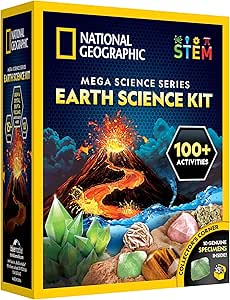 | Best Overall | Brand: Blue Marble (National Geographic) | Age Range: 8 years and up | Number of Activities: 100+ | VIEW LATEST PRICE | See Our Full Breakdown |
| UNGLINGA 150 Experiments Science Kits for Kids |  | Best Value | Brand: UNGLINGA | Age Range: 8 years and up | Number of Experiments: 150 | VIEW LATEST PRICE | See Our Full Breakdown |
| EUDAX Physics Science Lab Learning Circuit Kit, Electricity Experiment Set for Students |  | Best for Middle and High School Physics | Recommended Grades: 7-11 | Subject Focus: Electricity and Magnetism | Includes: Switches, wires, bulbs, LED, electromagnet, hand crank generator, wind power car, compass, storage box, screwdriver, wrench | VIEW LATEST PRICE | See Our Full Breakdown |
| Molecular Model Kit (240 Pieces) for Organic and Inorganic Chemistry Learning |  | Best for Chemistry Visualization | Number of Pieces: 240 | Model Types: Ball-and-stick and space-filling | Material: Food-grade plastics (PP, LDPE, ABS) | VIEW LATEST PRICE | See Our Full Breakdown |
| Carson Dellosa STEM Challenges, Hands-On Science Kits |  | Best for Elementary Classroom Centers | Format: 30 full-color challenge cards | Recommended Grades: 2-5 | Card Dimensions: 7¾ x 5½ inches | VIEW LATEST PRICE | See Our Full Breakdown |
| LINKTOR Chemistry Molecular Model Kit (444 Pieces) |  | Best for Advanced Chemistry | Total Pieces: 444 | Atom Pieces: 136 | Bond Pieces: 158 | VIEW LATEST PRICE | See Our Full Breakdown |
| Learning Resources Super Magnet Lab Kit – 119 Pieces |  | Best for Early Elementary | Total Pieces: 119 | Recommended Age: 5+ | Magnetic Chips: 100 | VIEW LATEST PRICE | See Our Full Breakdown |
More Details on Our Top Picks
National Geographic Earth Science Kit with 100+ Activities for Kids 8-12
This kit earns the top spot because it balances breadth, brand trust, and curriculum-friendly content better than anything else in this lineup. With over 100 experiments spanning volcanoes, crystal growing, and geologic digs, it gives teachers enough material to last a full semester of demo-driven lessons. The full-color learning guide is what separates it from the UNGLINGA 150 Experiments kit — the explanations are written with actual scientific context, not just step-by-step instructions. Compared with the Carson Dellosa challenge cards, everything here arrives in the box rather than requiring a scavenger hunt for household supplies. The tradeoff is that the activities skew toward Earth science only, so it cannot carry a full-year science curriculum on its own, and several experiments demand adult supervision that a solo teacher managing 30 students may struggle to provide.
Pros:- Over 100 experiments provide a full semester of hands-on Earth science content
- Full-color learning guide ties each activity to real scientific concepts
- Materials ship in the box, unlike card-based kits that require gathering supplies
- Trusted educational brand with responsive customer service
Cons:- Some experiments require hands-on adult supervision, which is difficult in large classes
- Content is narrowly focused on Earth science rather than general STEM
Best for: Upper elementary and middle school teachers who want a deep, ready-to-use Earth science unit with all materials included
Not ideal for: Teachers needing multi-subject coverage — this kit is Earth science only and won’t support physics or chemistry units
- Brand:Blue Marble (National Geographic)
- Age Range:8 years and up
- Number of Activities:100+
- Subject Focus:Earth Science / STEM
- Model Number:NGMEGAEARTH
- Manufacturer:JMW Sales, Inc.
- Warranty:Backed by exceptional service
Our verdict“The most complete, lowest-prep option for teachers building an Earth science unit — buy it if subject depth matters more than topic variety.”
UNGLINGA 150 Experiments Science Kits for Kids
On a cost-per-experiment basis, nothing here beats this kit. 150 experiments across chemistry, physics, and Earth science make it far more versatile than the National Geographic Earth Science Kit, which stays inside a single discipline. That variety makes this the smarter pick for teachers who rotate between science units or run after-school STEM clubs. The illustrated manual is genuinely kid-friendly, closer in accessibility to Carson Dellosa’s card format than to the denser EUDAX circuit kit instructions. The catch is hidden cost: several experiments call for household items not in the box, so teachers should budget time for supply gathering. Compared with the National Geographic option, the learning guide is thinner on scientific explanation, prioritizing fun over depth. For classroom stations on a tight budget, though, that tradeoff is easy to accept.
Pros:- 150 experiments deliver the best activity count for the price in this lineup
- Covers chemistry, physics, and Earth science rather than a single subject
- Well-illustrated manual that students can follow with minimal hand-holding
- Real lab-style tools and materials create an authentic science experience
Cons:- Some experiments require household items not included
- Scientific explanations are lighter than the National Geographic learning guide
Best for: Budget-conscious teachers and STEM club leaders who need topic variety and many activities per dollar
Not ideal for: Teachers wanting a self-contained kit — frequent household-item requirements add prep work the National Geographic kit avoids
- Brand:UNGLINGA
- Age Range:8 years and up
- Number of Experiments:150
- Subjects Covered:Chemistry, Physics, Earth Science
- Includes:Science experiment tools and materials
- Best Sellers Rank:#12 in Educational Science Kits
Our verdict“The best bang-for-buck pick for teachers who value experiment variety and low cost over deep scientific explanation.”
EUDAX Physics Science Lab Learning Circuit Kit, Electricity Experiment Set for Students
This is the only option in the lineup built for grades 7-11, and that changes everything about who should buy it. While the UNGLINGA and National Geographic kits stop at general kid-friendly experiments, this one teaches actual circuit building, electromagnetism, and power generation with components like a hand crank generator and wind power car. Physics teachers get reusable, standards-aligned hardware rather than single-use consumables — a long-term advantage over chemistry kits that deplete. The tradeoffs are real: batteries are not included, and beginners will hit a learning curve on assembly that younger students simply can’t manage. Where the Carson Dellosa cards ask second graders to stack cups, this kit asks teenagers to reason through series and parallel circuits. That rigor is exactly its value.
Pros:- Reusable hardware makes it a multi-year investment, unlike consumable experiment kits
- Includes everything from switches and LEDs to a hand crank generator and wind power car
- Scales from simple circuits to complex builds across skill levels
- Aligned to actual grades 7-11 physics curriculum, not just play-based STEM
Cons:- Requires 2 AA batteries that are not included
- Assembly and circuit concepts will frustrate students with no prior electronics exposure
Best for: Middle and high school physics teachers covering electricity and magnetism standards with reusable lab equipment
Not ideal for: Elementary teachers — the assembly complexity and circuit theory exceed what grades K-6 can handle
- Recommended Grades:7-11
- Subject Focus:Electricity and Magnetism
- Includes:Switches, wires, bulbs, LED, electromagnet, hand crank generator, wind power car, compass, storage box, screwdriver, wrench
- Batteries Required:2 x AA (not included)
- Storage:Included storage box
Our verdict“The clear choice for secondary science teachers who need rigorous, repeatable electricity labs rather than one-off experiments.”
Molecular Model Kit (240 Pieces) for Organic and Inorganic Chemistry Learning
Where every other kit in this roundup is about doing experiments, this one is about seeing invisible concepts. Ball-and-stick and space-filling models let students physically build molecular geometry — the single hardest thing to teach from a textbook. At 240 pieces it handles most middle and high school structures comfortably, though the LINKTOR 444-piece kit is the better buy for AP Chemistry or college-level work with complex organic molecules. Teachers at lower grades should consider it a demonstration tool rather than a student activity: unlike the Learning Resources Super Magnet Lab, which is built for small hands, this kit’s assembly instructions can be unclear and pieces are small. The food-grade plastic construction is a nice safety touch for a classroom setting, and the pieces survive years of repeated builds.
Pros:- Supports both ball-and-stick and space-filling modeling styles in one set
- Food-grade, eco-friendly plastics are safe for classroom handling
- Durable pieces hold up to repeated student use across school years
- Serves a uniquely wide grade span from middle school to graduate-level basics
Cons:- Assembly instructions are unclear, requiring teacher preparation before student use
- Too complex and fiddly for elementary students to use independently
Best for: Chemistry teachers in middle school through intro college courses who need durable 3D models for teaching molecular structure
Not ideal for: Teachers of advanced organic chemistry — the 240-piece count falls short of the LINKTOR 444-piece kit for complex molecules
- Number of Pieces:240
- Model Types:Ball-and-stick and space-filling
- Material:Food-grade plastics (PP, LDPE, ABS)
- Model Number:XYHTYBD-07
- Educational Level:Middle school to graduate
- Best Sellers Rank:#51 in Educational Science Kits
Our verdict“An affordable, long-lasting visualization tool for chemistry teachers — just size up to the LINKTOR 444-piece kit if you teach advanced organic chemistry.”
Carson Dellosa STEM Challenges, Hands-On Science Kits
This is the only option designed specifically for grades 2-5 classroom management, and the format reflects it. Thirty full-color challenge cards each carry a prompt, materials list, hints, and explanation — a structure that lets teachers run self-directed learning centers while working with other groups. Compare that with the National Geographic kit, which is teacher-led demonstrations, or the EUDAX circuit set, which is far beyond this age band. The honest tradeoff is that no materials ship in the box: every challenge depends on common classroom and household supplies, so the real cost is prep time, not the sticker price. Physical, life, Earth, and space science topics are covered, but at an introductory depth — this builds STEM thinking habits rather than curriculum content. For elementary teachers, that’s usually the right trade.
Pros:- Card-based format enables independent student work at learning centers
- Covers four science domains across 30 challenges for broad exposure
- Extremely low cost per activity compared with full material kits
- Organized storage box with divider keeps the set classroom-ready
Cons:- No materials included — teachers must gather supplies for every challenge
- Activities stay at introductory depth and can’t anchor a full science curriculum
Best for: Elementary teachers (grades 2-5) running science centers, morning bins, or early-finisher activities with minimal cost per student
Not ideal for: Teachers who want materials included — every activity requires sourcing classroom or household supplies yourself
- Format:30 full-color challenge cards
- Recommended Grades:2-5
- Card Dimensions:7¾ x 5½ inches
- Topics Covered:Physical, life, earth, and space science
- Storage:Included box with divider
- Materials Included:No — requires common household or classroom items
Our verdict“The cheapest way to run structured, independent STEM exploration in an elementary classroom, as long as you don’t mind supplying the materials.”
LINKTOR Chemistry Molecular Model Kit (444 Pieces)
For middle and high school chemistry teachers, this 444-piece molecular model set is the most scalable option in this lineup. Where the 240-piece Molecular Model Kit covers basic organic structures, this one adds 150 fullerene parts, meaning a full class can build everything from simple water molecules to complex carbon structures without running out of pieces. The inclusion of both ball-and-stick and space-filling modeling styles lets teachers demonstrate the difference between bond geometry and actual molecular size — a distinction textbooks rarely make click.
The tradeoff is focus: unlike the Learning Resources Super Magnet Lab Kit, which works for younger grades out of the box, this kit demands a higher level of instruction. Pieces snap together firmly, which preserves builds during demonstrations but makes frequent assembly and disassembly a slow process for younger students.
Pros:- 444 pieces support multiple student groups building simultaneously
- Both ball-and-stick and space-filling models cover geometry and molecular scale
- Fullerene parts extend usefulness into advanced and AP-level chemistry
- Durable enough to survive repeated classroom handling across school years
Cons:- Pieces fit tightly, making assembly and disassembly slow and frustrating for younger or impatient students
- Narrow subject focus — it only teaches molecular structure, not general chemistry or other sciences
- No storage tray labeling system, so sorting 444 loose pieces between classes takes time
Best for: Chemistry teachers in grades 7-12 who need enough pieces for group work and multi-unit molecular geometry lessons
Not ideal for: Elementary teachers — the piece count and assembly difficulty are overkill for introducing basic science concepts
- Total Pieces:444
- Atom Pieces:136
- Bond Pieces:158
- Fullerene Parts:150
- Model Types:Ball-and-stick and space-filling
- Grade Range:Grade 7 through graduate level
- Subjects:Organic and inorganic chemistry
Our verdict“This pick makes the most sense for chemistry teachers who need volume and depth for older students, while general science teachers should look elsewhere.”
Learning Resources Super Magnet Lab Kit – 119 Pieces
Compared with the NG Earth Science Kit or UNGILINGA 150 Experiments kit, which spread attention across many topics, this set goes deep on a single concept — magnetism — and that focus is exactly why it belongs in a kindergarten through third grade classroom. The seven magnetic wands and 100 counting chips make whole-class demonstrations and station rotations practical, something single-experiment kits simply cannot support. An included activity guide gives newer teachers ready-made lesson prompts rather than leaving them to improvise.
The limitation is obvious: once the magnetism unit ends, the kit goes back on the shelf. Teachers wanting a full-year science solution will get more mileage from the broader kits in this roundup. Also, the small chips and marbles demand active supervision with the youngest students.
Pros:- Enough wands and chips to run multiple student stations at once
- Wide variety of magnet types (horseshoe, bar, ring, wand) demonstrates different magnetic behaviors
- Activity guide provides structured lessons teachers can use without prep
- Includes a storage box, keeping 119 pieces organized between uses
Cons:- Single-topic scope means limited reuse outside a magnetism unit
- Small chips and marbles pose a swallowing hazard and require close supervision with younger kids
- Deeper experiments require supplemental materials not included in the box
Best for: K-3 teachers and homeschool parents running a magnetism unit who need enough materials for small-group stations
Not ideal for: Teachers seeking a full-year, multi-topic science resource — this covers magnetism only
- Total Pieces:119
- Recommended Age:5+
- Magnetic Chips:100
- Magnetic Wands:7
- Magnetic Marbles:5
- Magnet Types:2 bar, 2 ring, 2 mini horseshoe, 1 large horseshoe
- Extras:Activity guide and storage box
- Subject Focus:Magnetism and STEM exploration
Our verdict“This kit is the right call for early elementary educators who want an organized, station-ready magnetism unit rather than a scattered multi-topic bundle.”

How We Picked
I evaluated each kit against what actually matters in a classroom: curriculum fit (does the content map to real grade-level standards?), group usability (can 25-35 students rotate through it without chaos?), material durability (consumables versus reusable components), and total cost of ownership (refills, replacements, and teacher prep time included). A kit that dazzles a single child at home often fails when scaled to a classroom, so I weighted repeated-use durability heavily.
Ranking also reflected disciplinary depth. Kits that teach one subject thoroughly ranked higher for subject-specific teachers, while multi-topic kits ranked higher for elementary generalists. I docked points for missing lesson plans, single-use experiments, and materials that break after a few class periods — the most common failure pattern in this category.
Factors to Consider When Choosing Educational Science Kits For Teachers
Beyond the individual reviews, there are broader patterns in this category that catch teachers off guard. These are the factors I would weigh before spending department or PTA money.Class Size Determines Kit Value More Than Price Does
A $30 kit designed for one or two students becomes a week-long station rotation for a class of 30, while a $60 kit with reusable components may serve every section you teach for years. Calculate cost per student-use, not cost per kit. The molecular model kits in this lineup illustrate the point: a 444-piece set supports six to eight student pairs simultaneously, while a 240-piece set forces half the class to wait. Before buying, sketch out how many students can be hands-on at once, because idle students during science time is the fastest way to lose a class.
Experiment Count Is a Marketing Number, Not a Lesson Count
Kits advertising 100 or 150 experiments often count variations of the same activity — three color changes count as three experiments. Read the activity list, not the box. A kit with 15 substantive experiments usually outperforms one with 150 throwaway demos for actual instruction. The common mistake here is buying by number, then discovering half the activities need supplies the kit doesn’t include. Check whether each experiment is self-contained or requires grocery-store additions, because those hidden costs and last-minute store runs erode the value fast.
Grade-Level Fit Is Narrower Than the Box Suggests
Most kits claim an age range like “8-12” that spans three grade levels, but the actual reading level, fine-motor demands, and conceptual depth usually suit only one end of that range. A circuit kit listed for ages 8+ may frustrate third graders and bore seventh graders. Match the kit to the unit you actually teach, not the age on the package. For teachers covering multiple grades, kits with tiered instructions or adjustable difficulty — like Carson Dellosa’s challenge format — stretch further than single-level experiment kits.
Reusability Versus Consumables: The Hidden Budget Question
Some kits are built around consumables (powders, tablets, chemicals) that vanish after one or two classes, making them a recurring expense. Others — magnet sets, circuit components, molecular models — are reusable across years and sections. If you teach five sections of the same course, a reusable kit pays for itself within one semester while a consumable kit needs refills almost immediately. Ask whether replacement parts are sold separately before committing, because a kit with no refill pathway becomes shelf decor after one unit.
Safety and Supervision Requirements Vary Widely
Chemistry and electricity kits introduce supervision demands that earth science and magnet kits do not. Circuit kits with battery holders are generally safe, but kits involving chemical reactions may require goggles, ventilation, or even district safety approvals. Check your school’s science safety policy before ordering — some districts restrict certain chemicals or require specific storage. The safer route for teachers new to hands-on science is starting with physical-science kits (magnets, circuits, structures) and building toward chemistry once routines are established.
Teacher Prep Time Is Part of the Real Price
Almost no kit in this category includes full lesson plans, standards alignment, or assessment materials. That means the true cost includes an hour or more of your prep time per kit to turn activities into instruction. Kits with clear instruction manuals and labeled components — like the Learning Resources and LINKTOR options — cut that prep time noticeably compared to kits with vague, translation-heavy manuals. If your planning periods are scarce, prioritize kits with organized documentation over slightly cheaper alternatives that arrive as a bag of parts and a pamphlet.
Frequently Asked Questions
Can one kit serve a whole class, or do I need multiple sets?
For classes above roughly 20 students, a single kit almost never supports simultaneous hands-on work. The realistic approach is station rotation: split the class into groups of 4-6 and cycle them through the kit over several days, which works well with the reusable options like the magnet lab and molecular model kits. Consumable-heavy kits like the 100+ activity earth science sets run out faster under rotation because each group burns supplies. If your budget allows, two mid-priced kits usually beat one premium kit for coverage, and the LINKTOR 444-piece set is one of the few single kits that can genuinely occupy six to eight pairs at once.
Are the chemistry molecular model kits suitable for middle school, or only high school?
Both kits in this roundup are pitched at organic chemistry, which means they shine in high school and introductory college-level work. Middle school teachers can still use them for teaching molecule structure and chemical formulas, but many of the 240+ pieces — things like double-bond and ring-structure components — will sit unused until students reach more advanced content. If you teach middle school only, a simpler ball-and-stick set would serve better, while teachers covering grades 6-12 get full value from the larger LINKTOR kit because it grows with the curriculum. The main caveat for younger grades is that the small pieces require strict inventory routines or the set shrinks every semester.
Which of these kits need extra supplies the box doesn’t include?
What’s the best kit for a teacher with no science specialist background?
The Learning Resources Super Magnet Lab Kit is the friendliest starting point because magnet activities are intuitive, safe, and nearly impossible to set up incorrectly, with organized instruction cards included. Carson Dellosa’s STEM Challenges kit is a close second since its challenge-format activities frame open-ended problems that don’t require the teacher to have answers memorized. I would steer non-specialists away from the circuit kit as a first purchase — not because it’s dangerous, but because troubleshooting student wiring errors takes some familiarity with circuits. Start physical and low-stakes, then add subject-specific kits once you’re comfortable running hands-on sessions.
How do these kits align with NGSS or state standards?
None of them ship with formal standards alignment documents, which surprises many teachers on first purchase. The good news is that most of the core content maps cleanly onto NGSS expectations — circuits align with middle school energy standards, molecular models support high school chemistry structures, and magnet kits cover K-5 force and interaction standards. The work of alignment falls on you, typically an hour per kit of matching activities to the standards you must hit. Teachers in districts with strict curriculum audits should budget that mapping time before the unit starts rather than after purchase, when returns are no longer an option.
Conclusion
Match the kit to your classroom, not the box copy. For best overall, the UNGILINGA 150 Experiments Kit delivers the best mix of volume, variety, and price for upper-elementary and middle school generalists. For best value, the National Geographic Earth Science Kit covers more earth science ground per dollar than anything else here, provided you accept its shallow activity depth. The best premium pick is the LINKTOR 444-Piece Molecular Model Kit, which justifies its higher price with true whole-class chemistry support that lasts years. For beginners — teachers new to hands-on science or teaching early grades — the Learning Resources Super Magnet Lab Kit is forgiving, durable, and safe. For specific needs: the EUDAX Circuit Kit for middle school electricity units, the Carson Dellosa STEM Challenges for open-ended engineering tasks, and the 240-piece molecular kit for individual or small-group chemistry work on a tighter budget. Whichever you choose, plan the lesson mapping before the kit arrives, and it will earn its shelf space.
Fall Picks
fall essentials
As an affiliate, we earn on qualifying purchases.