
TL;DR
Listen free for 30 days with Audible
Thousands of audiobooks and originals — cancel anytime.
Start your free trialAs an affiliate, we earn on qualifying purchases.
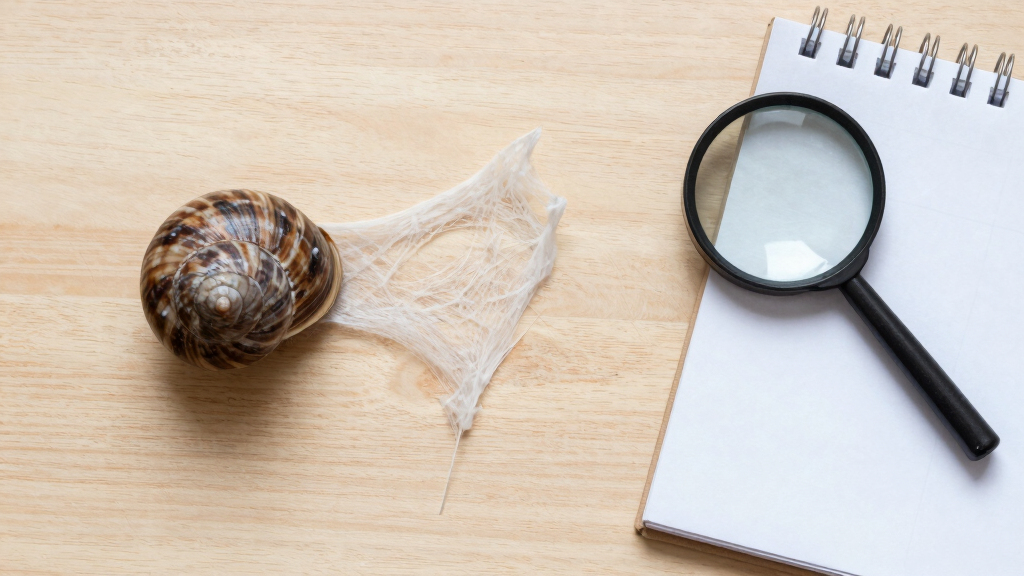
A 2015 study found that the teeth of certain snails are stronger than spider silk, making them the strongest natural material known. This discovery could impact biomaterials research and applications.
Research published in 2015 revealed that snails’ teeth are stronger than spider silk, making them the strongest known natural material. This finding challenges previous assumptions about the limits of biological materials and could influence future biomaterials development.
Scientists from the University of Portsmouth conducted a study measuring the mechanical properties of snail teeth, specifically those of Gulella marginata. They found that the mineralized part of the snail’s radula — a tongue-like structure used for feeding — exhibits a tensile strength exceeding that of spider silk, previously considered one of the strongest natural fibers.
The study used nanoindentation and other microscopic techniques to analyze the composition and strength of the snail teeth. The results showed that these teeth can withstand significant forces, outperforming spider silk in terms of tensile strength and durability. Researchers suggest that the mineralized tissue’s unique structure contributes to this exceptional strength.
The discovery was published in the journal Scientific Reports, and the lead researcher, Dr. David L. M. McCarthy, stated that this could open new avenues for biomimicry and the development of novel, high-strength materials inspired by natural designs.
Implications for Biomaterials and Engineering
This discovery highlights the potential for developing new high-strength materials based on biological structures. Understanding how snail teeth achieve such strength could inspire innovative, sustainable materials for use in medicine, manufacturing, and engineering. It also redefines the perceived limits of natural materials, prompting further research into other biological structures that may possess similar or even superior properties.
high strength biomimetic materials
As an affiliate, we earn on qualifying purchases.
As an affiliate, we earn on qualifying purchases.
Previous Assumptions About Natural Material Strength
Before this study, spider silk was widely regarded as the strongest natural fiber due to its combination of strength and elasticity. Its tensile strength was often used as a benchmark for natural materials. The 2015 research challenged this view by demonstrating that certain mollusk structures can surpass spider silk’s strength.
Research into biomaterials has increasingly focused on mimicking natural structures for technological applications. The finding that snail teeth are stronger than spider silk adds a new candidate for bio-inspired material design and emphasizes the diversity of biological solutions to mechanical problems.
While previous studies concentrated on spider silk and other fibers, this research highlighted the importance of mineralized tissues in mollusks, opening new research pathways into the structural biology of mollusks and other marine organisms.
“Our findings show that snail teeth can withstand forces greater than previously thought possible for natural materials, opening new avenues for biomimetic design.”
— Dr. David L. M. McCarthy
natural material strength research books
As an affiliate, we earn on qualifying purchases.
As an affiliate, we earn on qualifying purchases.
Unanswered Questions About Material Durability and Applications
It remains unclear how the strength of snail teeth varies across different species or environmental conditions. The long-term durability and potential for practical application in synthetic materials are still under investigation. Furthermore, the specific biological mechanisms enabling such strength are not fully understood, and translating this natural design into human-made materials presents challenges.
biomimicry materials science tools
As an affiliate, we earn on qualifying purchases.
As an affiliate, we earn on qualifying purchases.
Future Research Directions and Potential Material Development
Researchers plan to explore other mollusk species to assess the universality of this strength trait. Additional studies are expected to analyze the molecular and structural basis of the material’s properties, aiming to replicate or adapt these features in synthetic biomaterials. Industrial applications could emerge if the biological principles are successfully mimicked, but practical implementation will require further development and testing.
As an affiliate, we earn on qualifying purchases.
Key Questions
How do snail teeth compare to spider silk in strength?
Research from 2015 shows that snail teeth have a higher tensile strength than spider silk, making them the strongest known natural material.
Why are snail teeth so strong?
The strength is attributed to the mineralized tissue in the radula, which has a unique structure that resists significant forces. The exact biological mechanisms are still being studied.
Can this discovery lead to new materials for human use?
Potentially, yes. Scientists aim to understand the biological design principles to develop high-strength, sustainable biomimetic materials, but practical applications are still in early research stages.
Are all snail species capable of producing such strong teeth?
It is not yet clear whether this trait is common among all mollusks or specific to certain species like Gulella marginata. Further comparative studies are needed.
Source: hn
Summer Picks
summer essentials
As an affiliate, we earn on qualifying purchases.