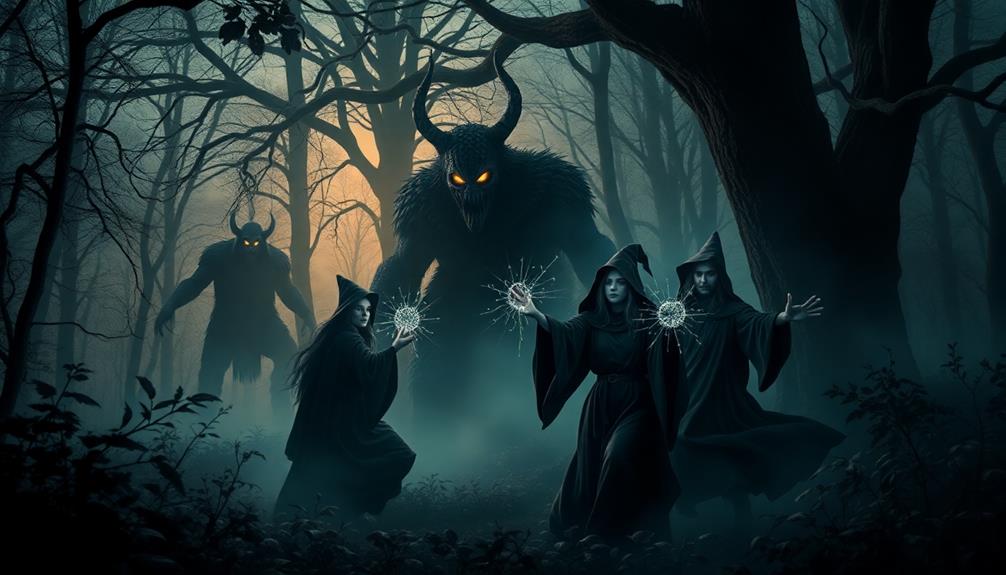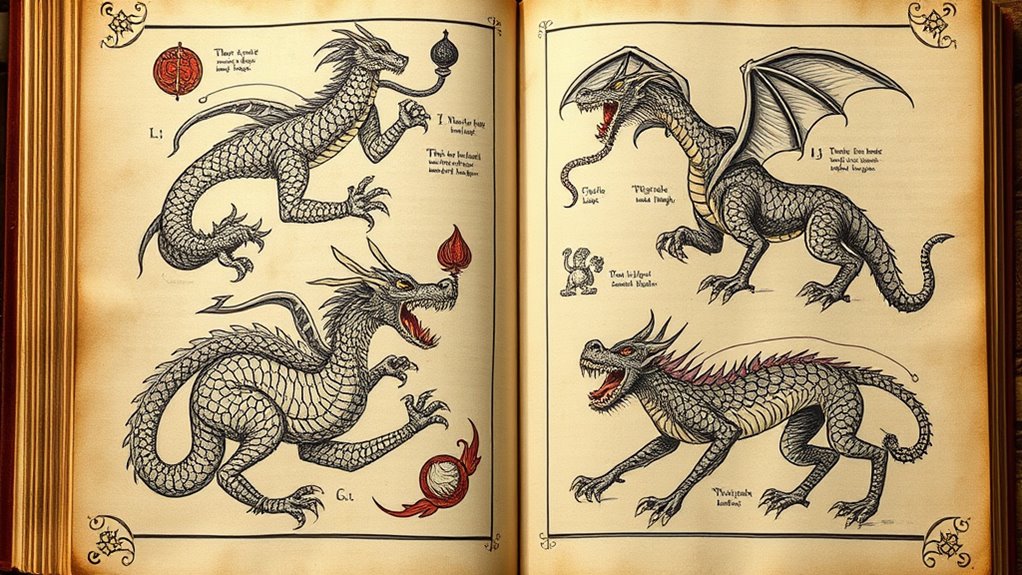
In medieval bestiaries, monsters symbolize moral and spiritual truths, blending myth with natural history. Creatures like dragons and unicorns reflect virtues, vices, and societal fears, serving as allegories to teach moral lessons. While some animals have fantastical traits inspired by folklore, they also embody cultural beliefs about the natural world and divine power. If you keep exploring, you’ll discover how these legendary monsters reveal deeper insights into medieval worldview and morality.
Key Takeaways
- Monsters in bestiaries symbolize moral virtues or vices, serving as allegories for spiritual and societal lessons.
- They blend myth, folklore, and natural observations, reflecting medieval interpretations of the natural world and morality.
- Creatures like dragons and griffins embody chaos, divine power, or protection, symbolizing broader spiritual and moral concepts.
- Bestiaries use fantastical attributes to explain natural phenomena and reinforce societal fears and values.
- The combination of symbolism and pseudo-science in bestiaries illustrates medieval efforts to understand and moralize the natural world.

Medieval bestiaries are fascinating collections that blend natural history with allegory, showcasing a wide array of creatures—many of which are monsters or mythical beings. As you explore these texts, you’ll notice that each creature is more than just a biological curiosity; it’s a symbol rooted in medieval folklore and mythological symbolism. These bestiaries serve as a mirror to medieval society’s beliefs, fears, and moral lessons, turning animals and monsters into visual stories that communicate complex ideas.
Medieval bestiaries combine natural history with allegory, revealing society’s beliefs, fears, and moral lessons through legendary creatures.
You’ll find that many creatures are used to embody virtues or vices, conveying moral lessons through vivid allegory. For example, the unicorn, a creature often depicted as pure and elusive, symbolizes innocence and divine power in Christian thought. Its mythological symbolism extends beyond the creature itself, representing the soul’s purity and the divine mystery of Christ. Similarly, the dragon, a common monster in bestiaries, isn’t just a fearsome beast but also a symbol of chaos, evil, and the devil, reflecting the medieval struggle between good and evil. These creatures are deeply embedded in medieval folklore, where their stories and attributes serve to teach and reinforce societal values.
Your journey through these bestiaries reveals how medieval people interpreted the natural world through myth and legend. Many animals were thought to possess supernatural qualities, or they were linked to stories from biblical or pagan traditions. For instance, the griffin, with the body of a lion and the head and wings of an eagle, embodies divine power, courage, and protection—attributes that symbolized royal authority and divine right. These mythological symbols aren’t arbitrary; they’re carefully chosen to communicate spiritual and moral truths, often serving as metaphors for human virtues or vices. Additionally, the symbolic significance of these creatures often reflected the medieval worldview, where natural phenomena and myth intertwined to create a rich tapestry of moral and spiritual meaning.
Furthermore, medieval bestiaries often incorporated stories from folklore that explained the origins or behaviors of these creatures, blending scientific observation with myth. You might see a description of a real animal, like a lion, paired with fantastical attributes that elevate it beyond its natural form. This fusion of folklore and myth creates a layered understanding of the world, where monsters serve as allegorical devices rather than mere biological entities. By understanding these mythological symbols, you gain insight into how medieval societies made sense of their universe, emphasizing moral lessons, spiritual truths, and cultural values through the fascinating lens of legendary creatures.
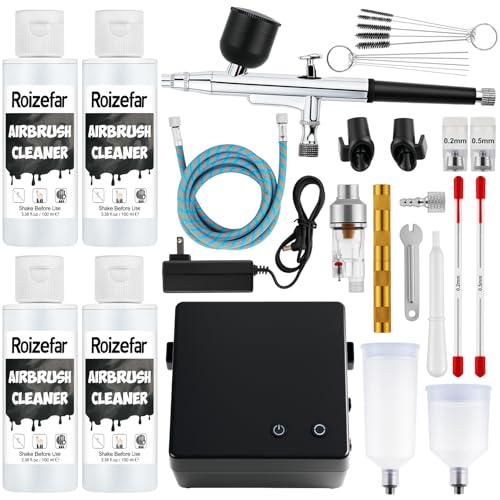
Roizefar Airbrush Kit with Compressor, 55 PSI Non-Clogging Air Brush Painting Set with 4x3.38 fl oz Cleaner, 0.2/0.3/0.5mm Nozzles & Cleaning Brush, Ideal for Painting, Modeling, Nail Art, Makeup
High-Pressure Performance & Adjustable Airflow: This airbrush kit delivers a powerful and stable 55 PSI for professional results....
As an affiliate, we earn on qualifying purchases.
Frequently Asked Questions
How Did Medieval Bestiaries Influence Modern Zoology?
Medieval bestiaries shaped modern zoology by blending myth and reality, inspiring curiosity and investigation. You see, they laid the groundwork for cryptozoology theories, encouraging scientists to explore unknown creatures. While some monsters were symbolic, others prompted real research into animal behaviors and habitats. Today, you can trace how these stories sparked scientific inquiry, helping distinguish myth from reality and advancing our understanding of the natural world.
Were There Real Animals Mistaken for Monsters in Bestiaries?
In medieval bestiaries, you’ll find that some mythical animals, like unicorns or dragons, were based on real animals misunderstood due to zoological inaccuracies. These mistaken identities often led to mythical creatures being included as if they were real, blending science and legend. As a result, you might wonder if some monsters were simply misinterpreted or exaggerated versions of actual animals, reflecting the limited zoological knowledge of the time.
How Did Cultural Differences Shape Monster Symbolism Across Regions?
Cultural perceptions heavily influence how you interpret monsters, shaping regional symbolism in bestiaries. In some areas, monsters symbolize moral lessons, fear, or divine lessons, while in others, they represent chaos or the unknown. These differences reflect each region’s unique beliefs, environment, and social structures. As a result, regional symbolism varies widely, allowing you to see monsters as reflections of local fears, values, and cultural narratives rather than just mythical creatures.
What Role Did Religion Play in Depicting Monsters?
Imagine monsters as divine messengers in disguise; religion deeply influences their depiction. You see, religious symbolism and spiritual significance shape how medieval artists portrayed these creatures, often representing sin, evil, or divine tests. They serve as moral lessons or warnings rooted in faith, making monsters more than mere beasts—they embody spiritual truths. By doing so, religion transforms monsters into symbols of moral struggle, emphasizing their role in guiding believers toward spiritual enlightenment.
Are There Surviving Medieval Bestiaries Accessible Today?
Yes, you can access surviving medieval bestiaries today through modern collections and digital archives. These ancient manuscripts, often preserved in museums and libraries, offer a fascinating glimpse into medieval beliefs and symbolism. Many institutions have digitized these texts, making them available online. So, you can explore these historical bestiaries, study the illustrations and descriptions, and appreciate their cultural and scientific significance from the comfort of your home.

The Army Painter Warpaints Air Starter Set, 12 x 18 mL Pre-Thinned Acrylic Airbrush Paints, incl. 1 Metallic & 1 Grey 100 mL Primer - Air Brush Paint Kit for Models and Miniature Painting
12 Warpaints Air
As an affiliate, we earn on qualifying purchases.
Conclusion
As you close the pages of these medieval bestiaries, remember that monsters aren’t just creatures of myth—they’re mirrors reflecting fears, morals, and the unknown. Just as shadows give form to darkness, these beasts symbolize deeper truths about human nature and spirituality. By exploring their stories, you reveal a world where science and symbolism intertwine, inviting you to see beyond the surface and confront the mysteries lurking within ourselves. After all, isn’t every monster a mirror of our own fears?

The Army Painter, GameMaster: Wandering Monsters Role-playing Paint Set, 15x18 ml Fanatic Acrylic Paints, incl. Metallics, Wash, Primer, 1 Brush & 1 Free Miniature - For Warhammer & Dnd
🎨 The Gamemaster: Wandering Monsters Role-playing Paint Set Includes 15 Paints, Consisting Of 10 Vibrant Colours, 2 Effect...
As an affiliate, we earn on qualifying purchases.

32PSI Cordless Airbrush Kit with Compressor - Portable Handheld Air Brush Gun with LED Display & 0.38mm Anti-Clog Nozzle, Rechargeable Airbrush Set for Model Painting, Nails, Barber, Cake & Makeup
[VISUAL CONTROL] SMART LED DISPLAY & 4 PRESSURE LEVELS - Elevate your art with our upgraded cordless airbrush...
As an affiliate, we earn on qualifying purchases.