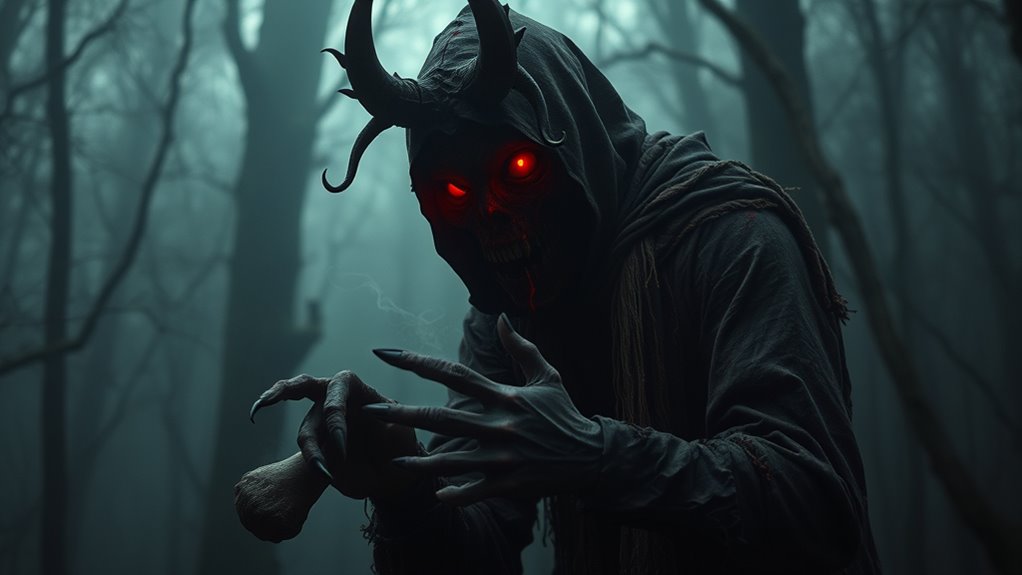

The Pishacha are terrifying flesh-eating demons from Indian folklore, often seen as grotesque creatures with disfigured faces and glowing eyes. They symbolize primal fears like death, chaos, and moral decay, often lurking in haunted places, cremation grounds, and forests. These demons serve as warnings against immoral actions and spiritual neglect, embodying the darker side of human nature. If you want to uncover more about their origins and significance, stay curious to learn further.
Key Takeaways
- Pishachas are terrifying flesh-eating demons rooted in medieval Indian folklore, symbolizing chaos, evil, and inner darkness.
- They are depicted as grotesque beings with disfigured faces and glowing eyes, often lurking in haunted or lonely places.
- Pishachas embody fears of death, the unknown, and moral corruption, serving as warnings against spiritual neglect.
- These demons are associated with cremation grounds and forests, representing liminal spaces between life and death.
- Rituals and exorcisms are believed necessary to banish Pishachas, emphasizing the importance of spiritual purity and moral righteousness.

Have you ever wondered about the dark spirits lurking in Indian folklore? The Pishacha, a terrifying flesh-eating demon, has haunted stories for centuries. These malevolent entities are deeply rooted in medieval legends, where they serve as cautionary tales and symbols of chaos and evil. In Indian folklore symbolism, Pishachas embody the darker aspects of human nature—fear, greed, and the corrupting influence of unchecked desires. They are often depicted as nightmarish beings that feed on human flesh and blood, lurking in shadows and abandoned places, ready to terrorize the unwary.
In the stories passed down through generations, Pishachas are not just mindless monsters; they are woven into the cultural fabric as representations of inner darkness. They symbolize the fears that dwell within everyone—the fear of death, the unknown, and the loss of control. These demons are believed to emerge during the night, especially when the moon is full, embodying the fears that surface when darkness falls. Medieval legends describe them as grotesque, with disfigured faces and eyes glowing with malevolence. Their presence in folklore underscores their role as warnings against immoral behavior or neglect of spiritual duties. Additionally, their connection to spiritual symbolism emphasizes their importance as moral cautionary figures.
Pishachas embody inner fears—death, the unknown, loss of control—warning against immoral choices and spiritual neglect.
The symbolism of Pishachas extends beyond their terrifying appearance. They are often associated with haunted places, cremation grounds, and lonely forests—settings that evoke the boundaries between life and death. These locations, in folklore, are seen as gateways for spirits and demons, emphasizing the fragile line between the mortal world and the supernatural domain. Their flesh-eating nature highlights a primal fear: the destruction of the human body and soul. In some stories, they are depicted as souls of those who have committed grave sins, cursed to roam the earth, feeding on the living as punishment.
Understanding the role of Pishachas in Indian folklore reveals how these entities function symbolically within the cultural psyche. They serve as a reminder of the consequences of immoral actions and the importance of spiritual purity. In many tales, exorcisms or spiritual rituals are necessary to rid a place or person of their influence, reinforcing the idea that purity and righteousness can banish darkness. The Pishacha’s terrifying nature and symbolic significance keep them alive in stories, reminding you of the eternal struggle between good and evil, light and darkness. Their presence in folklore continues to evoke fear, fascination, and respect for the mysterious forces lurking beyond the physical realm.
Indian folklore exorcism ritual kit
As an affiliate, we earn on qualifying purchases.
As an affiliate, we earn on qualifying purchases.
Frequently Asked Questions
Are Pishacha Demons Mentioned in Ancient Indian Texts?
Yes, pishacha demons are mentioned in ancient texts. You’ll find demonic references in scriptures like the Atharva Veda and other early Indian writings, describing these flesh-eating spirits as malevolent beings. These texts depict pishachas as haunting graveyards and dark places, embodying fears of death and decay. Their presence in ancient literature shows how deeply rooted these mythological demons are in Indian folklore, symbolizing chaos and evil.
Do Pishacha Demons Target Specific Times or Locations?
You should be aware that pishacha demons are believed to target specific times, especially during nighttime hauntings when darkness prevails. They are also drawn to sacred sites, where their presence is considered more intense and unsettling. If you venture into isolated or spiritually significant locations after sunset, you might encounter their malevolent influence. Stay cautious and avoid such places at night to reduce the risk of disturbing these ominous entities.
Can Pishacha Demons Possess Living Humans?
Yes, pishacha demons can possess living humans through spiritual possession, often during vulnerable moments or in sacred spaces. If you believe you’ve been possessed, exorcism rituals are commonly performed by spiritual experts to cast out the demon. These rituals aim to restore your spiritual balance and protect you from further harm. Stay cautious and seek guidance from knowledgeable practitioners if you suspect such an entity has taken hold.
Are There Any Rituals to Ward off Pishacha Demons?
Yes, there are rituals to ward off pishacha demons. You can use protective amulets, often blessed with sacred symbols, to keep them at bay. Additionally, purification rituals like holy water sprinkling, burning incense, and reciting mantras are believed to cleanse negative energies and prevent the demons from entering your space. Regularly performing these rituals helps maintain spiritual protection against pishacha attacks.
How Do Pishacha Demons Differ From Other Indian Spirits?
Imagine shadows flickering in the moonlight—that’s how Pishacha demons differ from other Indian spirits. They’re flesh-eating entities with dark, malevolent energy, rooted in specific cultural distinctions. Unlike gentle spirits or protective deities, Pishachas feed on flesh and haunt dark, deserted places. Their folklore variations highlight their violent, consuming nature, setting them apart from spirits associated with protection or guidance, making them uniquely terrifying in Indian mythology.

Purification & Spiritual Cleansing Kit – Sage Smudge, Ritual Oils, Herbs, Candles for Energy Clearing & Home Protection
For use in Purification, and Banishing rituals and spiritual practices.
As an affiliate, we earn on qualifying purchases.
As an affiliate, we earn on qualifying purchases.
Conclusion
So, next time you think you’re safe from dark forces, remember the pishacha. These flesh-eating demons, rooted in Indian folklore, thrive in shadows and fear, yet somehow, their stories remind us how real our fears can become. Ironically, it’s not just the demons that haunt us, but our own imagination. So, sleep tight—if you dare—knowing the pishacha might be just a myth… or perhaps lurking just beyond your dreams.

JMKTOOL 24pcs Antique Silver Tarot Card Pendant Charms Alloy Rectangle Wheel Of Fortune Sun Tarot Protection Charm Amulets for DIY Bracelet Necklace Jewelry Making Supplies, 6 Styles
PACKAGE QUANTITY: The package includes totally 24pcs antique silver tarot card charms in 6 styles, each style 4pcs,…
As an affiliate, we earn on qualifying purchases.
As an affiliate, we earn on qualifying purchases.

The Absolutely True Diary of a Part-Time Indian (National Book Award Winner)
Great product!
As an affiliate, we earn on qualifying purchases.
As an affiliate, we earn on qualifying purchases.