
TL;DR
NASA announced Overlap Zoo, a citizen-science project asking volunteers to check images for galaxies that overlap from Earth’s viewpoint and mark their features. The resulting catalog is intended to support research into how dust inside galaxies affects starlight; the project’s scientific measurements and outcomes are not yet reported.
NASA Science announced Overlap Zoo on Sept. 30, 2026, a citizen-science project asking volunteers to identify and describe galaxies that appear to overlap in telescope images. The classifications are intended to help researchers assemble a catalog of galaxy pairs that can be used to study how cosmic dust blocks and scatters starlight.
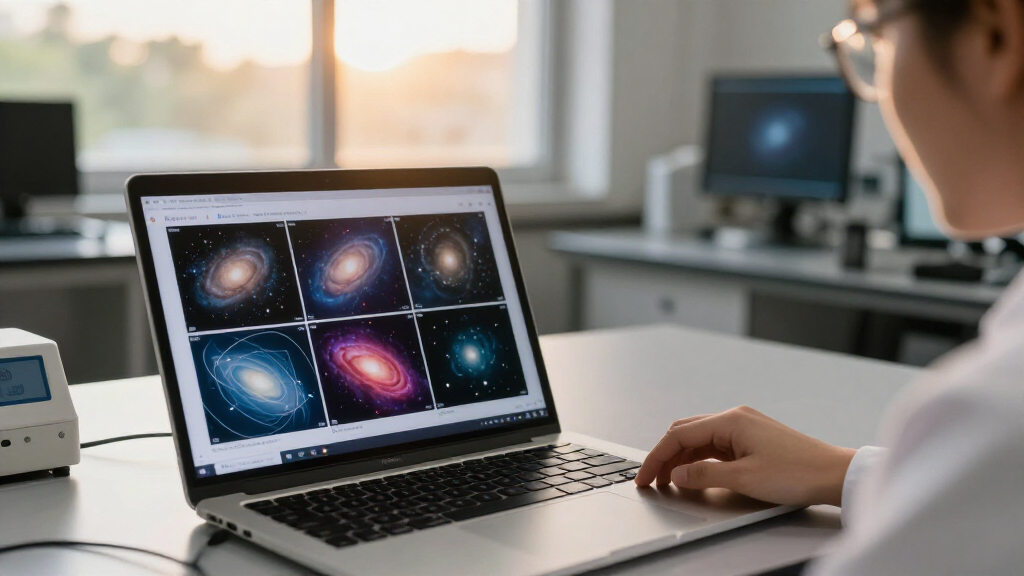
In the project, participants will review images of possible galaxy pairs previously flagged by volunteers with Galaxy Zoo. They will check whether the galaxies overlap in the image, classify features of each one and mark their outlines. NASA says volunteers can work through as many images as they choose and do not need prior astronomy experience; an internet-connected computer is needed.
The alignments matter because the more distant galaxy can act as a background light source behind a nearer one. Dust in the foreground galaxy may then appear as dark silhouettes against the background galaxy’s light. Researchers can use those silhouettes to investigate where dust lies and how it affects light passing through a galaxy.
NASA describes the project’s goal as creating a large-scale catalog of overlapping galaxy pairs suitable for dust research. Project lead Trevor Butrum, a graduate student, said growing volumes of galaxy observations make it difficult for astronomers to classify every candidate pair themselves. The report presents volunteer classifications as a way to help find and describe candidates; it does not report results from the project or specify how many images are available.
How Galaxy Shadows Can Trace Dust
Cosmic dust is difficult to study directly, but its effect on light can offer a way to map it. In an overlapping pair, the background galaxy provides light that passes through the foreground galaxy from the perspective of an observer. The dark patterns created by intervening dust can help researchers estimate where dust is distributed and how strongly it blocks or scatters light.
NASA also says measurements of dust’s effects on light may help refine distance estimates for faraway objects. That is a potential research application, not a result announced with the project. The value of Overlap Zoo is therefore at this stage in building a set of well-described galaxy pairs that astronomers can study further, rather than reporting a new measurement or discovery.
The project also offers a practical role for public participation: volunteers can help screen image candidates that would otherwise require researchers to review. Whether the classifications lead to improved dust maps or distance estimates will depend on later analysis and is not established in the announcement.
As an affiliate, we earn on qualifying purchases.
From Galaxy Zoo to Overlap Zoo
Galaxy pairs can appear to overlap because of their alignment in the sky, even when the galaxies are at different distances. NASA’s report describes these apparent overlaps as uncommon opportunities to observe foreground dust against the light of a background galaxy. They are visual alignments, not a claim that the galaxies are physically colliding or touching.
Overlap Zoo builds on images that Galaxy Zoo volunteers have already identified as possible overlaps. Its next task is more targeted: confirm the pair and record features and outlines in a consistent way. NASA says the project aims to create the first large-scale catalog of pairs suitable for dust studies; that is the stated project goal, not a completed catalog or a claim that no relevant pairs have ever been studied.
The announcement was published by the NASA Science Editorial Team on Sept. 30, 2026. It directs interested participants to the Overlap Zoo project to begin classifying images.
“As new and better observations of galaxies continue to multiply, it is becoming incredibly difficult for astronomers to classify every candidate galaxy pair.”
— Trevor Butrum, Overlap Zoo project lead and graduate student
astronomy binoculars for deep sky viewing
As an affiliate, we earn on qualifying purchases.
As an affiliate, we earn on qualifying purchases.
Project Results Are Not Yet Reported
NASA’s announcement does not give a count of images, expected number of volunteers, project schedule or date for publication of a catalog. It also does not report how many candidate overlaps have already been confirmed, or what quality checks will be applied to volunteer markings.
The described scientific uses remain research aims. The source says dust silhouettes can help researchers study dust and that measurements may refine distance estimates, but it provides no new findings or quantified improvement in accuracy. The extent to which the catalog will support those outcomes can only be evaluated after the candidates are classified and analyzed.
As an affiliate, we earn on qualifying purchases.
Volunteers Begin Reviewing Candidates
NASA is inviting members of the public to visit Overlap Zoo and start classifying the candidate images. Participants will verify apparent galaxy pairs, describe key features and mark galaxy outlines. The project’s announcement does not set a deadline or identify a scheduled release for its catalog.
The next reported milestones would be the completion or publication of a catalog and any subsequent analysis of dust patterns or starlight. NASA has not provided dates for those steps, so the timing and scientific results remain open.
As an affiliate, we earn on qualifying purchases.
Key Questions
What is Overlap Zoo?
Overlap Zoo is a NASA citizen-science project that asks volunteers to check images for galaxies that appear to overlap and record their features for future research on cosmic dust.
What will volunteers do?
Participants will review possible pairs identified through Galaxy Zoo, confirm whether galaxies overlap in the image, classify key features and mark their outlines.
Why are overlapping galaxies useful for studying dust?
A background galaxy can shine through a nearer galaxy. Dust in the foreground may appear as dark patterns against that light, giving researchers a way to study dust’s distribution and effect on starlight.
Do participants need astronomy experience?
No prior experience is required, according to NASA. The project is available to anyone with an internet-connected computer.
Has Overlap Zoo already produced new scientific findings?
The Sept. 30, 2026 announcement describes the project and its goals but reports no catalog results or new measurements. NASA has not stated when results will be available.
Source: primary