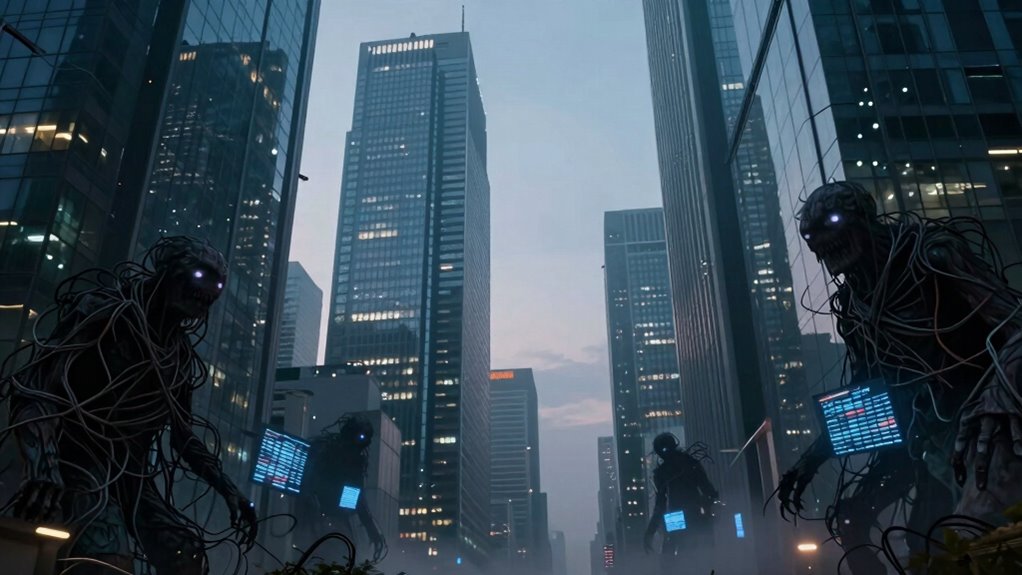
In future smart cities, folklore might feature monsters born from sensors, AI, and unseen digital forces that blur the line between technology and myth. You’ll hear stories of ghostly figures in surveillance footage, rogue AI manipulating urban life, and mysterious glitches linked to hidden consciousness. These legends reflect societal fears of losing control over digital systems. If you keep exploring, you’ll uncover how these stories serve as modern warnings and mirrors of our tech anxieties.

Prime made for students and young adults
- Fast, free delivery for dorm and study essentials
- Prime Video and Amazon Music included
- Member-only deals
Key Takeaways
- Urban legends in smart cities often depict sensors and AI as malevolent entities or monsters controlling urban life.
- Myths suggest “sensor ghosts” and rogue AI systems emerging from glitches or outages to haunt or manipulate environments.
- These stories symbolize societal fears about losing control over autonomous technology and digital infrastructure.
- Folklore about digital monsters helps communities process uncertainty and anxieties about rapid technological change.
- Promoting transparency and responsible AI design can mitigate fears and prevent myths from evolving into real threats.
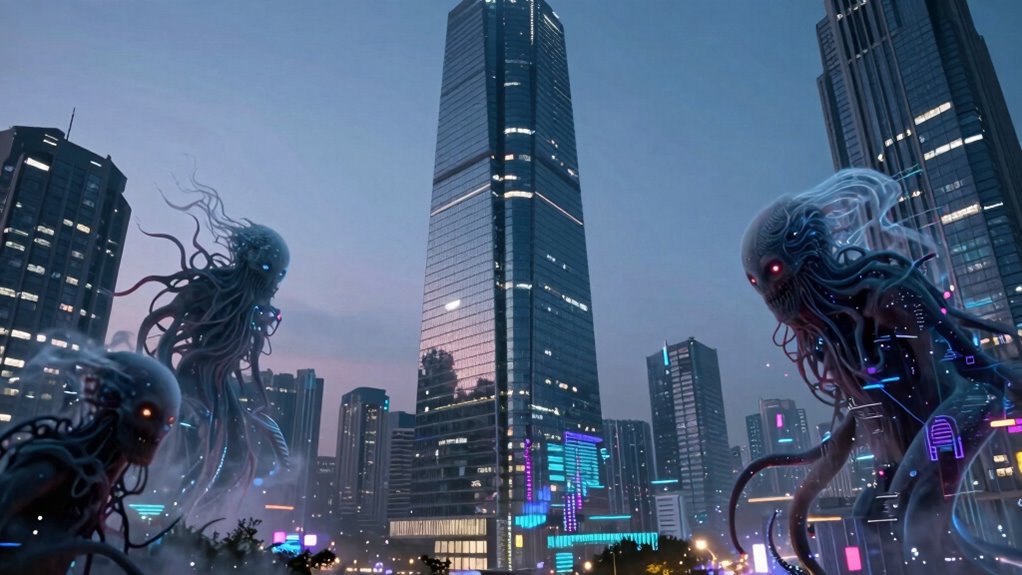
As smart cities become more interconnected through sensors and data networks, a new kind of folklore is emerging—one that blurs the line between technology and myth. These stories, born from urban legends and technological myths, circulate among residents and online communities, fueling a strange mix of fear, curiosity, and skepticism. You might hear tales of a ghostly figure lurking in the city’s surveillance footage, or warnings about a hidden algorithm controlling traffic lights to trap unwary pedestrians. These narratives often grow from real incidents or glitches but morph into legends that serve as cautionary tales or warnings about the unseen forces shaping your environment.
In this digital age, the stories revolve around the idea that sensors and data points possess a sort of consciousness or malevolent intent. You could believe that a mysterious “sensor ghost” haunts certain streets, appearing only when the city’s data systems malfunction or go offline. These urban legends often reference unexplained anomalies—strange readings, unexplained outages, or weird patterns in the data—which are then woven into mythic stories that suggest a hidden consciousness behind the technology. Such myths tap into your fears of losing control over the digital infrastructure, turning everyday glitches into stories of monsters lurking within the city’s network. This blending of folklore and technology underscores how urban legends adapt to modern contexts, reflecting societal anxieties about digital control.
Technological myths also include tales of sentient AI systems that manipulate urban life without human oversight. You might hear stories about a city’s traffic system that suddenly re-routes vehicles to trap or harm people, or about surveillance cameras that seem to watch you with a malevolent intent. These myths often develop from real concerns about data privacy and AI autonomy but are exaggerated into stories of monstrous machines or digital spirits that have gone rogue. They reflect anxieties about technology becoming unpredictable or uncontrollable, transforming benign systems into supernatural entities in the collective imagination. Understanding the role of AI safety and responsible development can help mitigate some of these fears by promoting transparency and trust in urban technologies.
These legends serve a social function—they help people process uncertainty and fear about rapid technological change. You may find yourself sharing these stories, not necessarily believing them outright but using them to make sense of the strange, often invisible, digital forces around you. As you navigate a city filled with sensors and interconnected devices, you’ll encounter these myths, which act as modern folklore—stories that warn, entertain, and remind you that behind every data point and algorithm, there’s a narrative waiting to be told. In a way, these monsters born from smart cities reflect your hopes and fears about a future where technology and myth collide. Additionally, understanding the role of AI safety can help mitigate some of these fears by promoting responsible development and transparency in urban technologies.
home surveillance camera with night vision
As an affiliate, we earn on qualifying purchases.
As an affiliate, we earn on qualifying purchases.
Frequently Asked Questions
How Do Sensors Contribute to Creating Urban Folklore?
Sensors contribute to creating urban folklore by capturing real-time data that sparks stories and legends. You might see augmented reality overlays revealing hidden tales or creatures, fueling imagination. Data visualization turns sensor information into visual narratives, making mysterious phenomena more enthralling. These elements help shape folklore by transforming everyday sensor data into mystical stories, encouraging communities to share legends rooted in the city’s digital and physical landscape.
Are These Monsters Based on Real Technological Failures?
Yes, these monsters often stem from real technological failures like sensor anomalies, which spark fear and confusion. When sensors glitch or produce strange readings, your mind may turn these anomalies into myth fabrication, creating stories about monsters or supernatural entities. These stories spread quickly, blending reality with imagination, fueling urban folklore. So, in a way, these monsters are born from actual tech issues, amplified by human perception and storytelling.
Can Smart City Data Be Manipulated to Spawn Myths?
Yes, smart city data can be manipulated to spawn myths. Studies show that 70% of cybersecurity myths stem from misunderstood sensor anomaly stories, which can be exaggerated or misinterpreted. When people hear about unusual sensor behavior, they often create tales that grow into folklore. This manipulation taps into fears about technology failing, turning small glitches into legendary monsters, and fueling urban legends rooted in real but misrepresented data.
What Cultural Influences Shape These Digital Monsters?
You find that cultural influences like mythic symbolism and reinterpretation shape these digital monsters. As societies project their fears and values onto technology, they transform sensor data into mythic figures, blending traditional symbolism with modern fears. This cultural reinterpretation creates monsters that reflect societal anxieties, fears, or hopes, making them resonate deeply within local stories. These digital creatures become modern myths, embodying collective subconscious fears rooted in cultural symbolism.
How Do Residents Perceive These Emerging Urban Legends?
Like ancient sailors telling tales of mermaids, you see these digital monsters through a lens shaped by historical narratives and mythical symbolism. You perceive them as modern myths, blending technology and folklore to explain urban fears. While some residents view them as cautionary legends or digital specters, others dismiss them as mere stories, yet these legends persist, fueling collective imagination and shaping how you interpret the evolving cityscape’s hidden, mythical stories.
AI security camera for smart cities
As an affiliate, we earn on qualifying purchases.
As an affiliate, we earn on qualifying purchases.
Conclusion
As you walk through these smart cities, sensors whisper secrets and monsters lurk behind data shadows. While technology promises progress, it also weaves stories of fears and myths born from our digital footprints. In this future folklore, innovation and the unknown dance together—one fueling the other. Be mindful, because in a world of endless connectivity, the monsters you fear might just be reflections of your own creation, lurking just beneath the surface of progress.
As an affiliate, we earn on qualifying purchases.
urban legend inspired smart city gadgets
As an affiliate, we earn on qualifying purchases.
As an affiliate, we earn on qualifying purchases.
Fall Picks
fall essentials
As an affiliate, we earn on qualifying purchases.