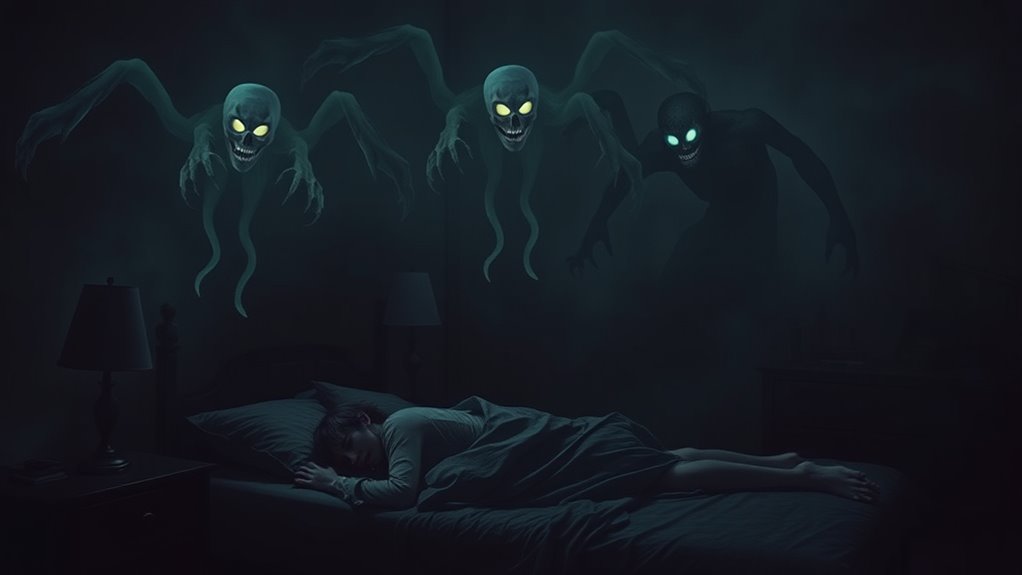

During sleep paralysis, your brain briefly remains conscious while your body is stuck in muscle atonia from REM sleep, often causing vivid hallucinations of nightmare creatures. These hallucinations are your mind’s attempt to interpret the paralysis and sensory input, creating frightening visions. Factors like sleep disorders can increase these episodes. Understanding the science behind these phenomena can help reduce fear and improve how you manage them. Keep exploring to uncover more about this mysterious and fascinating experience.
Key Takeaways
- Sleep paralysis involves the brain remaining conscious while the body is temporarily unable to move during sleep-wake transitions.
- Hallucinations during episodes often resemble nightmare creatures due to the brain’s misinterpretation of sensory input.
- These hallucinations are linked to REM sleep processes, where muscle paralysis and vivid dreaming occur naturally.
- Fearful visions are intensified by the overlap of sleep paralysis with hallucinations rooted in brain activity.
- Understanding sleep disorders and sleep cycles can help manage and reduce the frightening sensations and hallucinations.
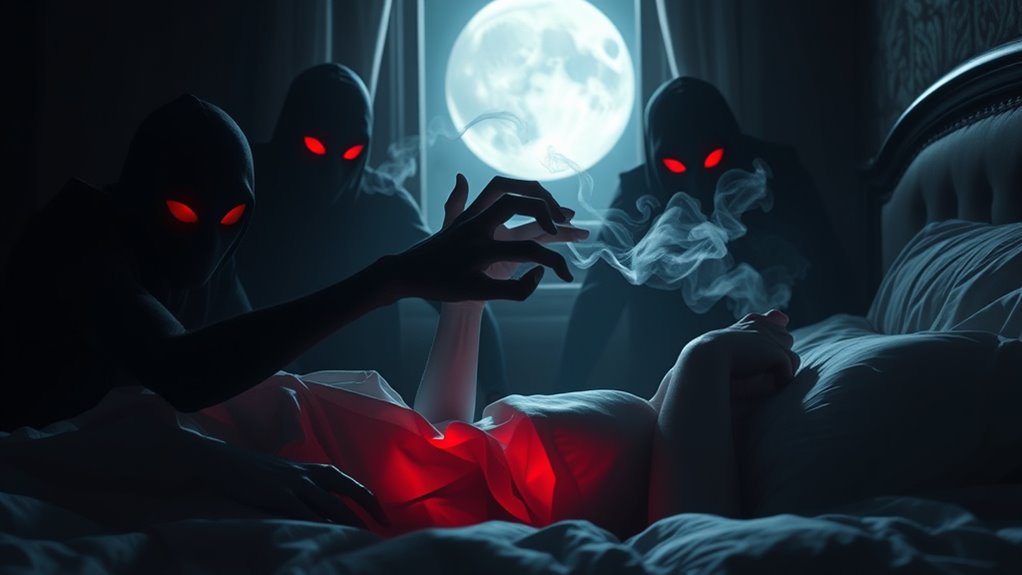
Many people experience the unsettling phenomenon of sleep paralysis, a state where you’re temporarily unable to move or speak while falling asleep or waking up. It can be terrifying, often accompanied by vivid hallucinations that seem to invade your awareness. During these episodes, your mind remains conscious, but your body stays frozen, caught between wakefulness and sleep. This liminal state is closely linked to various sleep disorders and can sometimes be understood through the lens of lucid dreaming. When you’re aware you’re dreaming during a sleep paralysis episode, it’s a sign you might be experiencing a form of lucid dreaming, which occurs when the dreamer recognizes they are in a dream state. Unlike typical nightmares, lucid dreams often give you a sense of control, but during sleep paralysis, that control can feel elusive, heightening your fear. Recognizing these episodes as a part of a sleep disorder is vital; a proper sleep disorder diagnosis helps identify underlying issues such as narcolepsy, REM sleep behavior disorder, or other sleep-related conditions.
Understanding the nature of sleep paralysis involves exploring how REM (rapid eye movement) sleep functions. During REM sleep, your muscles are naturally paralyzed to prevent acting out dreams. Sometimes, this paralysis persists as you wake, leading to sleep paralysis. This state can cause hallucinations, which many interpret as nightmare creatures or supernatural entities. These terrifying visions are not just products of imagination but are rooted in the brain’s attempt to make sense of the paralysis and sensory input. The hallucinations can be intense, making you feel like you’re being watched or attacked, which ties into the common themes of nightmare creatures. The experience is further complicated if you’ve been diagnosed with sleep disorders; in these cases, managing the disorder can reduce the frequency or severity of episodes.
If you’re experiencing recurrent sleep paralysis, it’s worth considering a sleep disorder diagnosis. Medical professionals may conduct sleep studies to monitor your brain activity, eye movements, muscle tone, and breathing patterns. Such tests can reveal disruptions in your sleep architecture and help distinguish between different sleep disturbances. This diagnosis not only clarifies why these episodes happen but also guides effective treatment strategies—whether through medication, lifestyle changes, or sleep hygiene practices. By gaining insight into your sleep patterns, you can better understand how lucid dreaming might influence these episodes and learn ways to control or reduce their occurrence. Ultimately, recognizing sleep paralysis as part of a broader sleep disorder empowers you to seek help and restore restful, uninterrupted sleep.

Kolbs Bed Wedge Pillow for Sleep Apnea, FSA Eligible Acid Reflux, and Back Pain Relief, with Chic Jacquard Cover – Headboard Wedges for Sleeping (Standard Width 7.5" Height)
FSA Eligible. Experience unparalleled comfort with our sleep apnea pillow, designed to elevate your upper body and improve…
As an affiliate, we earn on qualifying purchases.
As an affiliate, we earn on qualifying purchases.
Frequently Asked Questions
Can Sleep Paralysis Be Prevented Entirely?
You can’t prevent sleep paralysis entirely, but you can reduce its chances by practicing good sleep hygiene and managing stress. Stick to a consistent sleep schedule, avoid caffeine and heavy meals before bed, and create a relaxing bedtime routine. Reducing stress through meditation, exercise, or relaxation techniques helps prevent episodes. While not foolproof, these habits markedly lower the likelihood of experiencing sleep paralysis.
Are Nightmare Creatures Real Entities or Just Hallucinations?
Nightmare creatures are not proven to be supernatural entities; instead, they are often cognitive hallucinations your brain creates during sleep paralysis. You might feel like you’re encountering supernatural beings, but these sensations are hallucinations triggered by your brain’s response to stress or disrupted sleep. While they feel real, there’s no scientific evidence to support their existence outside of your mind. Recognizing this can help reduce fear during episodes.
How Does Sleep Paralysis Differ Across Cultures?
You’ll find that sleep paralysis differs across cultures through various interpretations. In some places, it’s seen as a visit from malevolent spirits, while others view it as a spiritual awakening or a mythological encounter. These cultural interpretations shape how you perceive the experience, influencing whether you see it as frightening or meaningful. Your beliefs and mythological background directly impact how you interpret these episodes, making them unique across different societies.
Is There a Genetic Predisposition to Nightmare Creatures?
Think of your mind as a garden, where genetic factors are the seeds that influence what grows. Yes, there’s a hereditary predisposition to nightmare creatures, meaning your genetic makeup can make you more susceptible. These genetic factors shape your brain’s wiring, affecting how you process fear and stress during sleep. While not the only cause, your genetics can certainly predispose you to encounters with these eerie sleep phenomena.
Can Medication Permanently Eliminate Sleep Paralysis Episodes?
Medication can help reduce sleep paralysis episodes, but it usually isn’t a permanent solution. The effects of medication vary from person to person, and long-term use might lead to dependence or side effects. Instead, focus on improving sleep hygiene and managing stress, which offer more sustainable, long-term solutions. Always consult a healthcare provider to find the best approach tailored to your needs and avoid relying solely on medication.
sleep mask for REM sleep
As an affiliate, we earn on qualifying purchases.
As an affiliate, we earn on qualifying purchases.
Conclusion
Understanding sleep paralysis and nightmare creatures helps demystify those frightening moments. Remember, knowledge is power, and even the darkest night will end with the dawn. When you face these eerie experiences, stay calm and remind yourself that fear often feeds the shadows. By learning more, you take away their power. After all, “every cloud has a silver lining,” so trust that brighter days lie ahead, even in the midst of your worst nightmares.
white noise machine for sleep
As an affiliate, we earn on qualifying purchases.
As an affiliate, we earn on qualifying purchases.
sleep tracking device
As an affiliate, we earn on qualifying purchases.
As an affiliate, we earn on qualifying purchases.