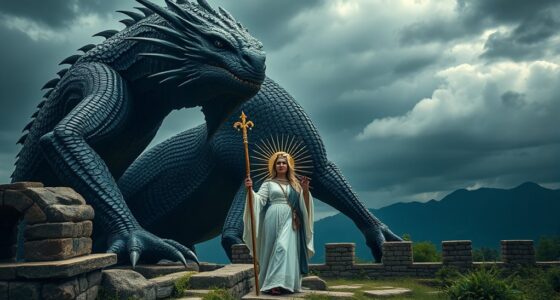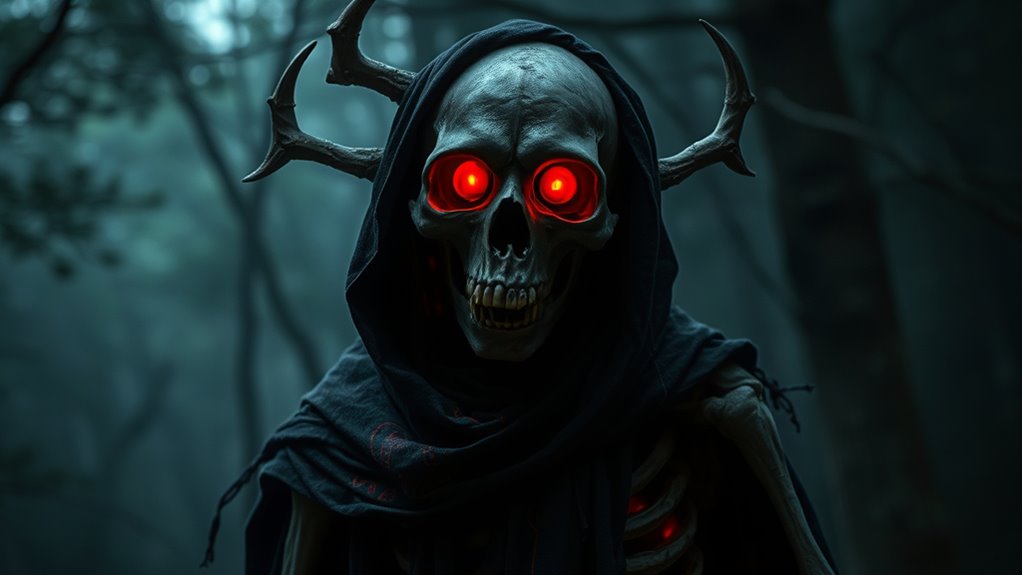
The Baigujing, or Bone Spirit, in Journey to the West is a cunning demon who disguises herself as a beautiful woman to deceive you. She symbolizes illusions and internal demons that threaten your spiritual progress, representing temptation, greed, and ignorance. Her shape-shifting abilities remind you not to trust appearances and to develop discernment. Overcoming her tricks requires resilience and inner strength, highlighting the ongoing battle between illusion and enlightenment—continue to explore and uncover her true nature.
Key Takeaways
- The Baigujing, or Bone Spirit, is a demon from *Journey to the West* symbolizing illusion and internal temptation.
- It disguises itself as a beautiful woman to deceive the travelers and challenge their virtues.
- The creature embodies internal demons like greed and ignorance, representing spiritual obstacles.
- Overcoming the Bone Spirit requires discernment, resilience, and spiritual wisdom from the pilgrims.
- Its story highlights the ongoing battle between illusion and enlightenment on spiritual journeys.
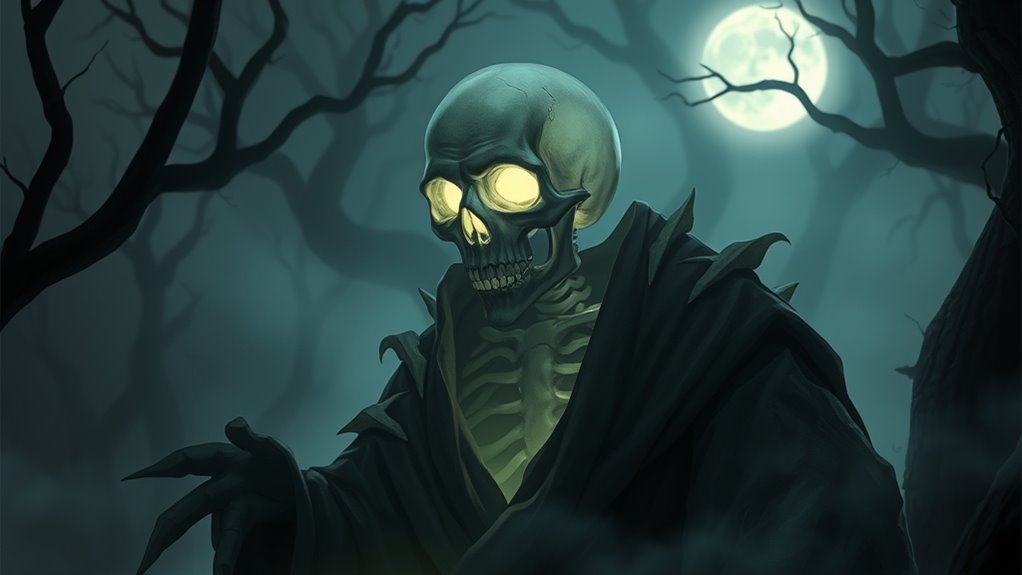
In the classic Chinese novel *Journey to the West*, the Bone Spirit stands out as a cunning and formidable demon who constantly challenges the monk Tang Sanzang and his companions. This creature, known as Baigujing, embodies more than just a physical threat; it symbolizes the dangers lurking on spiritual journeys and the illusions that can deceive even the most righteous. As a mythological creature, the Bone Spirit is crafted with supernatural features, yet its true power lies in its ability to manipulate perception and exploit weaknesses, making it a perfect allegory for spiritual temptation.
You’ll notice that the Bone Spirit’s form is deceptive—disguised as a beautiful woman to lure the unwary. This mirrors the spiritual symbolism often found in Chinese folklore, where external appearances can mask inner corruption. The demon’s ability to shift shapes reminds you that not everything that appears good or innocent is truly so. It’s a reminder that spiritual growth requires discernment and vigilance against illusions designed to lead you astray. The mythological creatures in the story, like the Bone Spirit, serve as allegories for internal struggles—temptation, greed, or ignorance—that threaten your spiritual progress. Recognizing these illusions is essential for maintaining faith and wisdom on your journey.
Deceptive appearances mask inner corruption, reminding us to discern illusions on our spiritual journey.
When encountering the Bone Spirit, you see how mythological creatures are used to personify abstract concepts. The demon’s cunning and resilience challenge the virtues of faith, patience, and wisdom that the travelers endeavor to uphold. Its repeated deceptions reveal how spiritual obstacles often come cloaked in familiarity or false promises. The Bone Spirit’s persistence also highlights that spiritual enlightenment isn’t achieved easily; it requires constant awareness and the ability to see beyond superficial appearances. This is where the symbolism deepens—the creature reflects the internal demons we all face and the importance of inner strength to overcome them.
Throughout their encounters, you realize that the story is not just about defeating a demon but about understanding the deeper spiritual lessons it embodies. The mythological creature, in this case, the Bone Spirit, acts as a mirror for your own inner fears and desires. Its role emphasizes that true spiritual progress involves recognizing and confronting these illusions, rather than being misled by them. The spiritual symbolism woven into its mythological form reminds you that growth often involves facing uncomfortable truths and developing the wisdom to see beyond surface appearances. Additionally, cultivating emotional support can help bolster inner resilience against these internal and external challenges. In a nutshell, the Bone Spirit’s role in *Journey to the West* underscores the ongoing battle between illusion and enlightenment that everyone must face on their spiritual path.
Frequently Asked Questions
What Inspired the Creation of the Bone Spirit Character?
You’re inspired by spiritual symbolism and folklore origins when creating the Bone Spirit character. You draw on traditional tales of spirits and demons, blending them with cultural symbols to craft a character that embodies deception and temptation. The Bone Spirit’s form and behavior reflect deep-rooted beliefs about spiritual domains and the power of supernatural forces, making her a compelling representation of the darker, mystical aspects of folklore in storytelling.
How Does the Bone Spirit Compare to Other Mythological Bone Spirits?
You notice that this bone spirit stands out in the mythological hierarchy, blending cunning spectral characteristics with a haunting elegance. Unlike others, it’s more deceptive, using charm to hide its true form. Its spectral traits make it feel more tangible, yet elusive. Compared to typical mythological bone spirits, it’s uniquely adaptable, embodying both danger and allure, which sets it apart in its domain of spirits.
Are There Real-World Legends Similar to the Bone Spirit Story?
Yes, you’ll find real-world legends similar to the bone spirit story in medieval folklore, where mythological beings often disguise themselves or possess hidden powers. These legends depict spirits or creatures that can change form or deceive humans, much like the bone spirit. Such stories reflect ancient beliefs in supernatural beings that blur the line between the living and the undead, emphasizing themes of deception, transformation, and hidden danger.
What Cultural Significance Does the Bone Spirit Hold in Chinese Folklore?
You see, the bone spirit embodies sacred symbolism in Chinese folklore, representing the potential for spiritual transformation. It highlights themes of rebirth and the importance of inner purity. As a symbol, it reminds you that even what seems broken or discarded can hold profound spiritual significance. This story encourages you to seek growth through challenges, emphasizing that transformation is a crucial part of spiritual evolution and cultural tradition.
How Has the Depiction of the Bone Spirit Evolved Over Time?
You see that the depiction of the bone spirit has evolved through cultural reinterpretations and modern adaptations. Over time, artists and storytellers portray it with more complexity, blending traditional folklore with contemporary themes. In modern adaptations, it often symbolizes themes like deception or transformation, reflecting current societal values. This evolution allows the bone spirit to remain relevant, resonating with audiences while maintaining its roots in Chinese cultural heritage.
Conclusion
As you reflect on the Bone Spirit’s journey, you see how her fragile bones symbolize the thin line between illusion and reality. Her transformation reminds you that even the strongest facades can shatter, revealing hidden truths beneath. Like a fragile bone breaking, false appearances crumble, leaving pure spirit behind. Embrace this symbolism, and remember that true strength lies in understanding what’s beneath the surface, guiding you toward wisdom on your own path.