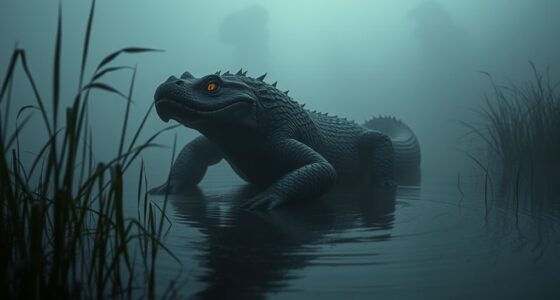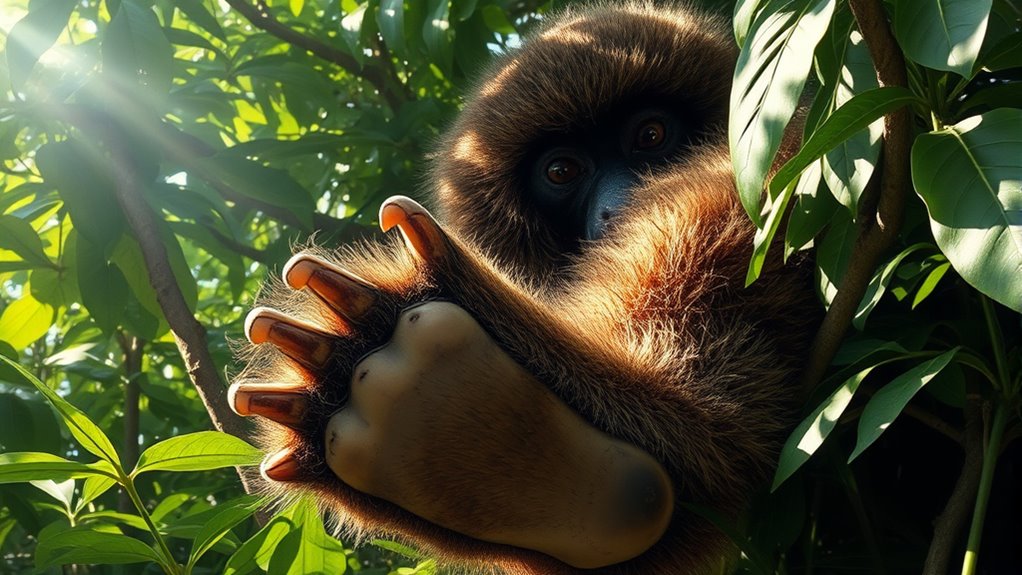

The Mapinguari is an elusive, giant creature reported in the Amazon rainforest, often described as ape-like with shaggy fur and a distinctive backward foot, which makes it stand out in folklore. It’s believed to possess incredible strength and resilience and is thought to be a guardian of the jungle. While some think it might be a remnant of ancient megafauna, others believe sightings are misidentifications. Discover more about this mysterious beast and its fascinating legends as you continue exploring.

Prime made for students and young adults
- Fast, free delivery for dorm and study essentials
- Prime Video and Amazon Music included
- Member-only deals
Key Takeaways
- The Mapinguari is a legendary Amazonian creature with a distinctive backward foot, adding to its mysterious and elusive nature.
- It is described as a massive, ape-like being with shaggy fur and a terrifying mouth stretching ear to ear.
- Indigenous folklore considers the Mapinguari a guardian of the rainforest, embodying both myth and potential real animal.
- Some theories suggest it may be a surviving ancient megafauna or a misidentified known animal.
- Its backward foot is a key feature that differentiates it from other cryptids and adds to ongoing debates about its existence.
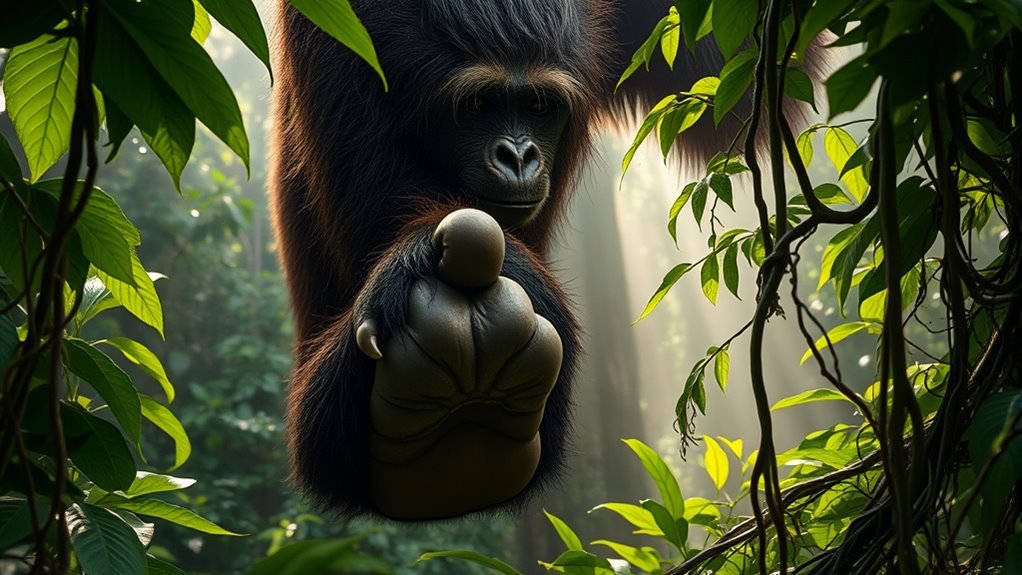
The Mapinguari is a legendary creature said to roam the Amazon rainforest, mesmerizing the imaginations of locals and explorers alike. As one of the most intriguing mythical creatures in South American folklore, it captures the curiosity of those interested in cryptozoology theories—investigations into creatures whose existence is unproven but widely reported. When you explore the stories surrounding the Mapinguari, you’ll find that it embodies many traits typical of cryptids: elusive, mysterious, and often shrouded in a mix of folklore and anecdotal evidence. Its reputation has persisted through generations, fueling debates about whether it’s merely a myth or a hidden animal lurking deep within the jungle.
According to legends, the Mapinguari is a massive, ape-like beast with a ferocious temperament. Its description varies, but common features include shaggy fur, powerful limbs, and a mouth that extends from ear to ear. Some stories suggest it has a single eye or a terrible, unearthly roar that echoes through the forest. What sets it apart from other mythical creatures is its backward foot—an odd characteristic that has fascinated cryptozoologists and enthusiasts alike. This backward foot is often cited as a key trait that might help distinguish it from known animals, hinting at its supernatural or hybrid nature. The creature is said to possess incredible strength and resilience, capable of tearing through dense vegetation and defending itself fiercely against threats. Interestingly, the legend of the Mapinguari also ties into cultural significance, highlighting its role as a symbol within indigenous stories and beliefs.
The Mapinguari’s backward foot and immense strength make it a mysterious, elusive guardian of the Amazon rainforest.
You might wonder what the purpose of these legends is and whether there’s any real evidence supporting its existence. Cryptozoology theories propose that the Mapinguari could be a surviving remnant of ancient megafauna, possibly a relic of extinct species like giant sloths or giant ground sloths. Others believe it’s a misidentified animal, such as a large anaconda or an anteater, exaggerated over time by folklore. Despite the lack of conclusive proof, numerous sightings and stories keep the legend alive, fueling the debate about whether the creature is an undiscovered species or simply a product of myth. The stories often describe encounters in remote parts of the jungle, where locals claim to have seen or heard it, reinforcing its status as a mysterious guardian of the rainforest.
If you’re drawn to mythical creatures and cryptozoology theories, the Mapinguari offers a fascinating glimpse into the unknown. Whether it’s a real creature hiding in the shadows or a symbol of Amazonian folklore, it continues to stir curiosity. Its legend reminds us that the rainforest still holds secrets, and the line between myth and reality remains delightfully blurred. Exploring such stories invites you to imagine what mysteries the depths of the Amazon might conceal, fueling your fascination with creatures that defy explanation.
As an affiliate, we earn on qualifying purchases.
Frequently Asked Questions
Has Anyone Ever Captured Clear Footage of the Mapinguari?
No, nobody has captured clear footage of the mapinguari. The photographic challenges in the dense Amazon rainforest make it hard to get definitive images. Eyewitness reliability is often questioned due to poor visibility and the creature’s elusive nature. You’d need highly reliable witnesses and advanced equipment to improve chances, but so far, no one has succeeded in filming a clear, conclusive shot of this mysterious beast.
What Sounds Does the Mapinguari Reportedly Make?
You hear the Mapinguari’s calls as guttural roars, thunderous growls, and eerie howls, echoing through the Amazon’s depths. These sounds, rooted in mythical origins and folklore, serve as warnings or territorial signals. Their ecological impact is significant, as these noises may deter predators or rivals. You sense that understanding these sounds deepens your connection to the mysterious creature, revealing its elusive nature and the stories woven into the rainforest’s fabric.
Are There Any Known Scientific Explanations for Its Existence?
You’ll find that scientific skepticism remains strong about the Mapinguari’s existence, as no concrete evidence confirms it. Zoological theories suggest it could be a misidentified known animal, a surviving giant sloth, or a myth rooted in local folklore. Researchers emphasize the need for tangible proof before accepting such creatures as real, highlighting the importance of scientific investigation over anecdotal tales in understanding Amazonian legends.
How Do Local Tribes Traditionally Describe the Creature?
You’ll find that local tribes often describe the Mapinguari in tribal legends as a terrifying, giant creature with a fierce roar and backward feet, which mystifies and frightens them. Folklore descriptions emphasize its monstrous features, like thick fur, a foul smell, and sometimes a single eye. These stories evoke a deep respect and caution, fueling the mystery and belief that the creature is a guardian or a dangerous spirit of the Amazon rainforest.
What Recent Sightings Have Been Reported in the Amazon?
Recent sightings of the Mapinguari continue to spark interest among explorers and locals alike. You might hear reports of large, mysterious footprints or strange sounds deep within the Amazon. These sightings fuel speculation about its mythical origins and ecological impact, suggesting it plays a role in local ecosystems. While evidence remains scarce, these reports keep the legend alive, enticing researchers to explore further and understand the creature’s true nature.
As an affiliate, we earn on qualifying purchases.
Conclusion
Imagine wandering through the Amazon and hearing a strange growl behind you, like a beast out of legend. The Mapinguari, with its backward foot and mysterious presence, is that myth come alive. Just like explorers once chased shadows, you realize some legends are rooted in something real—an ancient guardian of the rainforest. It’s a reminder that even in the modern world, nature still guards secrets, waiting to surprise those brave enough to believe.
As an affiliate, we earn on qualifying purchases.
cryptozoology books about Amazon creatures
As an affiliate, we earn on qualifying purchases.
As an affiliate, we earn on qualifying purchases.
Fall Picks
fall essentials
As an affiliate, we earn on qualifying purchases.