Monster movies greatly influence folklore by turning primal fears into legendary stories that resonate across cultures and generations. You see creatures designed with meticulous detail, blending reality and fantasy to evoke primal responses. These films use familiar tropes and folklore inspirations to create symbols of collective fears, bridging ancient myths with modern stories. Technological advancements also allow for astonishing creatures that keep these legends alive and relevant. Exploring further reveals how cinema continuously shapes and maintains these compelling legends.
Key Takeaways
- Monster movies adapt and popularize folklore creatures, embedding them into modern cultural narratives.
- Filmmakers use creature design to symbolize collective fears, shaping contemporary mythologies.
- Iconic monsters from cinema influence folklore, inspiring stories and traditions across generations.
- Advances in special effects enable more realistic monsters, deepening their impact on cultural myths.
- Cinema’s portrayal of monsters perpetuates archetypes, reinforcing their role in societal fears and folklore.
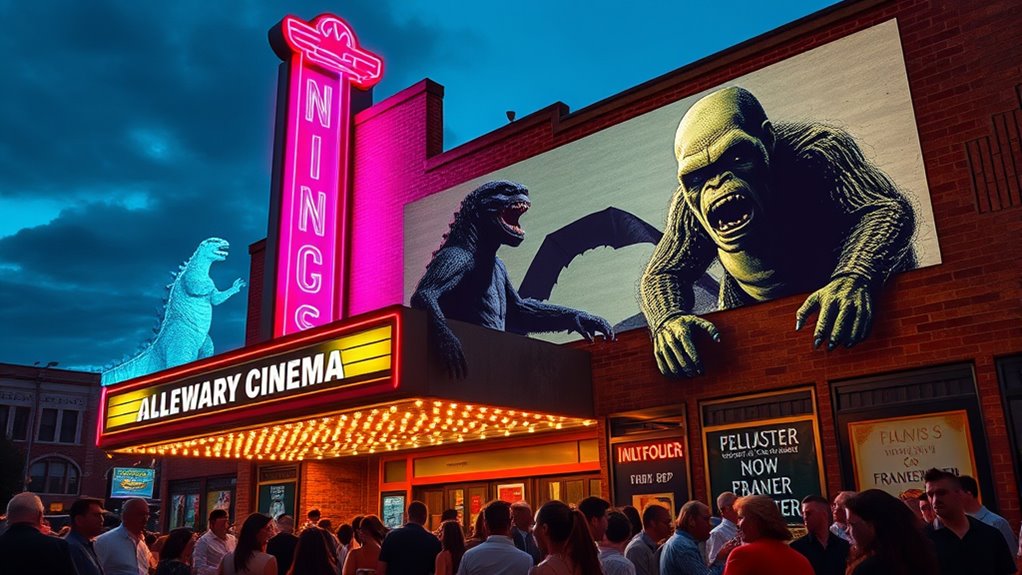
Have you ever wondered why monster movies continue to captivate audiences? It’s because they tap into deep-seated fears and fascinations that resonate across cultures and generations. One of the key reasons these films leave such a lasting impression is their masterful use of creature design. When you see a monster on screen, it’s not just about the creature itself; it’s about how its appearance and movements evoke a primal response. Filmmakers spend countless hours crafting these creatures, blending elements of reality and imagination to create something both terrifying and believable. This meticulous creature design makes the monsters feel like tangible threats, fueling your sense of dread or awe. At the same time, monster movies often rely heavily on horror tropes—familiar patterns and motifs that evoke fear, suspense, or curiosity. These tropes include jump scares, the unstoppable villain, or the innocent victim caught in a nightmare scenario. When you watch a monster flick, you might find yourself anticipating certain scenes or reactions because these tropes have become almost instinctive parts of the genre. They provide a framework that guides your expectations, making the experience more visceral and immediate. Yet, it’s the combination of creature design and these horror tropes that elevates a simple monster story into a cultural phenomenon. The creature design isn’t just about making something scary; it’s about creating a symbol that can embody humanity’s fears—be it the unknown, technological overreach, or nature’s revenge. These designs often draw inspiration from folklore, transforming ancient myths into visual nightmares that feel both familiar and terrifying. Meanwhile, horror tropes serve as storytelling shortcuts, allowing filmmakers to quickly establish tension and emotional stakes. You might recognize these tropes from classic films and then see how modern movies tweak or subvert them, adding fresh layers of meaning. This interplay between old and new keeps monster movies exciting and relevant. Over time, the monsters themselves become part of folklore, their designs and associated stories passed down, reshaping collective fears and beliefs. Interestingly, the advent of special effects technology has revolutionized creature design, enabling filmmakers to craft even more convincing and imaginative monsters. As you watch these films, you’re participating in a tradition that connects modern cinema with ancient legends. The power of monster movies lies in their ability to evolve while still anchoring themselves in timeless archetypes. Through inventive creature design and clever use of horror tropes, they continue to reflect and influence cultural anxieties, making each new film a mirror to society’s deepest fears and fantasies.
Frequently Asked Questions
How Have Monster Movies Evolved Over the Decades?
Over the decades, you’ve seen monster movies evolve through innovative monster design and genre shifts. Early films featured simple, creature-based horror, but now, you notice more complex, CGI-enhanced monsters that reflect societal fears. As genre evolution continues, filmmakers experiment with blending horror, sci-fi, and even comedy, making monsters more diverse and relatable. This evolution keeps you engaged, showing how cinema shapes and is shaped by changing cultural narratives.
What Are the Cultural Origins of Popular Movie Monsters?
You might find it fascinating that popular movie monsters often stem from mythical origins and cultural symbolism. Like the Loch Ness Monster, rooted in Scottish folklore, these creatures embody fears and values of their societies. These mythical origins give monsters depth, reflecting collective anxieties or moral lessons. Understanding their cultural symbolism helps you see how they evolve from ancient stories into modern cinematic icons, connecting history with entertainment in powerful ways.
How Do Monster Movies Influence Modern Folklore Traditions?
You see, monster movies influence modern folklore by shaping urban legends and inspiring myth reinterpretations. When you watch these films, you might find yourself sharing stories that blend fiction with reality, creating fresh legends. These movies often amplify fears or morals, leading communities to reinterpret myths in new ways. As a result, cinematic monsters become part of contemporary folklore, passing down fears, lessons, and cultural values through generations.
What Role Does Special Effects Technology Play in Monster Portrayals?
You might think special effects are just shiny gimmicks, but they’re the real magic behind monster portrayals. Practical effects bring creepy realism, while CGI innovations let filmmakers craft monsters from digital dreams. Together, they’re like the dynamic duo of horror, transforming ordinary actors into terrifying beasts. Without these tech marvels, your favorite monsters would be just cuddly puppets or flat drawings—hardly scary enough to haunt your nightmares!
Are There Psychological Reasons Behind the Popularity of Monster Movies?
You watch monster movies partly because they tap into your fear response, offering a safe way to confront and process fears. These films also satisfy your escapism necessity, allowing you to temporarily escape everyday life’s stresses. Their thrill, combined with fascinating creatures and stories, keeps you engaged. Ultimately, the popularity of monster movies stems from their ability to evoke primal emotions and provide a cathartic experience through entertainment.
Conclusion
As you watch these monster movies, remember you’re part of a timeless story, much like King Kong or Godzilla defending their worlds. They remind us that monsters aren’t just on screen—they live in our fears and legends. So, next time you see a creature roaring to life, think of how cinema keeps our folklore alive, turning ancient tales into modern myths. In this way, movies become the new guardians of our collective imagination.