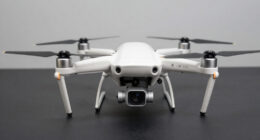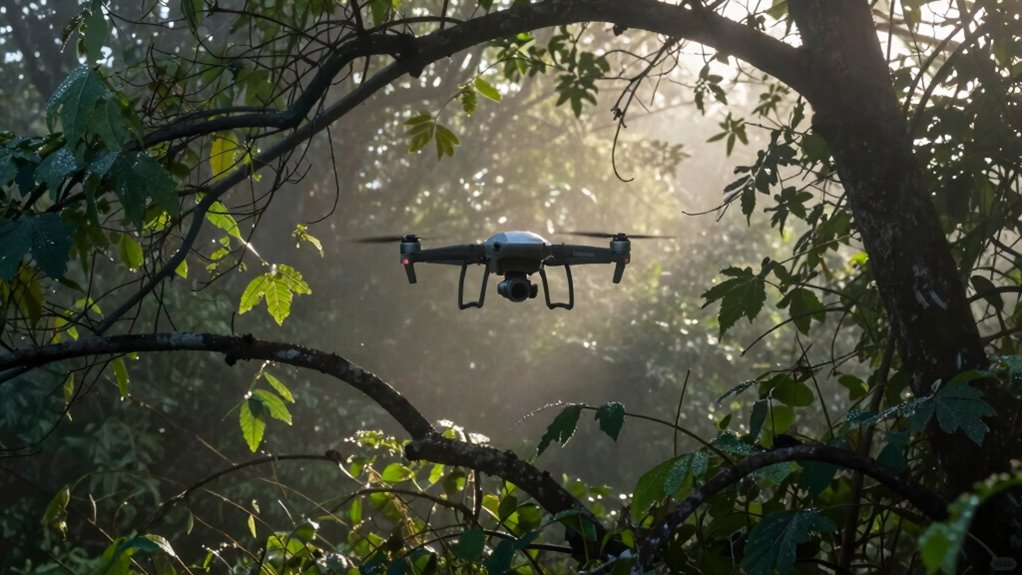

Drones can help you explore hard-to-reach areas and capture impressive footage of cryptids, but they don’t guarantee proof of their existence. While they provide better visuals and real-time data, this alone isn’t enough to confirm sightings as real evidence. Natural illusions or hoaxes can easily distort what you see. To truly understand what’s out there, you’ll need to combine technology with careful verification—there’s much more to uncover beyond the screen.
Key Takeaways
- Drones improve exploration reach and data collection but do not provide definitive proof of cryptid existence.
- Enhanced footage may be misleading or manipulated, requiring scientific validation beyond visual evidence.
- Technological limitations and natural phenomena can cause misinterpretations, complicating cryptid identification.
- Relying solely on drone footage risks prioritizing spectacle over rigorous scientific confirmation.
- Responsible use with proper verification can aid in wildlife studies, but alone, drones cannot confirm cryptid sightings.
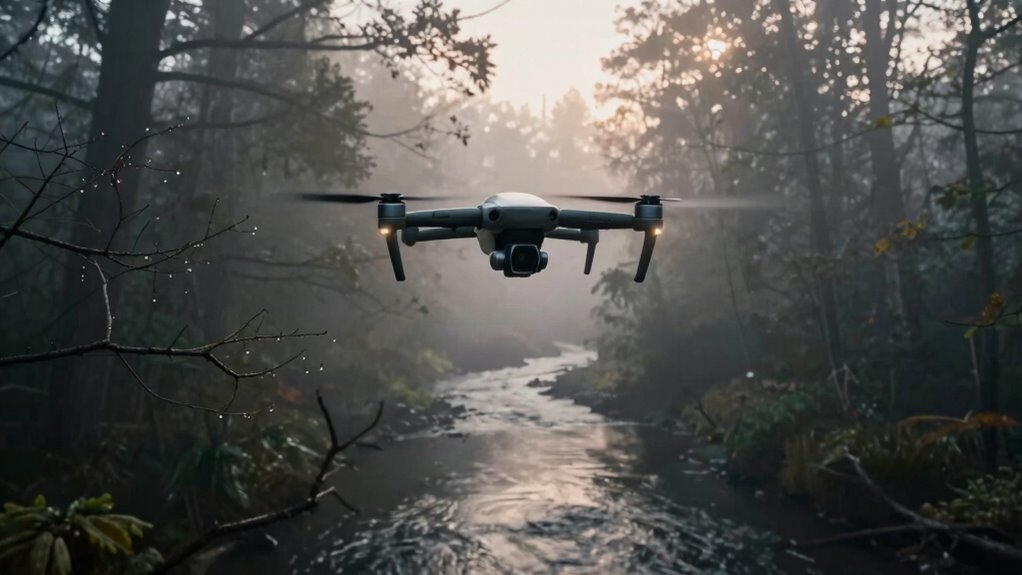
In recent years, the advent of drone technology has added a new dimension to the age-old mystery of cryptids—those elusive creatures said to inhabit remote or unexplored regions. With their ability to reach hard-to-access areas, drones have become valuable tools for wildlife monitoring, giving researchers and enthusiasts a better shot at spotting these legendary beings. But the question remains: do drones genuinely help find cryptids, or are they just producing better footage for entertainment and speculation?
Drones expand remote exploration for cryptids, but evidence verification remains essential beyond capturing impressive footage.
When you consider wildlife monitoring, drones excel at covering vast, rugged terrains where traditional methods fall short. They can hover quietly over dense forests, mountains, or swamps, capturing real-time aerial surveillance data that might reveal unusual movements or shapes hinting at cryptid activity. This capability allows you to observe areas without disturbing the environment, increasing the chances of detecting something out of the ordinary. The high-resolution cameras and thermal imaging on many drones can detect heat signatures or subtle movements, potentially identifying creatures that are rarely seen or documented. Additionally, sensor technology in drones continues to improve, further enhancing their ability to detect elusive targets in challenging environments. As drone navigation systems become more precise, the likelihood of successful discoveries could increase, although the challenge of verifying sightings remains.
However, despite these technological advantages, the core challenge remains: confirming the existence of cryptids. Better footage doesn’t necessarily equate to proof. While drones can provide clear images and videos, these can be misinterpreted or manipulated. When you watch drone footage of suspicious shapes darting through the trees or splashing in water, it’s easy to get caught up in the excitement. But skeptics argue that what appears to be a cryptid could be a known animal, a branch, or a trick of the light. The quality of footage can be impressive, but without concrete evidence—like biological samples or verifiable tracks—these sightings remain speculative.
Moreover, deploying drones for cryptid searches sometimes leads to a focus on capturing spectacular footage rather than scientific validation. Enthusiasts can get more interested in filming the creature than understanding its true nature or confirming its existence. This tendency risks turning serious research into a spectacle, where the goal becomes viral videos instead of discovery. Additionally, the limitations of drone technology mean that many sightings could still be misinterpreted or overlooked, emphasizing the importance of proper scientific methodology. Recognizing the potential for misidentification is essential when interpreting drone footage, as many natural phenomena can resemble cryptid activity. Proper scientific rigor is crucial to differentiate real evidence from illusions or hoaxes.
In the end, drones certainly enhance your ability to explore remote regions and gather potential evidence. They are powerful tools for wildlife monitoring and aerial surveillance, increasing the possibility of spotting something unusual. But whether they help find cryptids or just produce better footage depends on your approach. If you use drones responsibly, with an emphasis on scientific rigor and verification, they can be valuable assets. Otherwise, you might just be chasing shadows, captivated by the allure of a good story rather than the truth.

Zivolixd 4K 84MP WiFi Trail Camera, Wildlife Camera 0.1s Trigger, Game Camera with 130°Wide Angle, Trail Cameras with Night Vision Motion Activated Waterproof Suitable for Outdoor Wildlife Detection
Crystal-Clear 84MP Photos & 4K Ultra HD Video: Capture every detail in stunning 84MP high-resolution photos and razor-sharp…
As an affiliate, we earn on qualifying purchases.
As an affiliate, we earn on qualifying purchases.
Frequently Asked Questions
Are Drone Sightings Ever Confirmed as Cryptids?
Drone sightings of cryptids are rarely confirmed as actual cryptids. You might use drones for aerial reconnaissance or wildlife monitoring, which can help spot unusual creatures or movements. However, many sightings lack solid evidence, and footage often remains inconclusive. While drones can improve your chances of discovering something extraordinary, confirming a cryptid requires more than just a quick sighting—scientific validation is essential.
What Legal Restrictions Exist for Drone Use in Remote Areas?
Back in the day, explorers used paper maps, but now you’re bound by wildlife regulations and airspace restrictions when flying drones in remote areas. You need to follow local laws that prohibit drone flights near wildlife habitats or restricted airspace, even in wilderness. Always check for specific regulations before launching your drone, as violations can lead to hefty fines or confiscation. Stay informed, respect nature, and fly responsibly.
How Do Drones Compare to Traditional Cryptid Detection Methods?
Drones excel over traditional cryptid detection methods through aerial surveillance, offering a broader view of remote areas. Thanks to technological advancements, they can cover challenging terrains quickly and capture high-quality footage, increasing your chances of spotting unusual creatures. Unlike ground searches, drones can access hard-to-reach spots and provide real-time data, making them a valuable tool for cryptid enthusiasts seeking credible evidence.
Can Drones Differentiate Between Real Creatures and False Positives?
Drones can differentiate between real creatures and false positives, but it’s no miracle. With artificial intelligence and advanced sensor accuracy, they analyze movement and shapes to identify genuine cryptids. However, false positives still occur, especially in tricky terrains or when visual illusions deceive sensors. So, while drones substantially improve detection, they’re not foolproof—think of them as the sharpest detectives, yet still vulnerable to clever tricks of nature.
What Are the Ethical Concerns of Using Drones for Cryptid Searches?
Using drones for cryptid searches raises ethical concerns like wildlife disturbance and privacy invasion. You might unintentionally scare animals or disrupt habitats, which harms ecosystems. Additionally, flying over private property could invade people’s privacy, leading to discomfort or legal issues. As you explore these areas, it’s essential to respect nature and individual rights, ensuring your drone use remains responsible, mindful, and within legal boundaries.
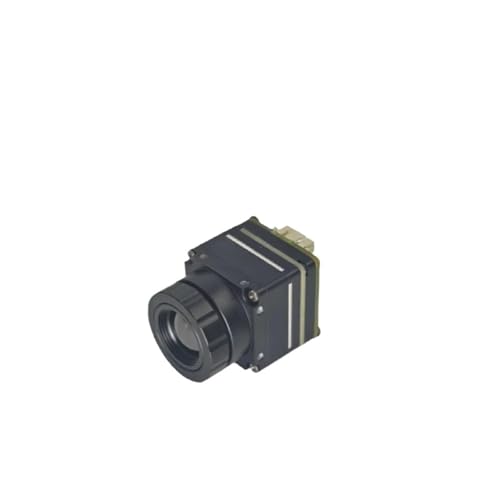
Compatible For FPV&drone toy car thermal imaging camera, multifunctional embedded for exploration and monitoring(CV256-9mm)
Integrates seamlessly with monitoring systems, providing real-time thermal data for observation and inspection tasks.
As an affiliate, we earn on qualifying purchases.
As an affiliate, we earn on qualifying purchases.
Conclusion
So, do drones truly reveal the secrets of cryptids, or are they just giving us fancier, more dramatic footage? Honestly, it’s like handing a superhero a jetpack—you might get closer to the action, but the mystery still keeps its grip. Drones can definitely help spot strange creatures, but they won’t turn every blurry image into proof overnight. In the end, whether you’re chasing legends or just capturing epic views, drones are your high-tech sidekick in this wild adventure.
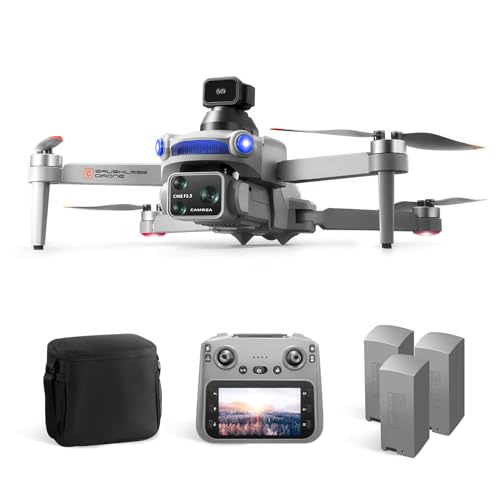
S119 4K Drone with Camera for Adults, GPS Auto Return, Obstacle Avoidance, Brushless Motor, 5G Screen Remote, 3 Batteries 75 Min Flight, Dual Camera 120° Wide-Angle, 2000M Range, 120M Altitude FPV Quadcopter (Gray)
[Extended Flight Time & High-Altitude Performance] Comes with 3 modular 7.4V 3800mAh batteries, each supporting 25 minutes of…
As an affiliate, we earn on qualifying purchases.
As an affiliate, we earn on qualifying purchases.

Police Drone Detection & Tracking Kit Handheld Drone Detection Kit- Compact Remote ID Receiver for iOS & Android
✅ Real-Time RF Drone Detection: Instantly detects drones using radio frequency remote ID signals VERSATILE DETECTION: Handheld device…
As an affiliate, we earn on qualifying purchases.
As an affiliate, we earn on qualifying purchases.