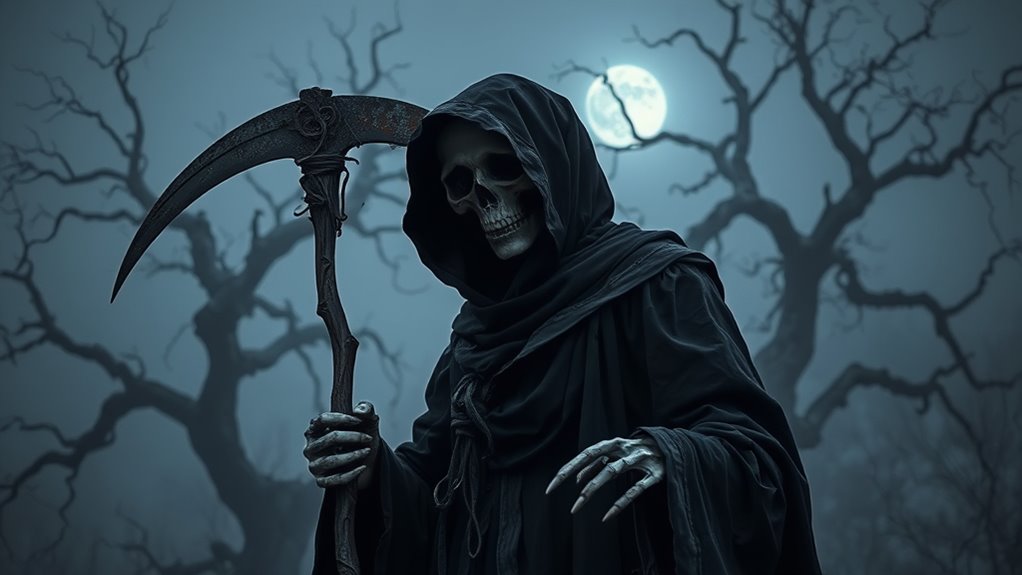
The Ankou, often called the Breton grim reaper, is a haunting figure that symbolizes death’s inevitable approach. Rumored to snatch bodies through sinister rituals like body-snatching, this gaunt, scythe-wielding figure embodies mortality and spiritual boundary crossings. Folklore suggests the Ankou’s presence can be linked to dark omens or disturbed graves, intensifying fears. If you’re curious about the mysterious connection between the Ankou and body-snatching, you’ll discover more intriguing stories behind this spectral figure.
Key Takeaways
- The Ankou is a Breton death figure symbolizing mortality and guiding spirits, often depicted as a gaunt, scythe-wielding figure.
- Historically, stories link the Ankou to body-snatching, as it was believed to collect bodies for the afterlife or prevent premature death.
- Folklore suggests the Ankou’s role extends to guarding spiritual boundaries, sometimes involving body-snatching to maintain cosmic balance.
- Funeral customs in Brittany included rituals to appease the Ankou, aiming to prevent it from claiming bodies prematurely.
- The concept of the Ankou reflects broader themes of mortality, fear, and cultural efforts to accept death through ritual and storytelling.
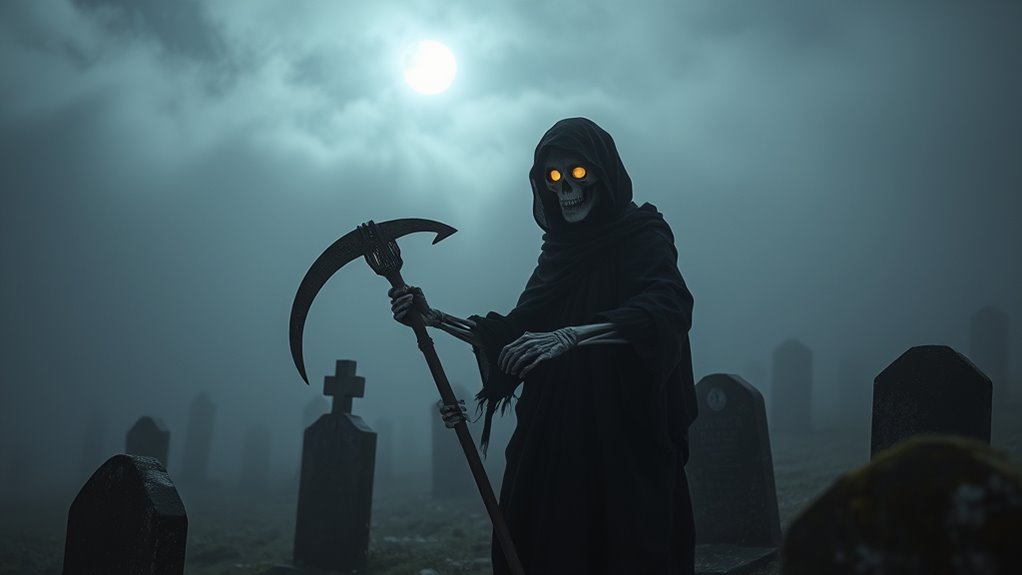
Have you ever heard of the Ankou, the sinister figure from Breton folklore known for collecting souls? If you’re intrigued by death and its rituals, you’ll find this spectral entity fascinating. The Ankou is often depicted as a tall, gaunt figure wielding a scythe, symbolizing the inevitable march toward death. In Breton culture, folklore symbolism plays a significant role in understanding and coping with mortality, and the Ankou embodies this connection deeply. It’s believed to be the embodiment of death itself, a harbinger who arrives at funeral customs to guide spirits from the realm of the living to the afterlife. Homegrown funeral customs often incorporate folklore to foster community bonds and provide comfort in the face of mortality. In many Breton communities, funeral customs are intertwined with stories of the Ankou. These traditions often involve elaborate rites meant to honor the dead, but also serve as a reminder of the Ankou’s presence. For example, some customs include leaving offerings or lighting candles at the graves to appease the specter and prevent it from claiming souls prematurely. These practices reflect a desire to maintain harmony between the living and the dead, acknowledging the Ankou’s role as both a collector and a guardian of spiritual boundaries. The folklore symbolism here is profound: the Ankou isn’t just a death figure but a symbol of life’s transient nature and the importance of respecting funeral customs to ensure a peaceful transition.
The legend also emphasizes the importance of community and tradition. In Breton folklore, the Ankou’s appearances are often linked to specific times of year or particular circumstances, reinforcing the idea that death is an integral part of life’s cycle. By observing funeral customs and rituals, communities express their respect for the dead while also acknowledging the Ankou’s role in the spiritual journey. The figure’s menacing presence underscores the universal fear of death, but it also highlights the cultural efforts to understand and accept it through folklore symbolism. These stories serve as a reminder that death is inevitable, but the way you approach it—through customs, rituals, and storytelling—can help make it less frightening. Additionally, understanding funeral customs can deepen appreciation for how cultures process loss and mortality.
Frequently Asked Questions
Are There Any Recorded Sightings of the Ankou Today?
There are no confirmed modern sightings of the Ankou, but folklore investigations suggest stories persist in local communities. You might hear tales from villagers or see reports online, though they lack concrete evidence. These accounts often blend tradition with imagination, making it hard to verify. If you’re curious, explore regional folklore, but remember, the Ankou remains a myth woven into Brittany’s cultural fabric.
How Do Breton Villagers Traditionally Honor the Ankou?
You might think Breton villagers fear the Ankou, but they actually honor him with funeral rituals and protective charms. Ironically, these customs serve to appease and ward off the reaper’s shadow, transforming fear into reverence. They burn candles, recite prayers, and wear talismans, believing these acts keep the Grim Reaper at bay. Instead of fighting death, they dance around it, making peace with the inevitable through tradition.
What Symbols Are Associated With the Ankou’s Presence?
You notice death symbols like black crows and mist, signaling the Ankou’s presence. Spiritual omens such as cold winds, sudden silence, or flickering lights also mark his arrival. These symbols serve as warnings, reminding you of the boundary between life and death. When you see these signs, it’s a call to respect the spirit world and prepare for the passage, acknowledging the Ankou’s role as Breton’s grim reaper.
Is the Ankou Linked to Specific Breton Festivals?
You might think the Ankou isn’t linked to festivals, but it actually plays a role in Breton festival origins. During certain celebrations, the Ankou’s procession symbolizes the cycle of life and death, reminding communities of mortality. This powerful imagery emphasizes the importance of respecting ancestors and the spiritual domain. So, yes, the Ankou’s presence is woven into some Breton festivals, highlighting its deep cultural and symbolic significance.
Can the Ankou Be Appeased or Warded Off?
You can try rituals for protection and appeasement practices to ward off the Ankou. Many believe that offerings, prayers, or specific ceremonies can appease this grim reaper, reducing its interest in snatching bodies. Light candles, recite Breton prayers, or perform traditional rituals to create a protective barrier. While no method guarantees success, these practices are believed to keep the Ankou at bay and honor the spirits of the departed.
Conclusion
So, step into the shadowy stories of the sinister Ankou, where death dances with dread and darkness. Its body-snatching, bone-chilling presence proves that Breton beliefs blend both bravery and fear. Don’t dismiss the disturbing details—dive deeper, and discover the dark, daring dance of death’s dreadkeeper. Remember, in the eerie embrace of the Ankou, every whisper, every warning, weaves wonder and warning into a wickedly woven web of wonder.