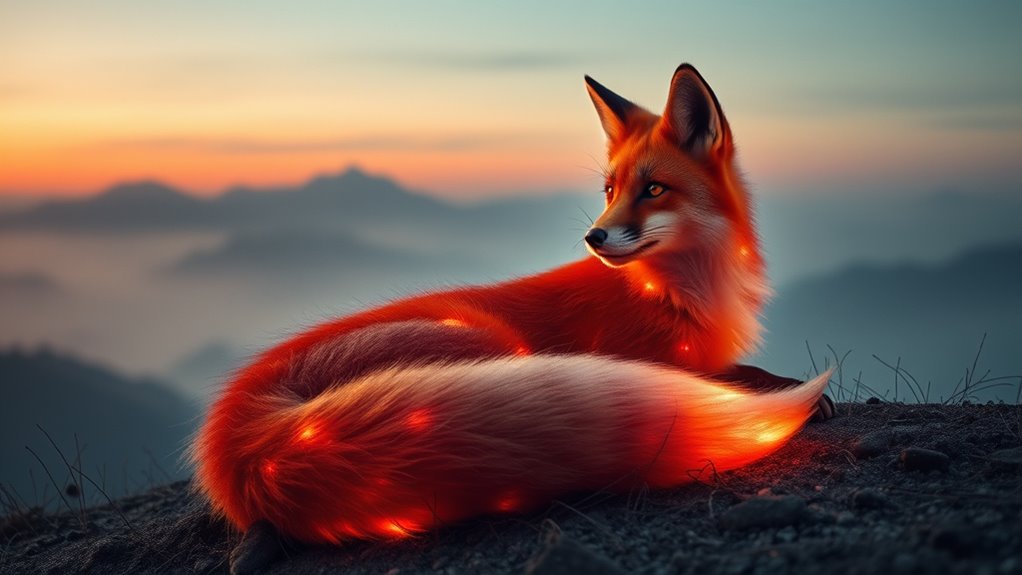

The Kumiho, Korea’s legendary nine-tailed fox, is a fascinating creature that symbolizes temptation, transformation, and morality. Often depicted as a beautiful woman capable of shape-shifting, it represents both danger and allure. Stories vary, portraying it as malicious or seeking redemption, reflecting changing cultural values. This myth continues to influence modern stories and media, blending tradition with contemporary themes. If you explore further, you’ll discover how this mythical being deeply connects with Korea’s cultural heritage and moral lessons.
Key Takeaways
- The Kumiho is a mythical nine-tailed fox from Korean folklore, symbolizing temptation, transformation, and moral ambiguity.
- Traditionally depicted as a beautiful woman or fox capable of shape-shifting into humans.
- Folklore portrays the Kumiho as either malicious predators or misunderstood beings seeking redemption.
- Modern stories feature the Kumiho in movies, dramas, and literature, exploring themes of identity and morality.
- It remains an important cultural symbol representing Korea’s mythological heritage and societal fears.
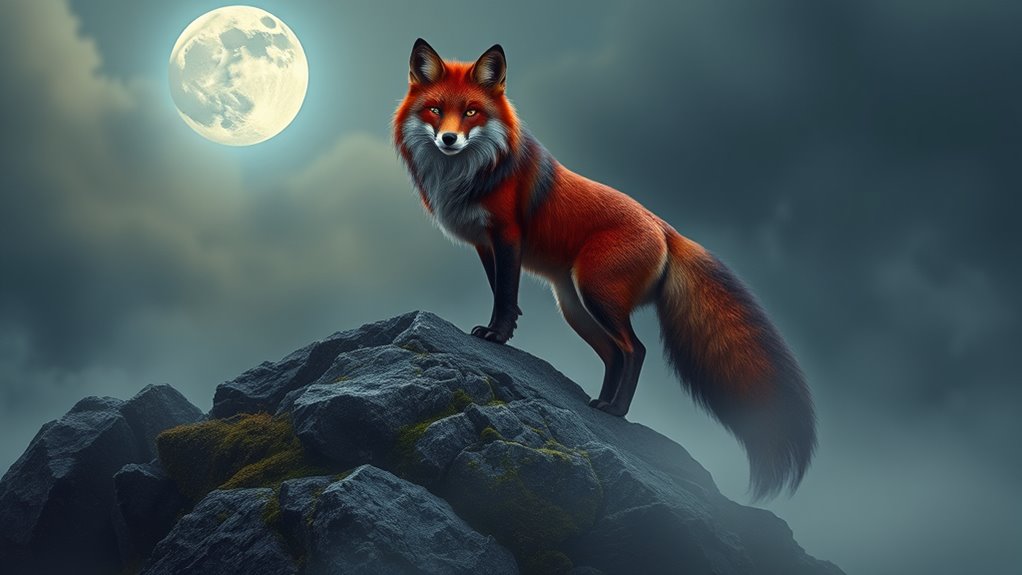
Have you ever wondered about the mysterious creature behind Korea’s legendary tales of shape-shifting foxes? The Kumiho, or nine-tailed fox, is a mesmerizing figure rooted in Korean folklore that embodies both fascination and fear. As a type of mythical creature, the Kumiho has long been part of Korea’s storytelling tradition, symbolizing complex themes like temptation, transformation, and morality. These stories aren’t just tales to entertain—they carry deep folklore symbolism that reflects cultural values and societal anxieties. The Kumiho’s reputation as a supernatural being makes it stand out among mythical creatures, blending elements of danger and allure that keep it alive in modern myths and popular culture.
Discover Korea’s legendary nine-tailed fox, a mythic symbol of temptation, transformation, and cultural fears.
In traditional stories, the Kumiho is often depicted as a beautiful woman who can transform into a fox or vice versa. Its nine tails are more than just a mythological detail; they represent its immense power and age, with each tail symbolizing progress in its mystical journey. The creature’s ability to shape-shift allows it to infiltrate human society, often luring victims with charm and seduction. Unlike other mythical creatures that serve protective or wise roles, the Kumiho’s dual nature makes it a symbol of temptation and moral ambiguity. Its folklore symbolism explores themes of desire, greed, and the danger of losing oneself to darker instincts. This duality makes the Kumiho a compelling figure that embodies both cultural fears and fascination with the unknown.
Throughout generations, stories about the Kumiho have morphed and adapted, reflecting changing societal attitudes. In some tales, the Kumiho is a malicious predator, preying on humans, especially men, feeding on their life force or energy. In others, it’s a misunderstood creature seeking redemption or human connection. This variability underscores its role as a complex symbol in Korean mythology—neither wholly evil nor wholly good. It reminds you that mythological creatures like the Kumiho serve as allegories for human struggles, illustrating how desire and morality intertwine. The folklore symbolism surrounding the Kumiho reveals cultural anxieties about temptation, morality, and the boundaries between the human and supernatural worlds. Its stories serve as cautionary tales, warning against succumbing to greed or lust, while also inviting curiosity about what lies beyond the ordinary.
Today, the Kumiho continues to enthrall audiences through movies, dramas, and literature, blending tradition with modern storytelling. Its mythic qualities and folklore symbolism keep it relevant, allowing you to explore themes of identity, temptation, and transformation. As a mythical creature, the Kumiho embodies the enduring power of folklore to reflect human nature’s complexities, making it a fascinating part of Korea’s cultural heritage. Whether feared or revered, this nine-tailed fox remains an enduring symbol of mystery, reminding you of the thin line between myth and reality. Additionally, the stories about the Kumiho often highlight the importance of emotional support in navigating fears and moral dilemmas related to temptation and morality.
Frequently Asked Questions
Are There Modern Sightings of Real Kumiho Today?
You might find modern sightings of kumiho in contemporary beliefs or folklore stories, but there’s no concrete evidence. People still share legends and urban myths about these nine-tailed fox spirits, often linking them to supernatural encounters or mysterious events. While some believe in their existence today, most consider them part of cultural mythology. So, if you’re curious, explore local stories—these tales keep the myth alive in modern times.
How Does Kumiho Compare to Other Asian Fox Spirits?
You’ll find that kumiho differs from other Asian fox spirits like Japan’s kitsune or China’s huli jing in its mythical origins and cultural symbolism. While kitsune often symbolize intelligence and magical abilities, kumiho are linked to temptation and transformation. These spirits reflect unique cultural values, with kumiho embodying both danger and allure, making them distinct in their mythological roles across Korea compared to their counterparts in neighboring cultures.
Can a Kumiho Transform Into a Human at Will?
You might think of the Kumiho like a master illusionist, effortlessly shifting shapes at will. Yes, it can transform into a human, showcasing remarkable shape-shifting abilities rooted in ancient human transformation myths. This ability allows the Kumiho to blend into society, sometimes hiding its true fox nature. Its transformation is often depicted as nearly perfect, making it difficult to distinguish from real humans, much like legendary shape-shifters across cultures.
What Symbols Represent the Kumiho in Korean Culture?
You’ll find that the kumiho is symbolized in Korean culture through various elements. Its symbolic meanings include cunning, danger, and transformation, often representing the duality of human nature. Cultural representations often depict the kumiho with nine tails, emphasizing its mystical power. You might see these symbols in traditional art, folklore, and literature, highlighting its role as a creature that embodies both allure and threat, reminding you of life’s complexities.
Are There Any Kumiho Legends Specific to Certain Regions?
Ever wonder if different places tell different Kumiho stories? Yes, regional variations in Korea feature unique folklore differences. For example, in Gyeongju, legends depict the Kumiho as more malicious, while in Seoul, stories often portray her as a tragic figure seeking love. These regional tales reflect local beliefs and cultural nuances, making each legend distinct. So, exploring these variations helps you understand the deeper cultural significance behind the Kumiho myths.
Conclusion
As you explore the legend of the kumiho, you realize it’s more than just a myth—it’s a mirror to your own fears and desires. Will you see the creature as a cunning predator or a misunderstood soul? The nine tails hide secrets that could change everything you thought you knew. And as the story unfolds, one question lingers: are we all just hiding something deeper beneath our surface? The truth might be closer than you think.