The Jade Rabbit is a powerful symbol in Chinese moon mythology, representing sacrifice, compassion, and harmony. According to legend, it jumped into fire to feed a starving man, impressing the gods and earning a place on the moon. This myth highlights virtues admired in Chinese culture, linking the moon to divine qualities and moral virtues. If you continue exploring, you’ll discover how this myth connects to broader cultural traditions and spiritual meanings.
Key Takeaways
- The Jade Rabbit is a legendary figure on the Chinese moon, symbolizing selflessness, sacrifice, and harmony.
- According to myth, the rabbit sacrificed itself to feed a starving man, earning a place on the moon.
- The moon in Chinese culture represents reunion, eternity, and divine power, with the Jade Rabbit embodying moral virtues.
- Lunar legends link the moon’s glow and the rabbit’s story to divine influence and moral lessons rooted in Chinese philosophy.
- The myth continues to inspire cultural traditions and festivals, emphasizing altruism, compassion, and spiritual connection.
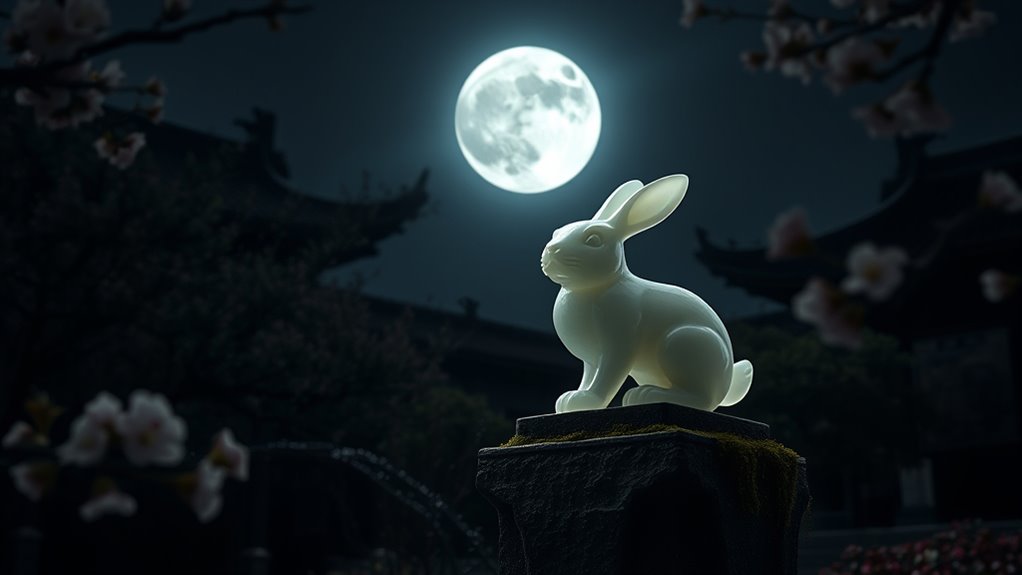
Have you ever wondered about the story behind the Jade Rabbit on the moon? It’s a tale that’s been passed down through generations, woven into the fabric of lunar legends that hold deep cosmic symbolism. When you look up at the night sky and see the moon, you might not realize the rich stories it carries—stories that connect the heavens to human life in profound ways. The Jade Rabbit is more than just a mythical creature; it embodies themes of sacrifice, immortality, and harmony, reflecting the ancient Chinese understanding of the universe. In Chinese culture, the moon isn’t just a celestial body; it’s a symbol of reunion and eternity. The Jade Rabbit, often depicted pounding medicine with a mortar and pestle, represents the quest for eternal life. This image ties into lunar legends that explain the moon’s mysterious glow and its connection to divine power, serving as a reminder of the celestial forces that influence earthly life. Additionally, the myth of the Jade Rabbit highlights cultural symbolism that emphasizes moral virtues like selflessness and compassion. Your curiosity might lead you to explore how the Jade Rabbit became a symbol within these lunar legends. According to myth, the rabbit’s story begins with a selfless act of kindness. As the legend goes, three celestial beings disguised themselves as humans and approached a starving old man, offering food. The rabbit, moved by compassion, jumped into a fire to feed him, sacrificing itself to save others. Impressed by the rabbit’s unwavering generosity, the gods took pity on it and placed it on the moon, where it continues to serve as a symbol of altruism and sacrifice. The cosmic symbolism of this myth highlights the idea that kindness and selflessness are divine qualities, echoing the universal laws of karma and harmony. You can see how these lunar legends have shaped Chinese cultural views of the moon as a sacred space where moral virtues are celebrated. The Jade Rabbit’s presence on the moon isn’t just a charming story; it’s a reflection of the values that resonate deeply within Chinese philosophy and cosmology. These tales give the moon a spiritual personality, turning it into a mirror of human virtues and divine qualities. When you gaze at the moon during festivals like Mid-Autumn, you’re not just admiring a celestial body—you’re witnessing a living story steeped in cosmic symbolism, reminding you of the virtues that connect us to the universe. The Jade Rabbit’s myth, with its roots in lunar legends, continues to inspire and deepen your understanding of the moon’s role in cultural and spiritual traditions worldwide.
Frequently Asked Questions
How Did the Jade Rabbit Become Associated With the Moon?
You might wonder how the jade rabbit became associated with the moon. It’s because of lunar symbolism and mythological animals that this connection exists. In Chinese legend, the jade rabbit lives on the moon, tirelessly pounding herbal medicines. This story highlights the rabbit’s role as a symbol of sacrifice and immortality, making it a significant mythological animal linked to the moon’s mysterious and cultural significance.
Are There Regional Variations of the Jade Rabbit Myth in China?
Yes, you’ll find regional storytelling and dialect variations of the Jade Rabbit myth across China. In some areas, locals emphasize different aspects of the story, like the rabbit’s role in medicine or immortality. Dialect differences also shape how the myth is told, with unique names and details that reflect local cultures. These variations enrich the myth’s meaning, showing how it adapts to different communities while maintaining its core symbolism.
What Materials Are Traditionally Used in Jade Rabbit Moon-Themed Art?
You’ll notice that jade carvings and ceramic figurines are the traditional materials used in moon-themed art. Jade, prized for its smooth texture and vibrant green hues, captures the mystical essence of the moon and rabbit. Ceramic figurines, often delicately painted, add a tactile charm. Together, these materials create a harmonious balance of elegance and tradition, bringing the myth to life in a tangible, artful way.
How Does the Jade Rabbit Myth Influence Modern Chinese Culture?
The jade rabbit myth influences your modern Chinese culture by serving as a powerful cultural symbolism that connects traditional beliefs to contemporary life. It inspires modern adaptations in art, fashion, and media, blending ancient stories with current trends. As you explore these influences, you’ll notice how the myth fosters a sense of cultural identity and continuity, enriching your understanding of Chinese heritage and its ongoing relevance in today’s society.
Are There Annual Festivals Celebrating the Jade Rabbit in China?
Yes, you can find annual festivals celebrating the Jade Rabbit in China, especially during the Moon Festival. During these celebrations, you’ll notice rabbit symbolism in lanterns, decorations, and mooncakes. People honor the myth by sharing stories about the Jade Rabbit, enjoying moon gazing, and participating in traditional dances. These festivals highlight the cultural significance of the Moon Festival and reinforce the beloved symbolism of the rabbit in Chinese folklore.
Conclusion
As you reflect on the Jade Rabbit’s story, remember how it symbolizes hope, sacrifice, and the eternal bond between humans and the cosmos. Just like the rabbit’s eternal grind on the moon, your own perseverance can turn dreams into reality, shining as a guiding light in darkness. The moon’s gentle glow reminds you that even in solitude, there’s beauty and meaning—an enduring symbol of resilience and unity that echoes through time and space.