
TL;DR
Open a free Amazon Business account
Business pricing, bulk buying and tax-exempt orders.
Create a free accountAs an affiliate, we earn on qualifying purchases.
In June 2026, the full moon known as the Strawberry Moon will occur, and it will be one of the smallest full moons of the year, classified as a micromoon. This event is confirmed by astronomers and will be visible worldwide.
The full moon known as the Strawberry Moon will occur in June 2026, and astronomers confirm it will be one of the smallest full moons of the year, classified as a micromoon due to its proximity to the lunar apogee. June’s Strawberry Moon is unlike any other full moon. Here’s why
The June 2026 full moon is set to take place in the first week of June, though the exact date is still to be confirmed. According to lunar orbit calculations, this moon will appear smaller and less bright than typical full moons, as it coincides with the moon’s apogee — the farthest point from Earth in its orbit. June 2026 full Moon: How and when to see the Strawberry Moon rise in the UK
This phenomenon is known as a micromoon, a term used when a full moon occurs near apogee, making it appear smaller and dimmer. Astronomers from various observatories have verified this based on the moon’s orbital position, which is predictable and well documented. The strawberry moon will soon rise. When to look up.
The name “Strawberry Moon” has historical roots, originating from indigenous and colonial traditions that associated June’s full moon with the strawberry harvest. The event is expected to be visible globally, weather permitting.
Why the June 2026 Strawberry Moon Matters for Skywatchers
This event provides an opportunity for skywatchers and astronomers to observe a smaller, dimmer full moon than usual, offering insights into lunar orbit dynamics. It also highlights the predictable nature of lunar phases and the importance of orbital mechanics in astronomy.
While the moon’s size and brightness are primarily of interest to enthusiasts and scientists, such events also influence cultural and traditional observances related to lunar cycles. The June 2026 micromoon underscores the variability of lunar appearances throughout the year.
As an affiliate, we earn on qualifying purchases.
Lunar Cycles and the Phenomenon of Micromoons
The moon’s apparent size varies throughout its orbit, with the largest full moon (perigee) appearing when the moon is closest to Earth, and the smallest (apogee) during a micromoon. These variations are well-documented and predictable, occurring roughly once every month during full moons.
The term “Strawberry Moon” has been used for centuries to describe June’s full moon, rooted in Native American and colonial traditions. The 2026 event is notable because it coincides with the moon’s apogee, making it one of the smallest full moons of the year.
Previous micromoons have been observed and documented, but each offers a unique viewing experience due to its smaller size and reduced brightness.
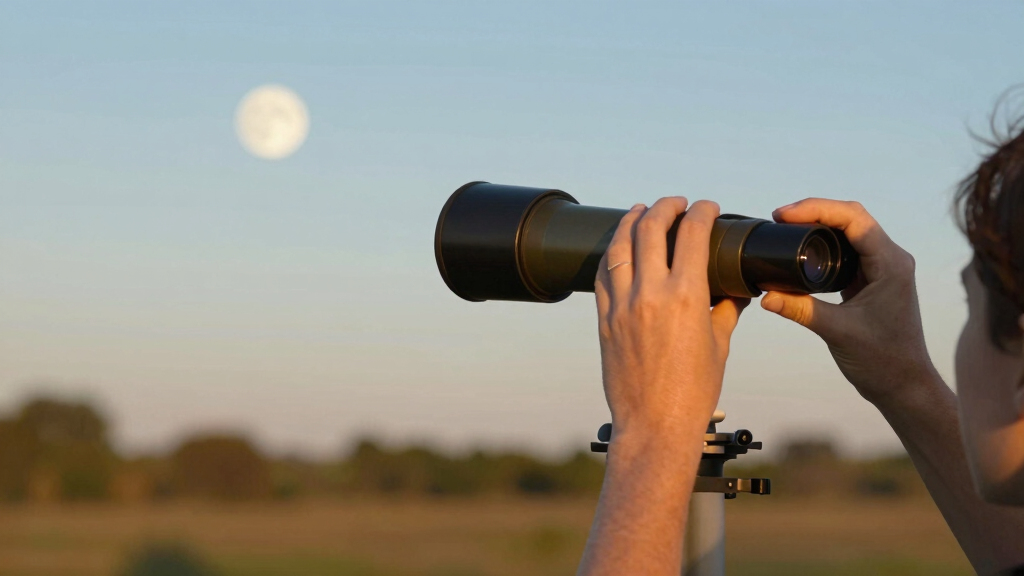
astronomy binoculars for moon watching
As an affiliate, we earn on qualifying purchases.
As an affiliate, we earn on qualifying purchases.
Exact Date and Visibility Conditions Still Unconfirmed
The precise date of the June 2026 full moon has not yet been announced, and weather conditions could affect visibility in different regions. Additionally, the moon’s apparent size may vary slightly depending on local atmospheric conditions.
While orbital calculations confirm the moon will be at apogee, the exact timing and brightness levels are still to be finalized as the date approaches.
As an affiliate, we earn on qualifying purchases.
Monitoring Lunar Orbit Predictions for June 2026
Astronomers and observatories will continue to refine the exact date of the full moon as June 2026 approaches. Skywatchers should stay updated through astronomical calendars and local observatories for the confirmed date and optimal viewing times.
Weather forecasts closer to the event will also determine the best viewing conditions. The event is expected to generate interest among amateur astronomers and the general public, especially those interested in lunar phenomena.
As an affiliate, we earn on qualifying purchases.
Key Questions
When exactly will the June 2026 full moon occur?
The exact date has not yet been announced but is expected to be in the first week of June 2026. Official confirmation will come closer to the date.
What makes a moon a micromoon?
A micromoon occurs when the full moon happens near the moon’s apogee, the farthest point from Earth in its orbit, making it appear smaller and dimmer than usual.
Will the moon look significantly different during a micromoon?
Yes, it will appear smaller and less bright compared to a typical full moon, which is near perigee, the closest point to Earth.
Can I see the micromoon with the naked eye?
Yes, it will be visible without special equipment, though it may be less striking than a larger, brighter full moon.
Why is it called the Strawberry Moon?
The name originates from Native American and colonial traditions, linking June’s full moon to the strawberry harvest season.
Source: google-trends
College move-in / dorm season Picks
dorm essentials
As an affiliate, we earn on qualifying purchases.